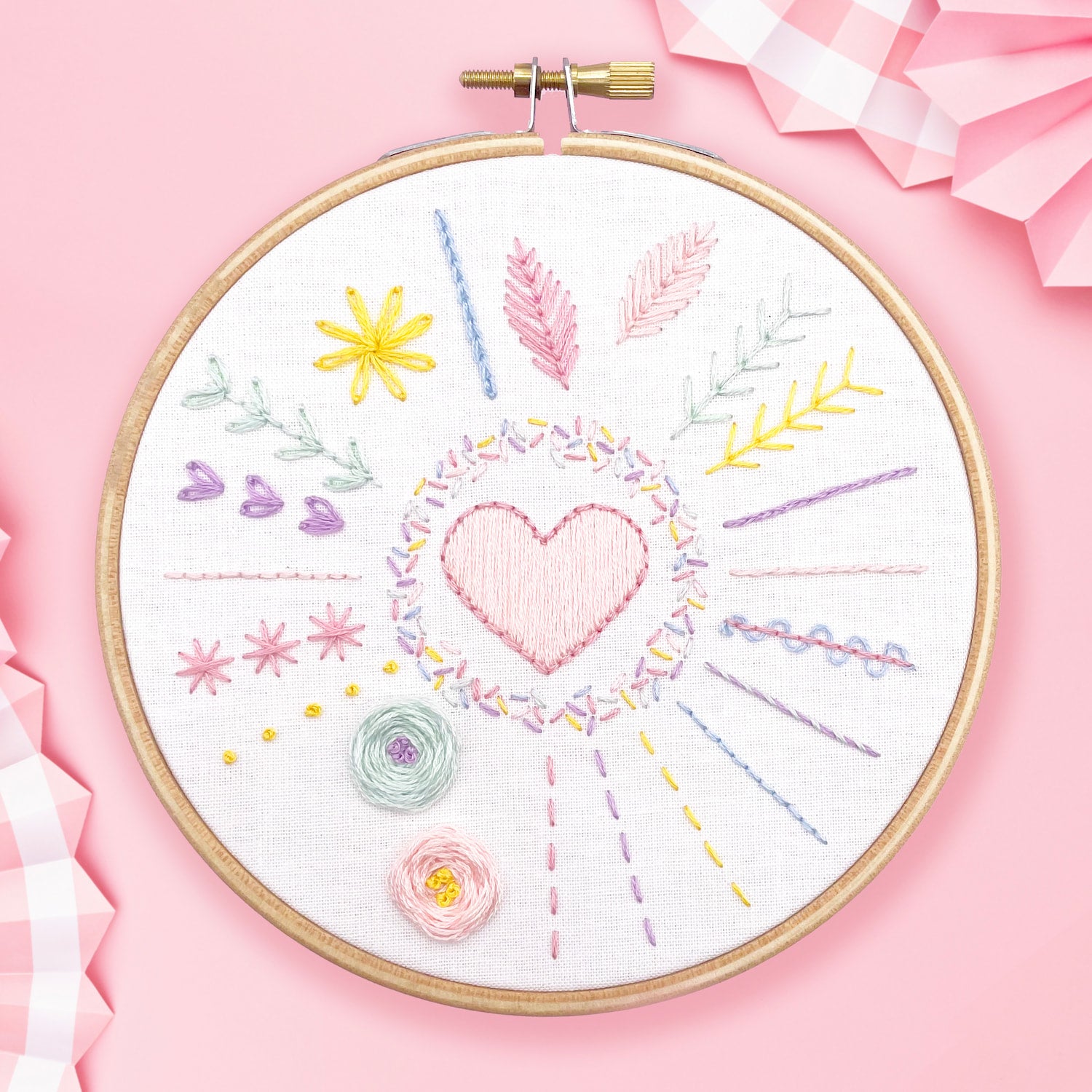
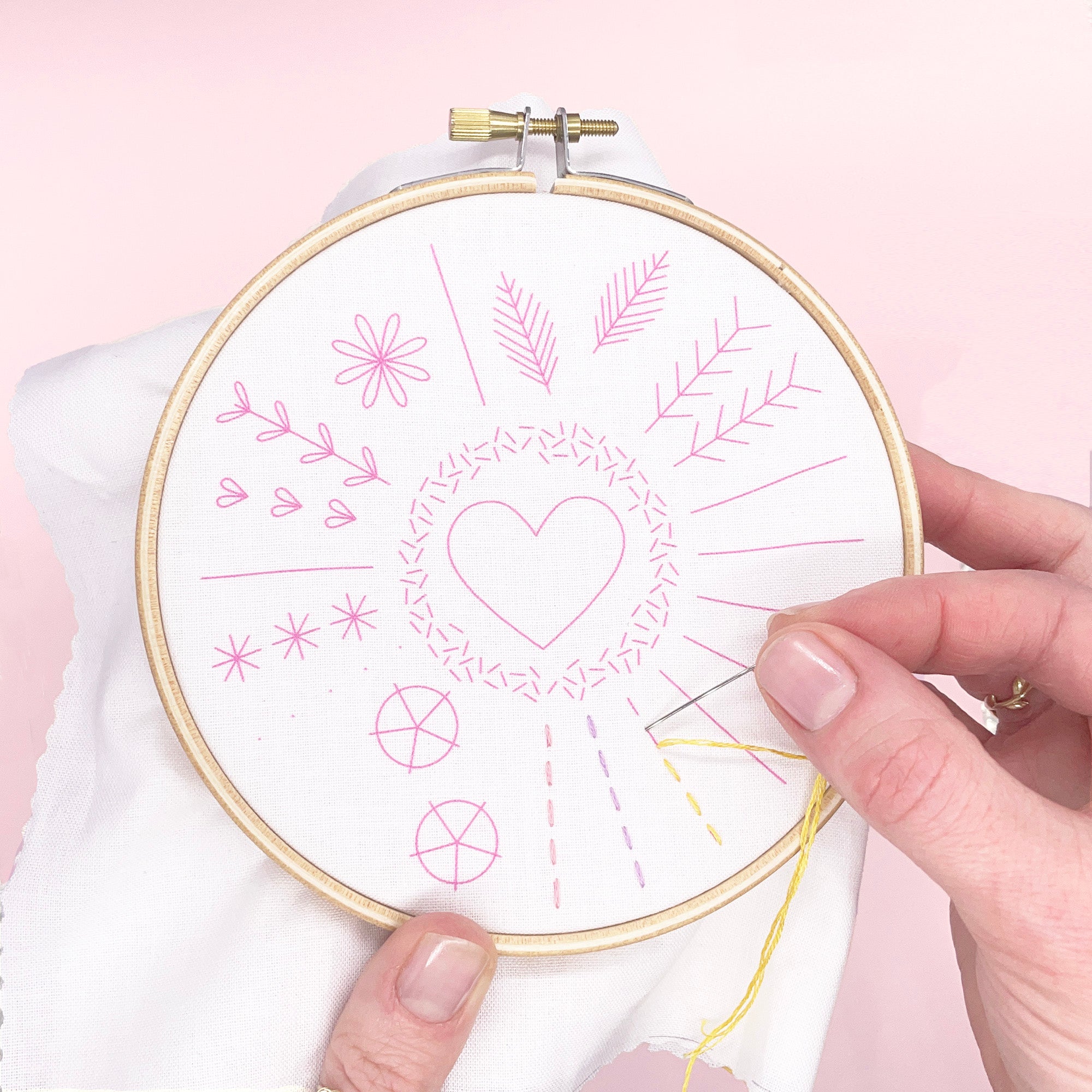
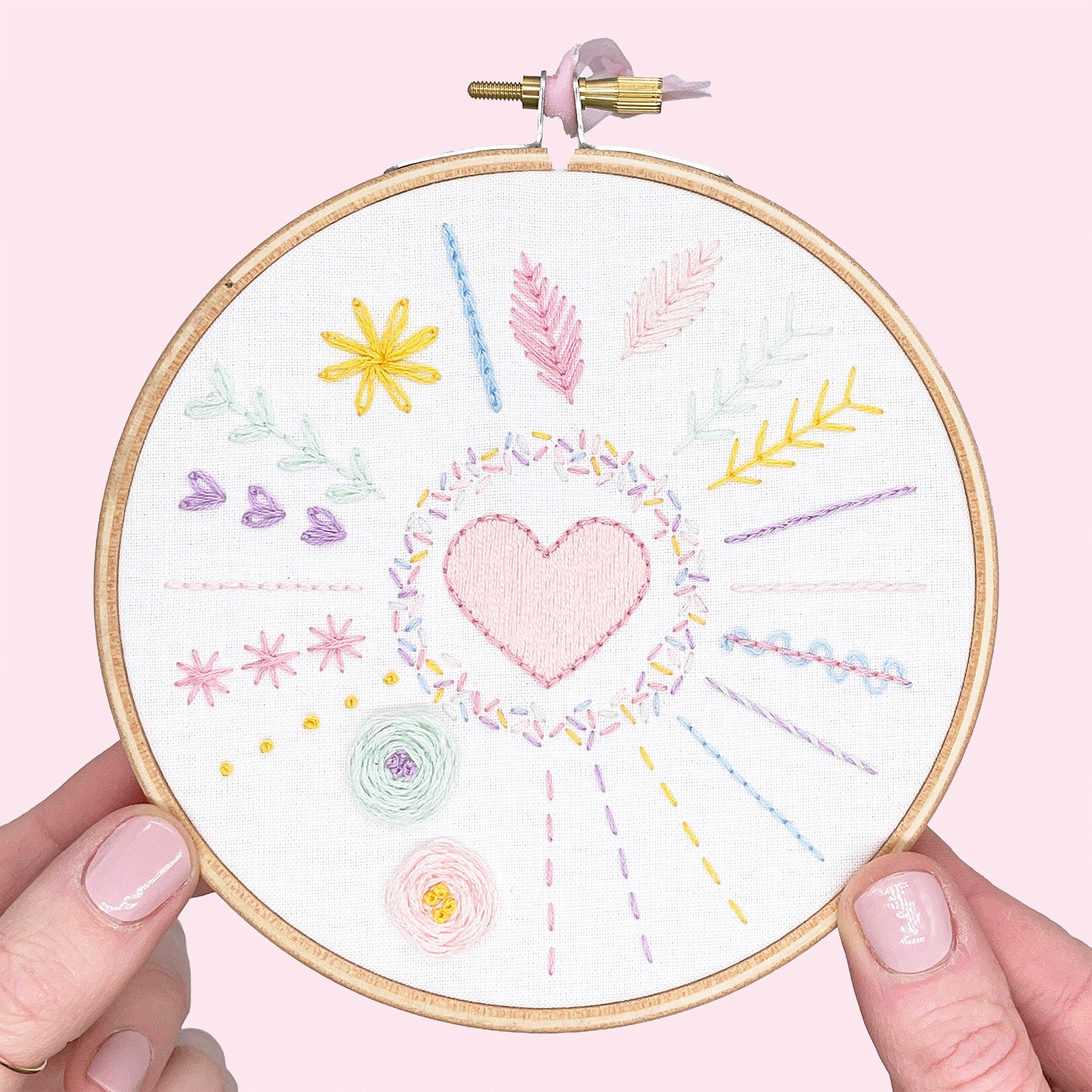
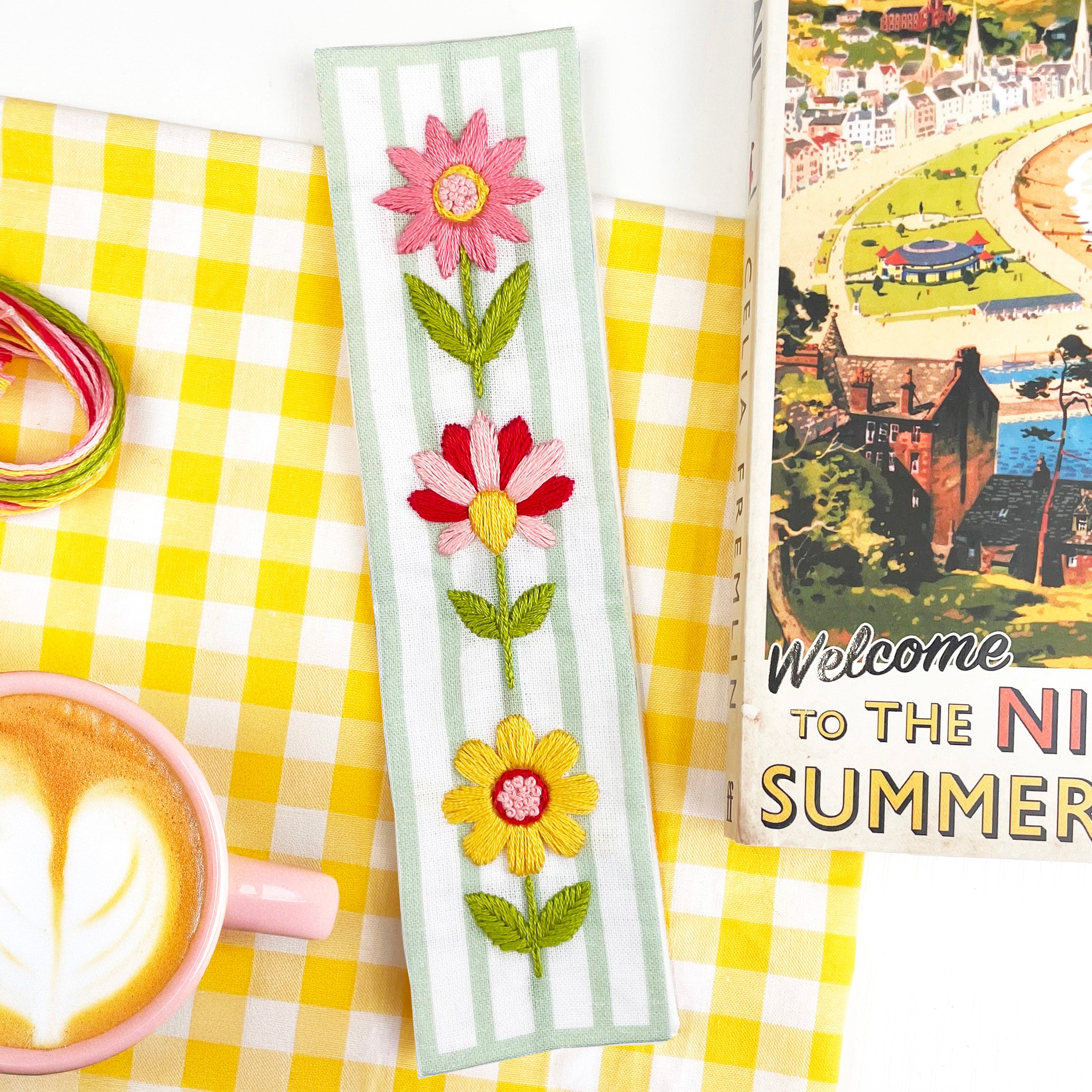
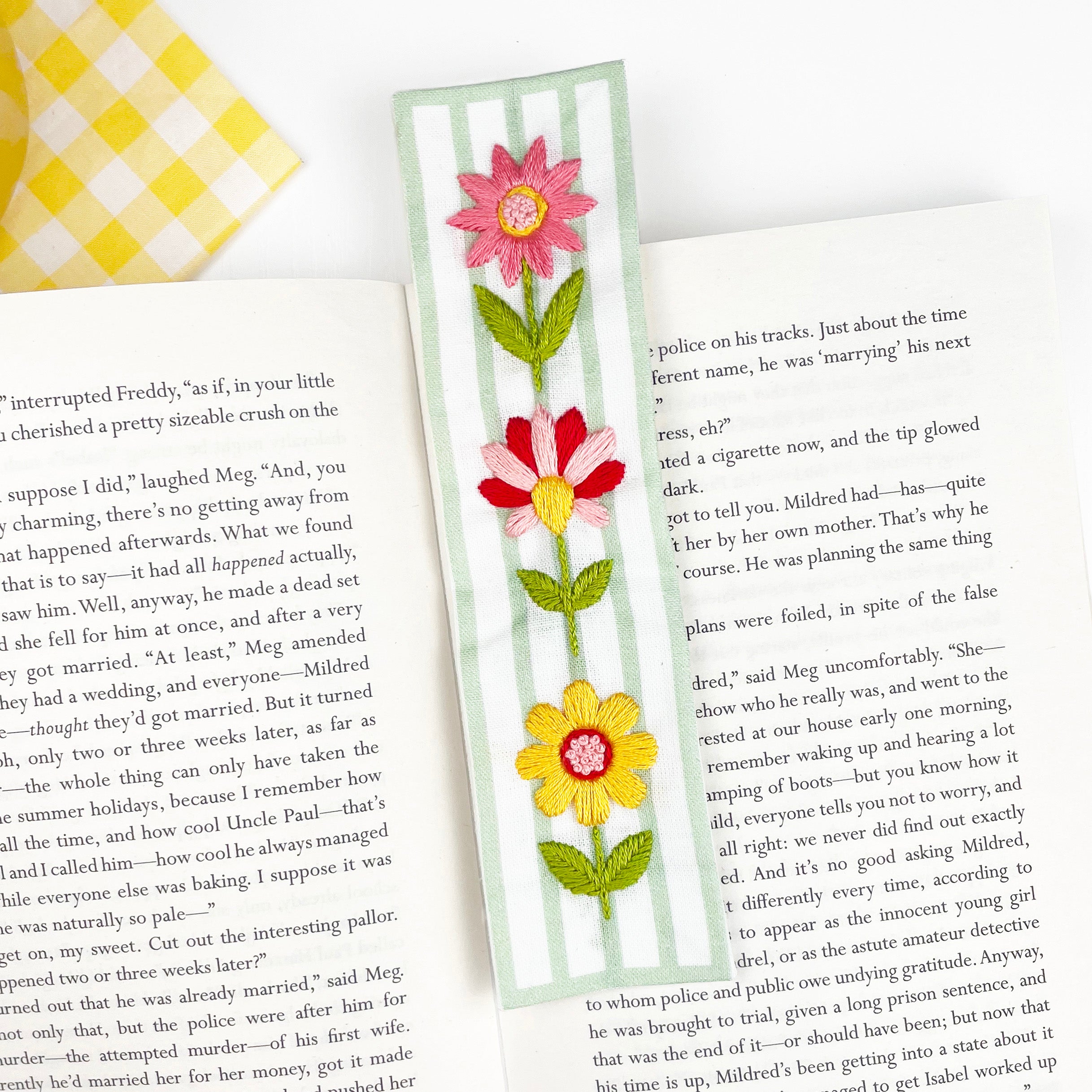
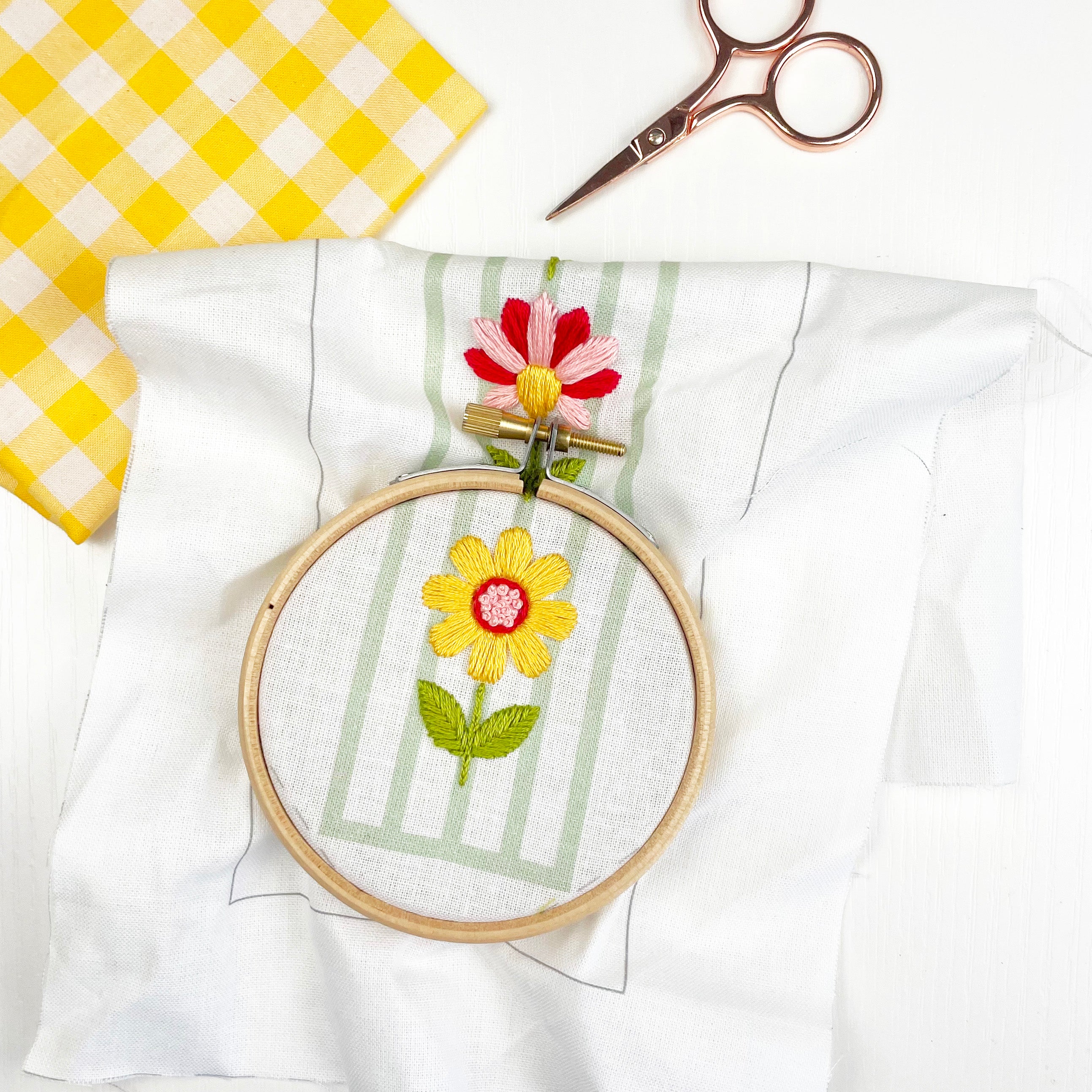
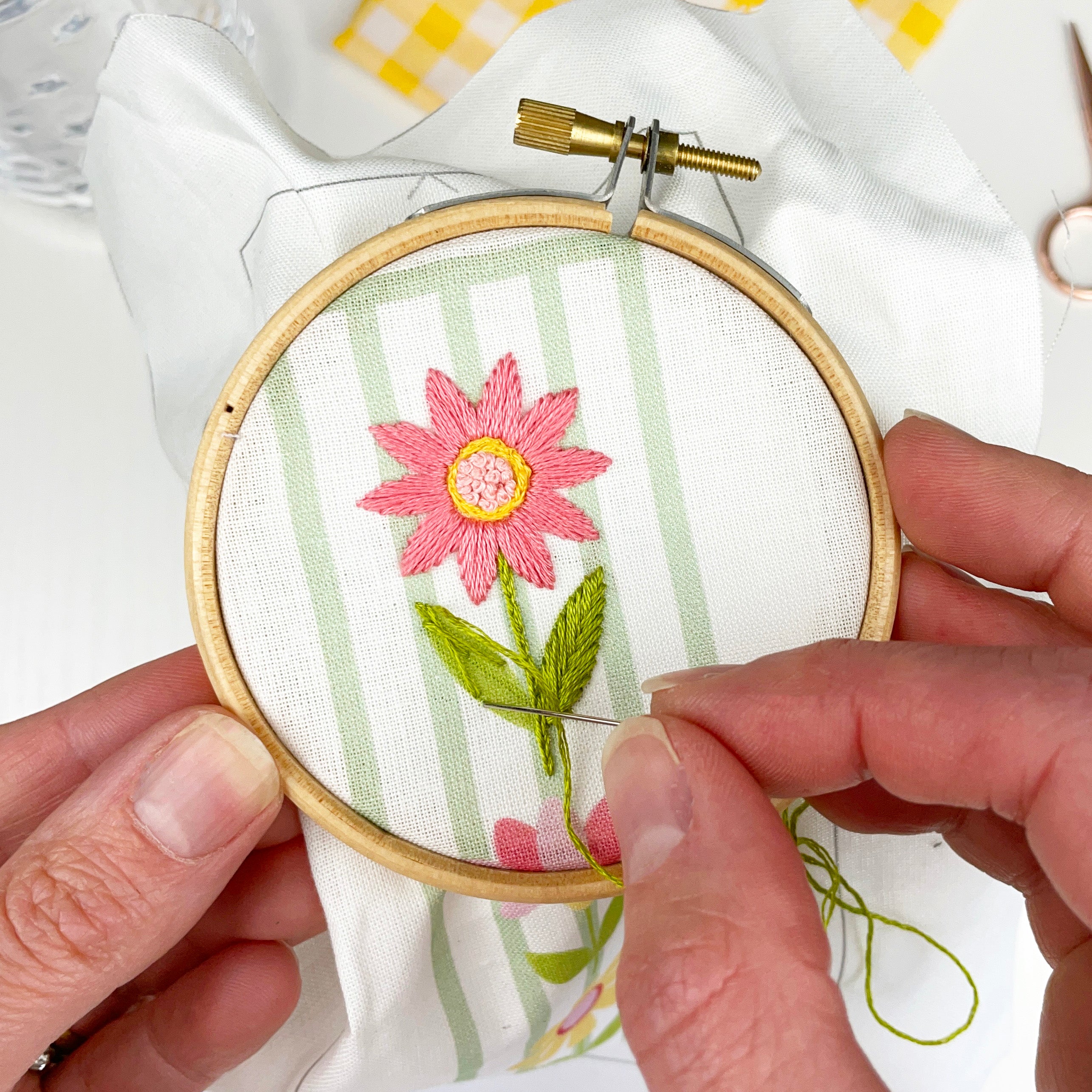
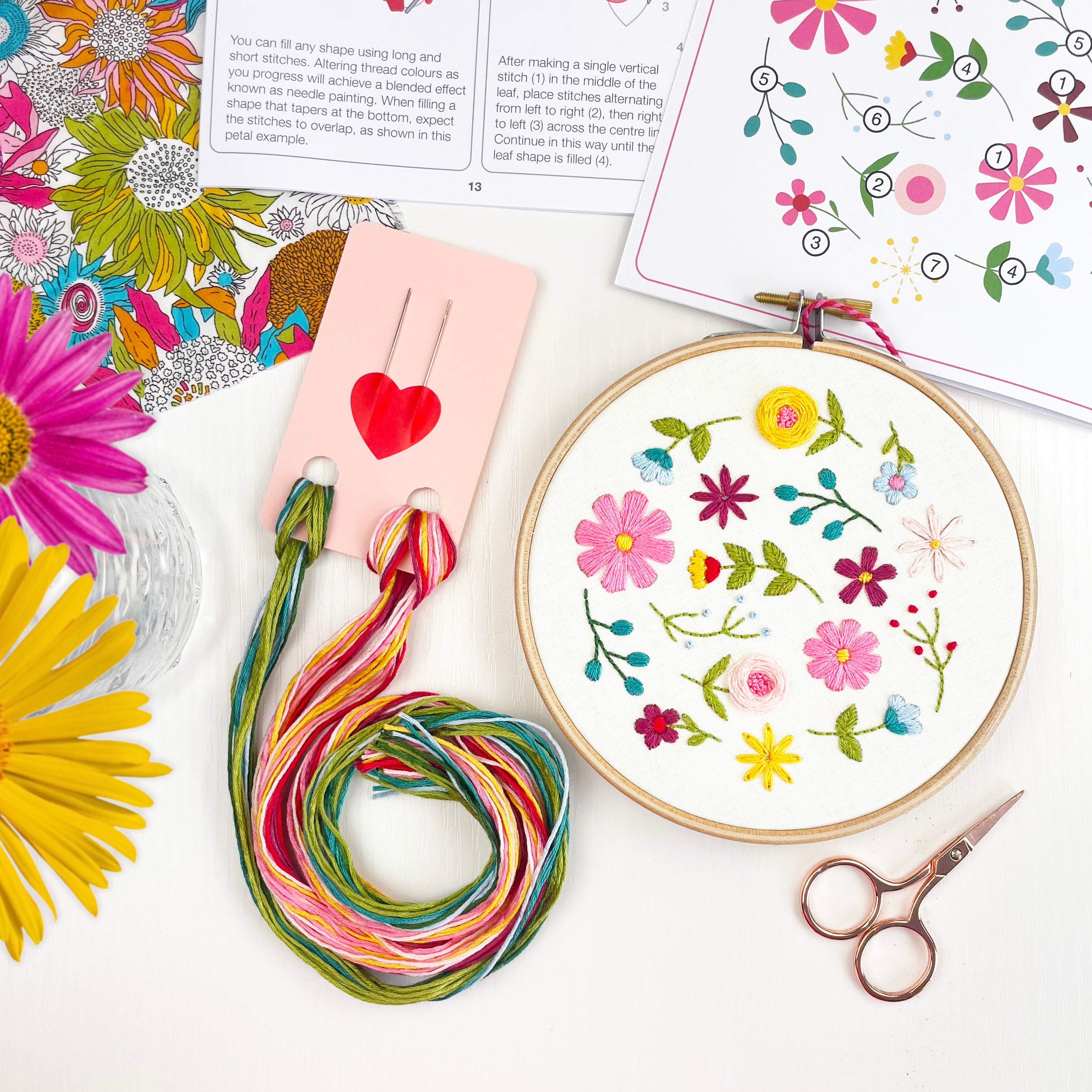
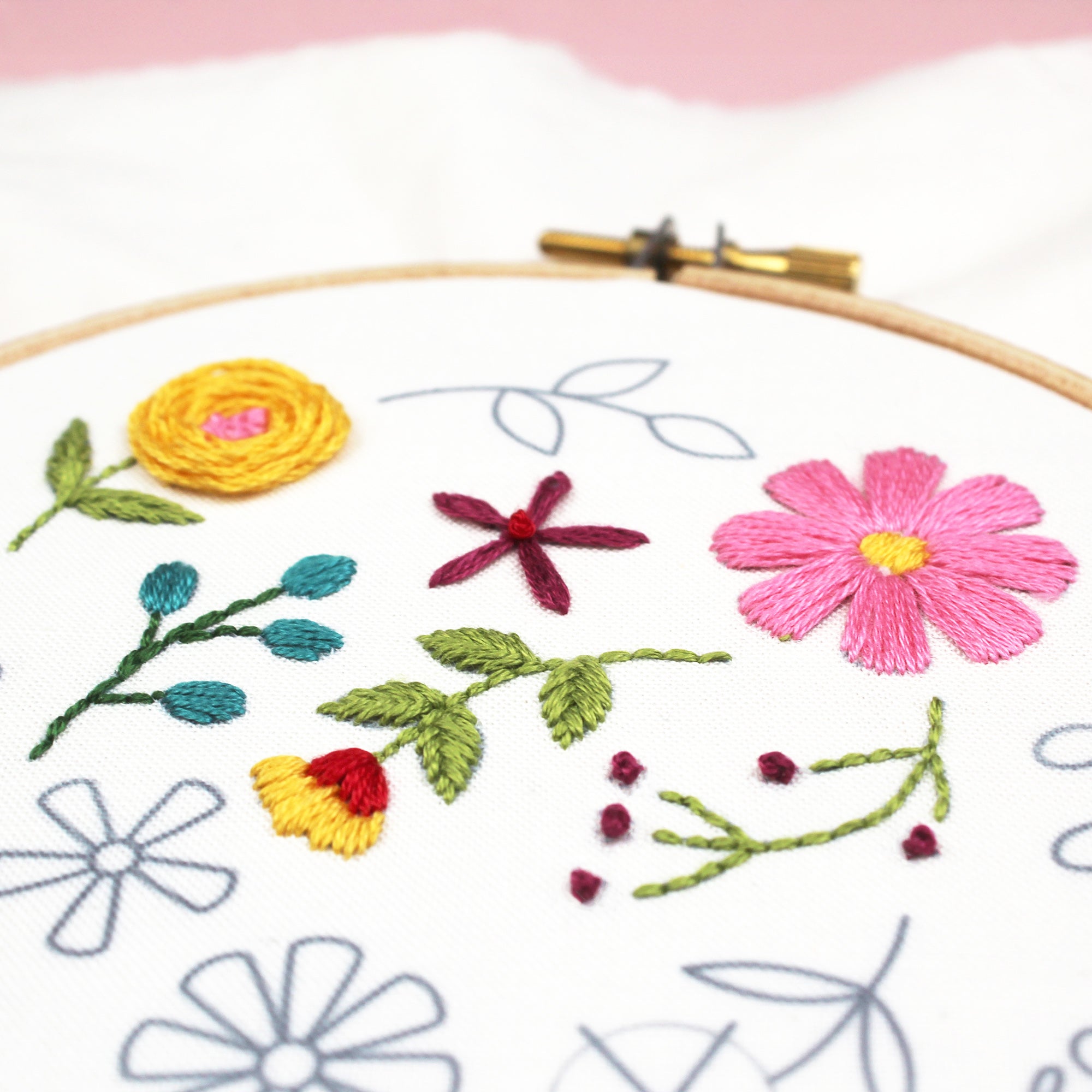
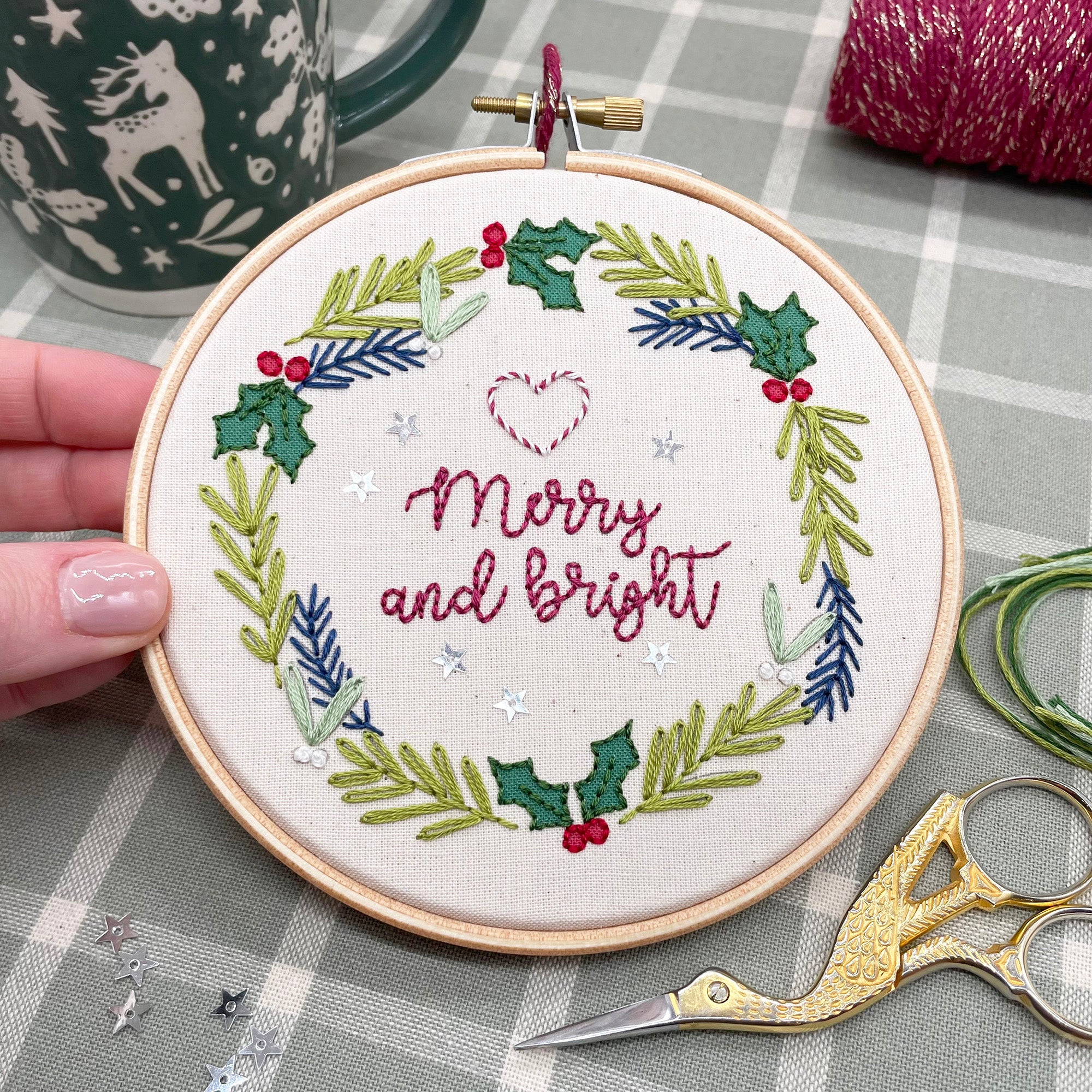
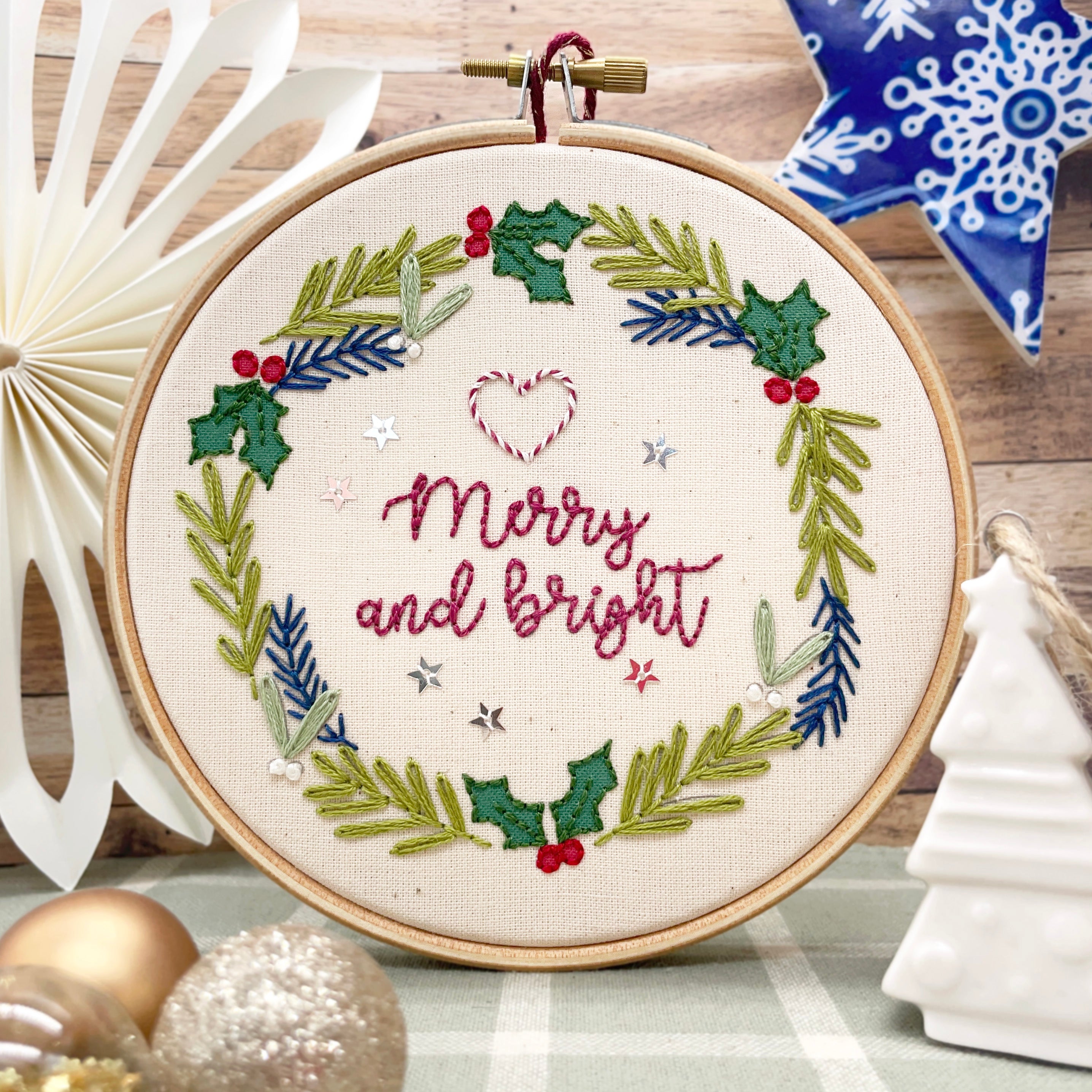
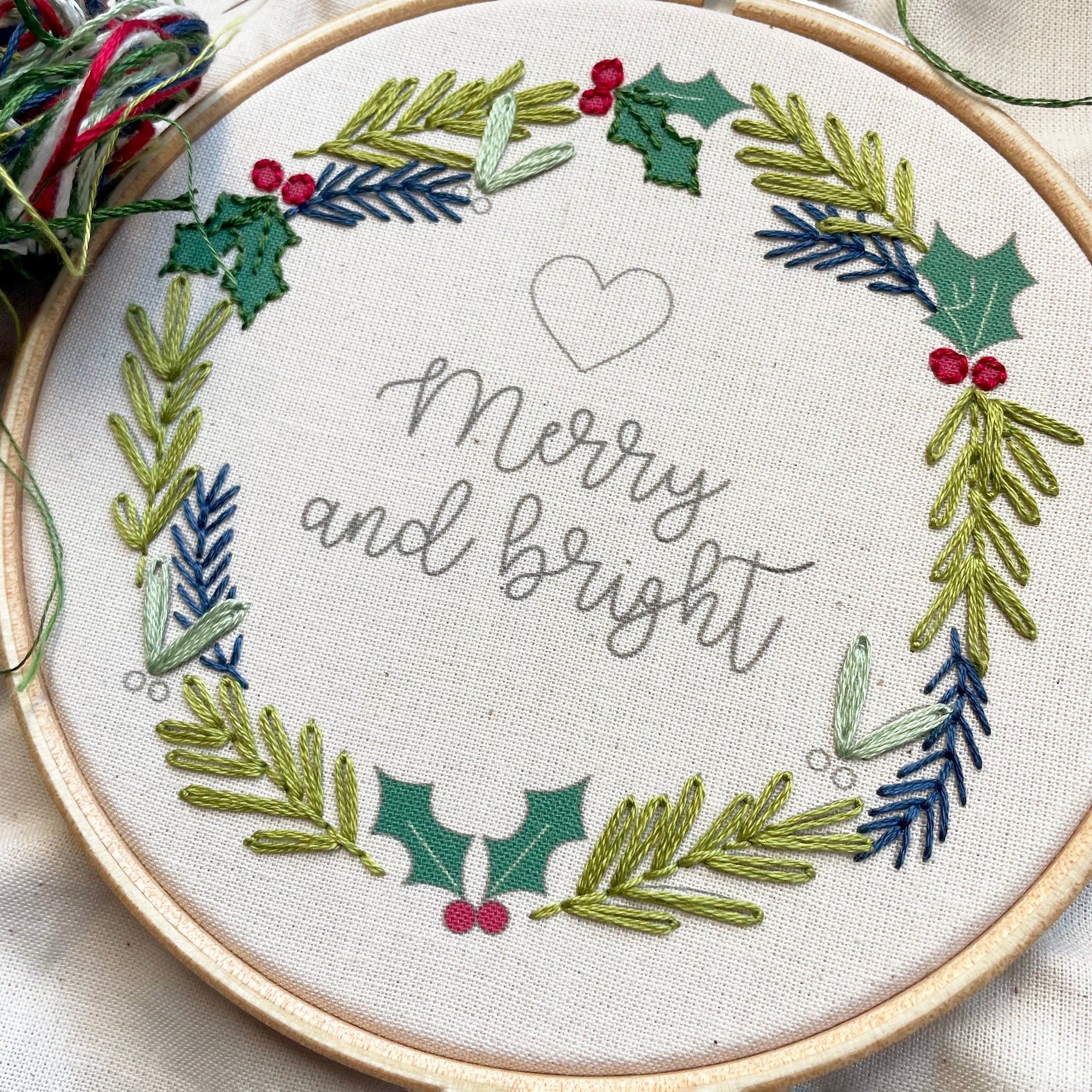
Raised fishbone stitch is a textured filling stitch used to create neat, slightly raised leaves and petals. You start with a single central stitch, then work alternating angled stitches from side to side across the centre line until the shape is filled.

How to do raised fishbone stitch (step-by-step)
- Start with a simple leaf outline (or draw one lightly on your fabric) so you have a shape to fill.
- Bring your needle up at the top centre of the leaf and make a single vertical stitch down the middle of the leaf shape (1).
- Bring the needle up on the left edge of the leaf, slightly below the top. Take it down on the centre line, crossing over the vertical stitch (2).
- Bring the needle up on the right edge of the leaf, slightly lower than the last stitch. Take it down on the centre line, crossing over the centre again (3).
- Continue placing stitches alternating from left to right, then right to left, always crossing the centre line, until the leaf shape is filled.
As you work, try to keep your stitches evenly spaced and angled so the edges of the leaf stay smooth. The stitches should overlap slightly along the centre line, which is what creates the raised effect.
More about raised fishbone stitch
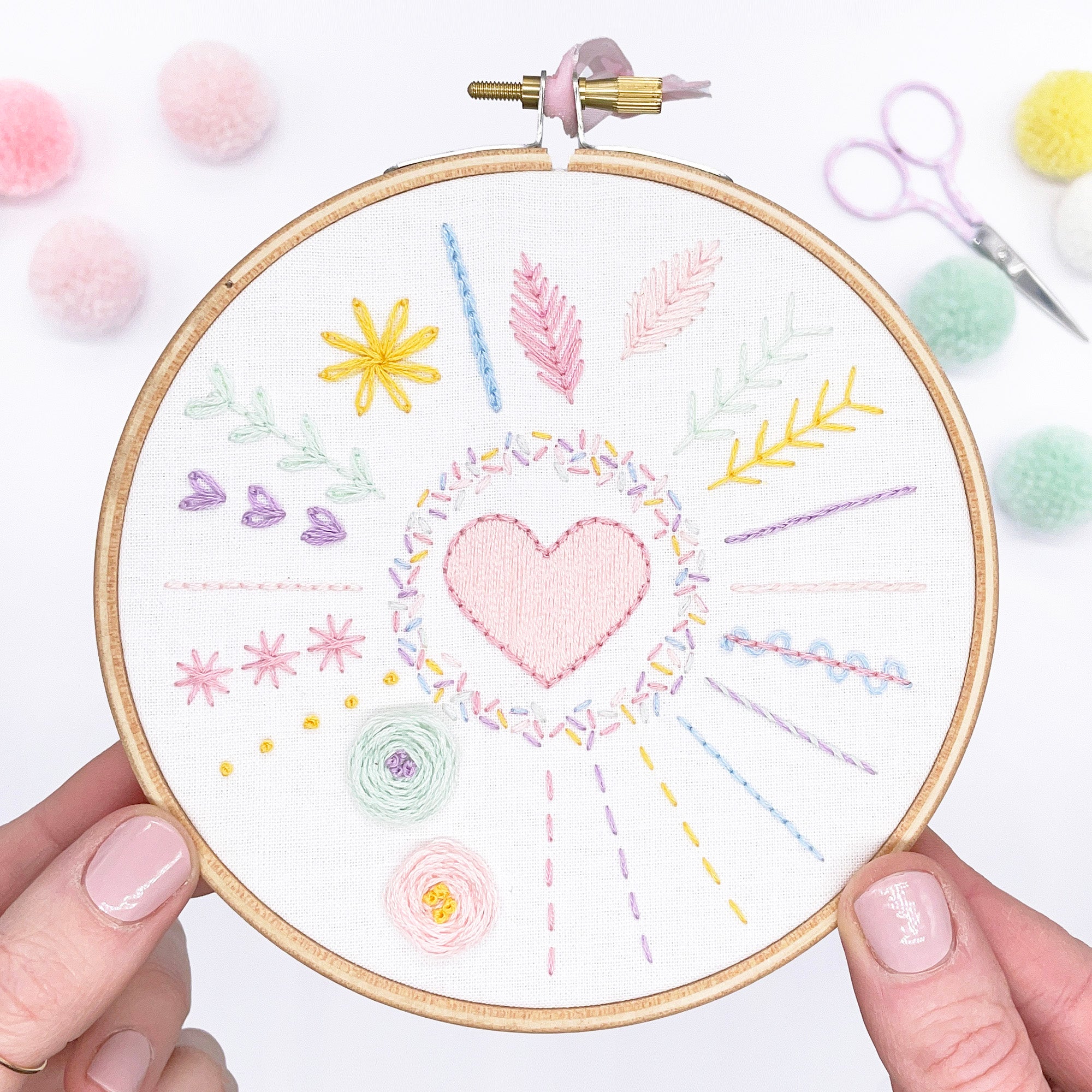
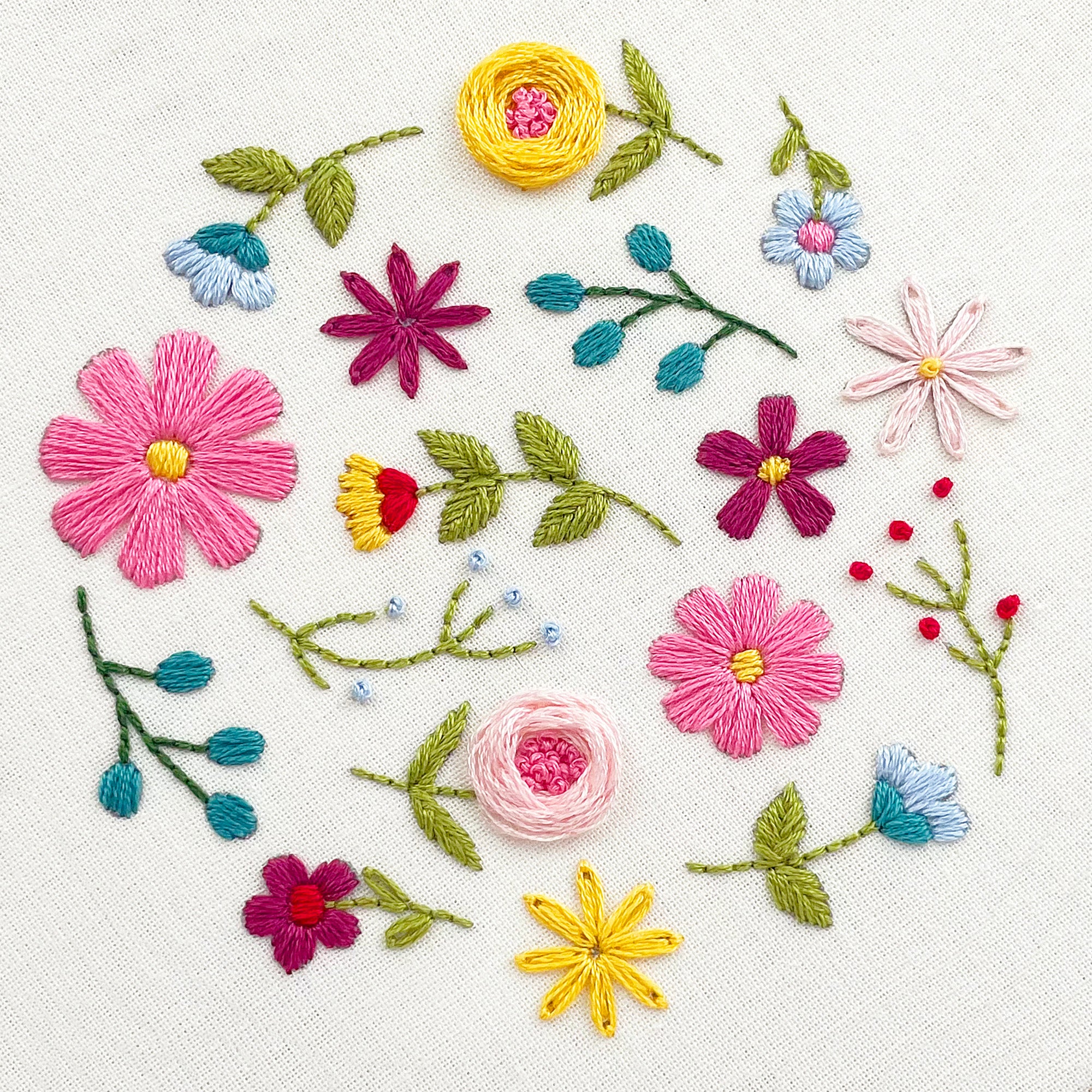
This stitch is a lovely choice for botanical embroidery because it fills shapes quickly and adds texture without needing lots of different stitches. It works best on small to medium leaf shapes and looks especially nice when stitched in a softly variegated thread.
You can make the centre line stand out more by using a slightly thicker thread for the initial vertical stitch, or keep everything the same thickness for a smoother look.
Ready to practise raised fishbone stitch?
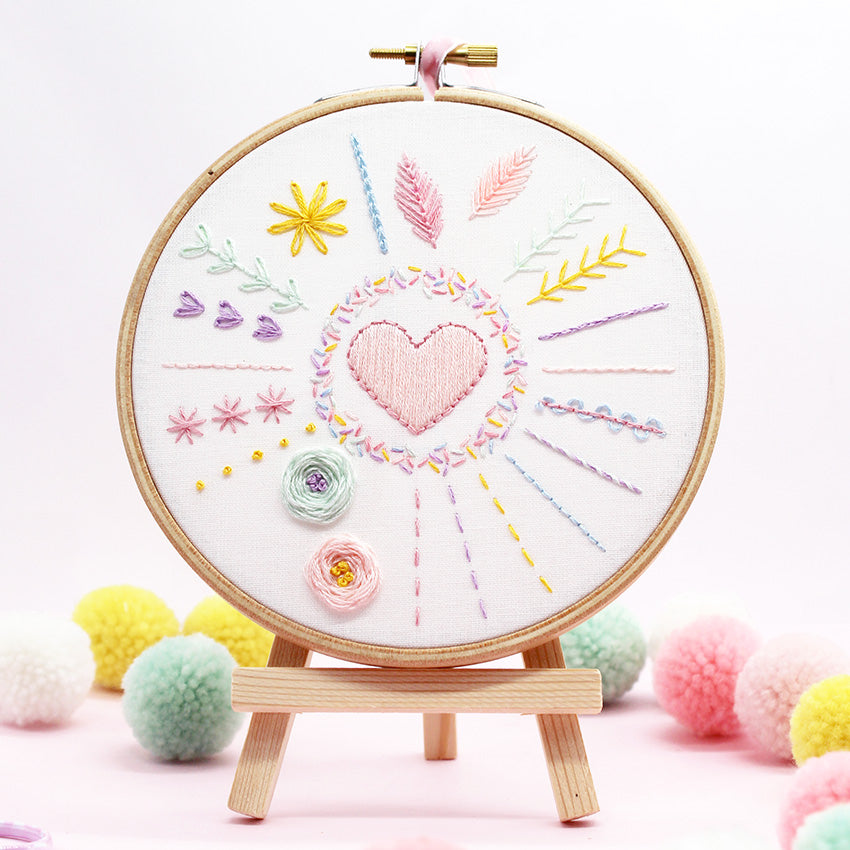
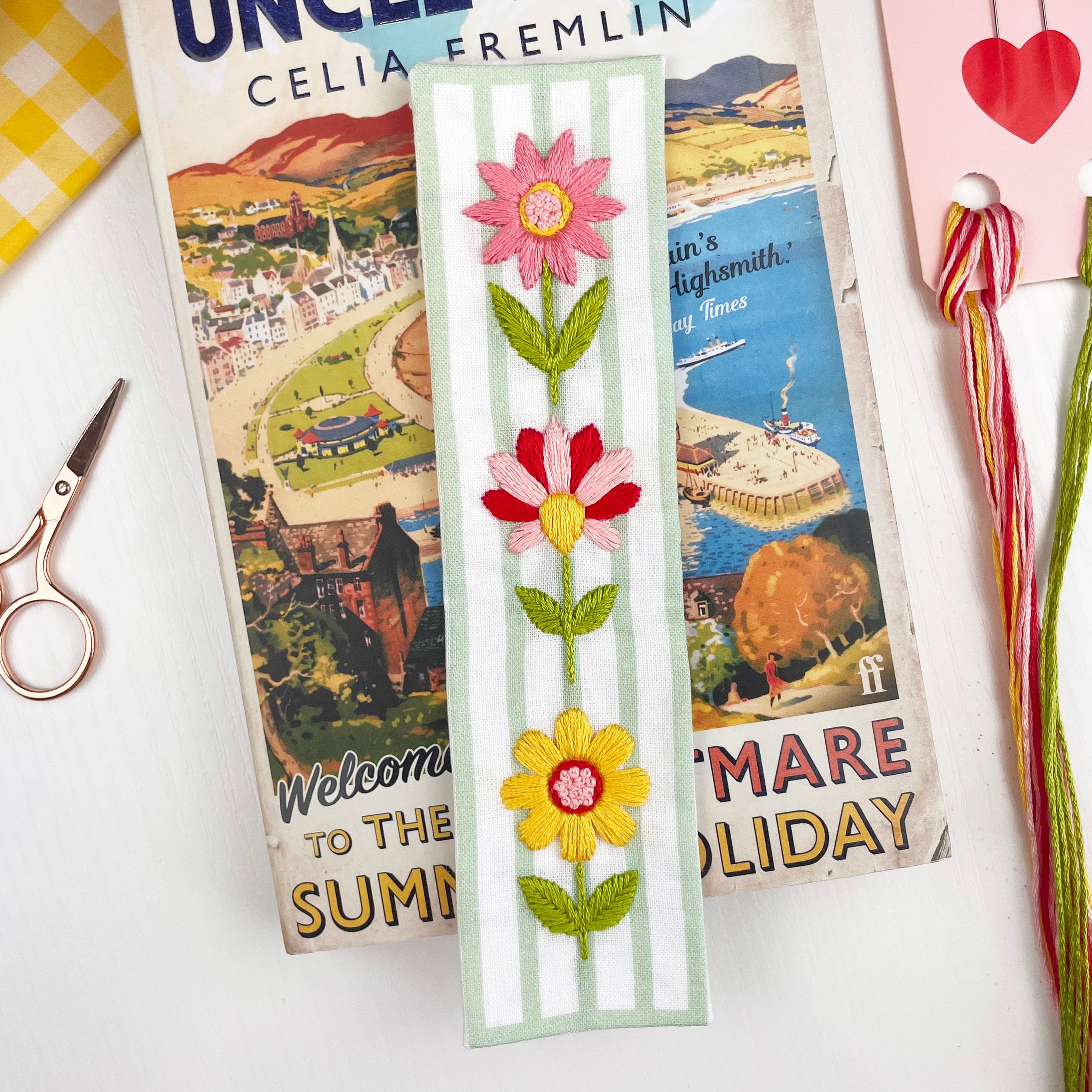
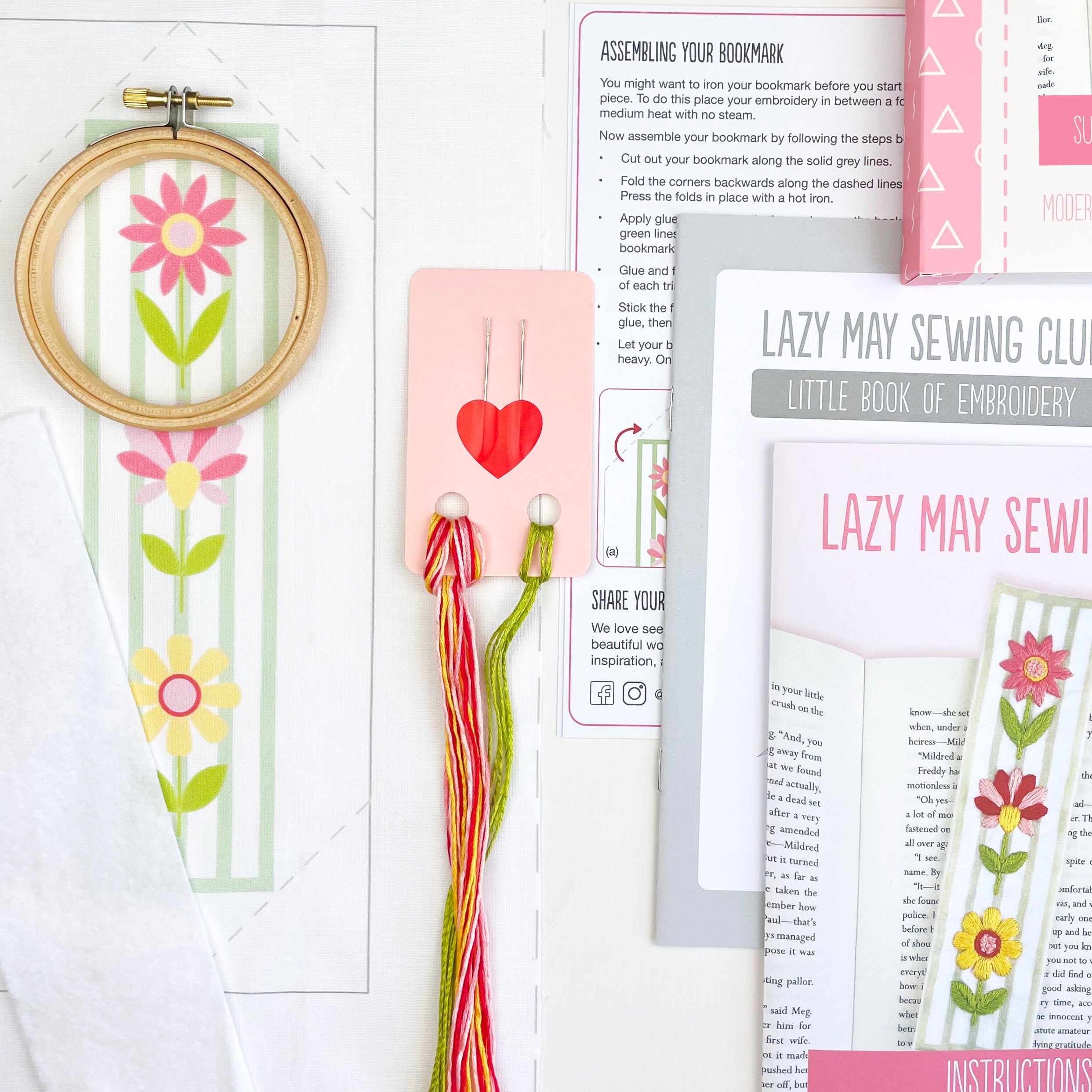
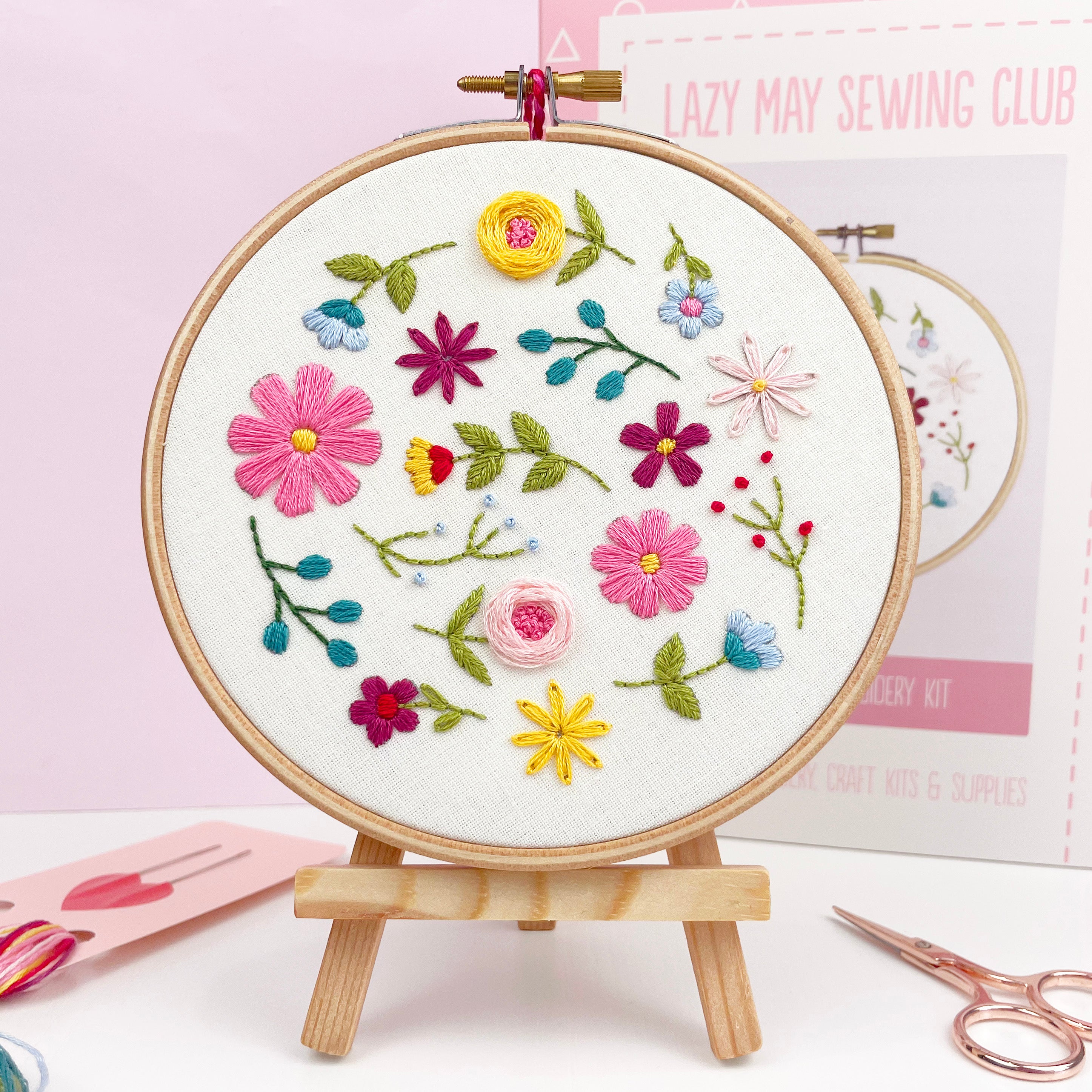
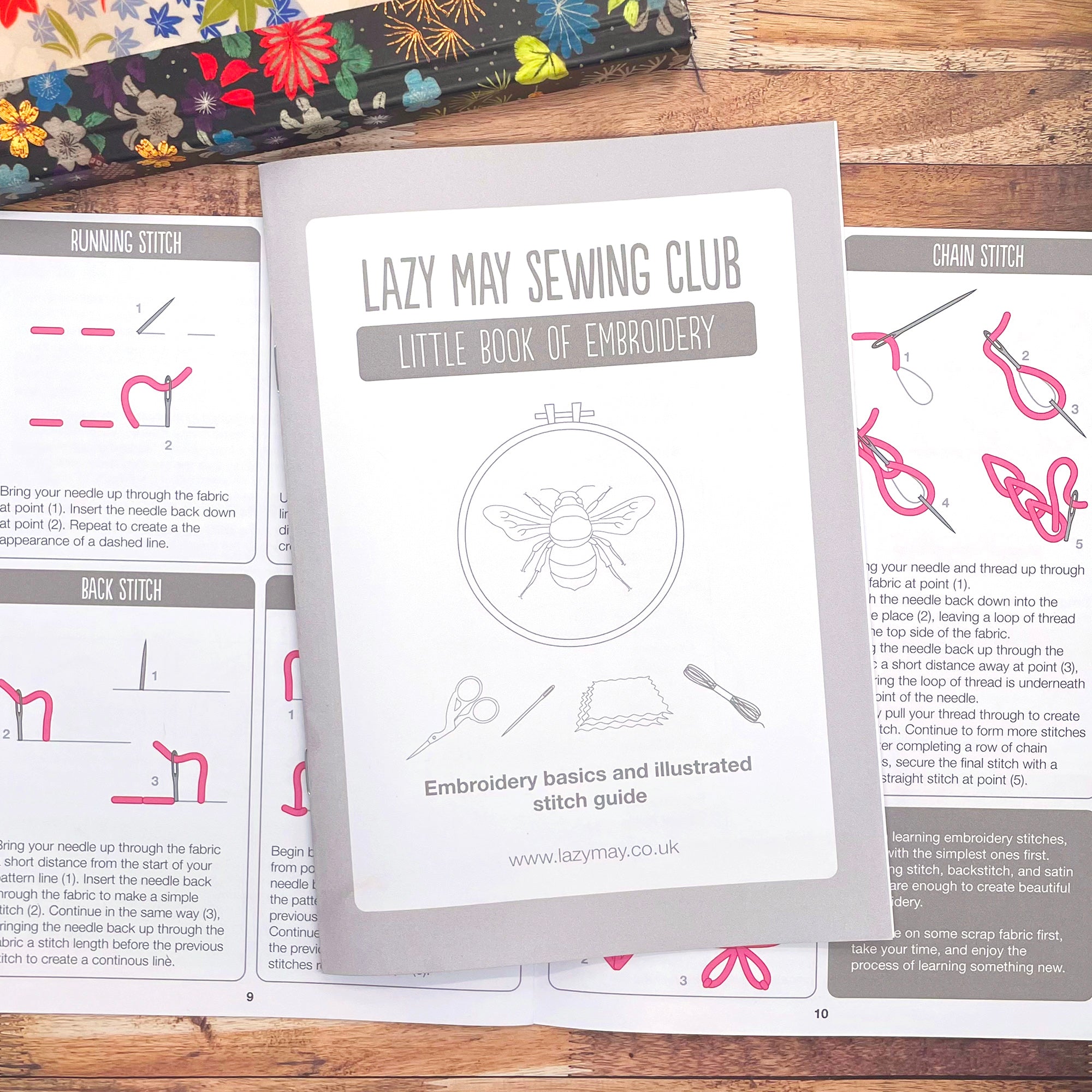
If you would like a project to try raised fishbone stitch on, I have a range of embroidery kits and patterns that include leafy shapes and simple botanical details.
Tips for raised fishbone stitch
- Make the first vertical stitch straight and centred, as this sets the shape for the rest of the filling.
- Always cross the centre line with each stitch to build the raised, layered look.
- Keep the stitch angle consistent so both sides of the leaf look even.
- If your leaf edge looks bumpy, bring your needle up closer to the outline on the next stitch.
- This stitch works best for leaves and petals, rather than large open areas.