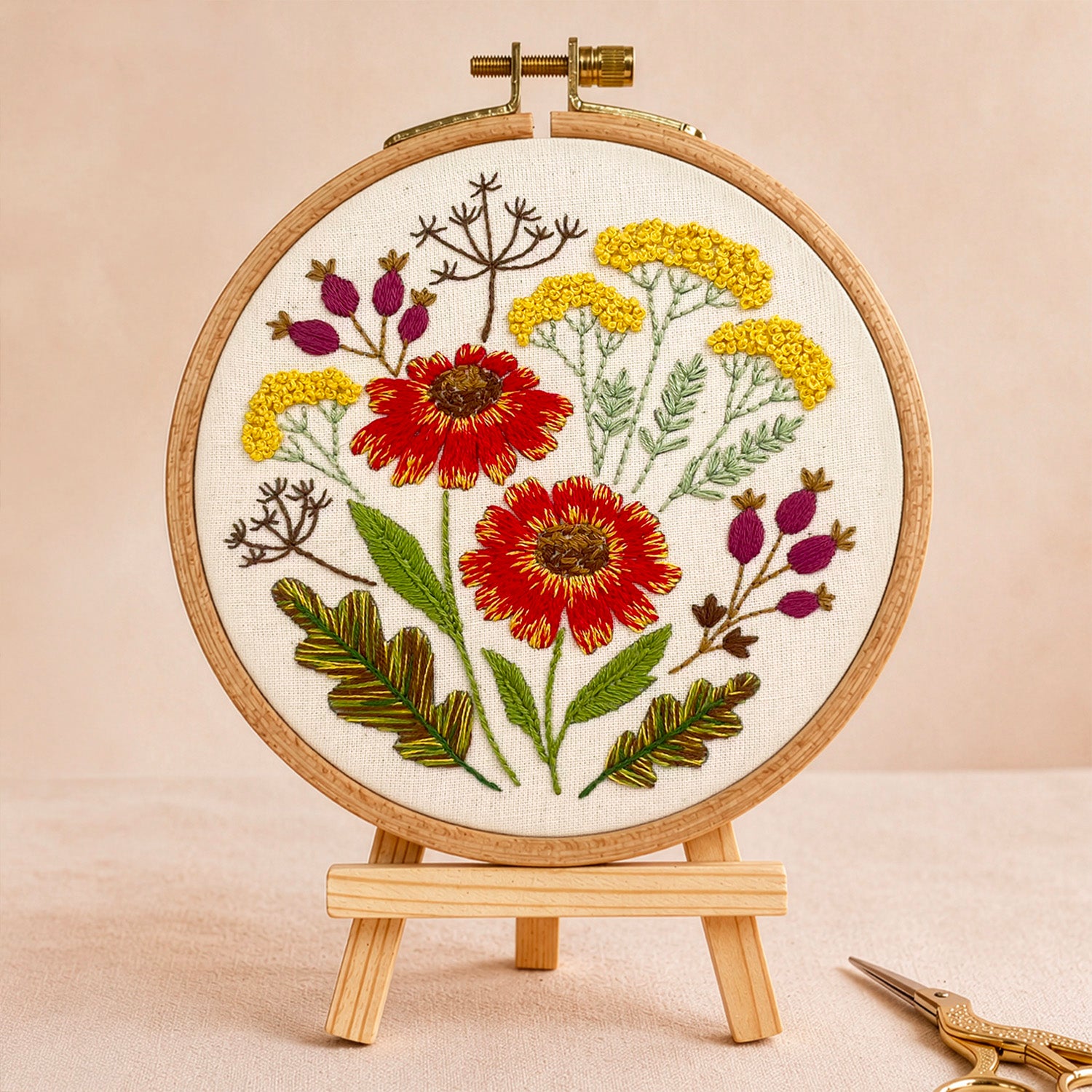
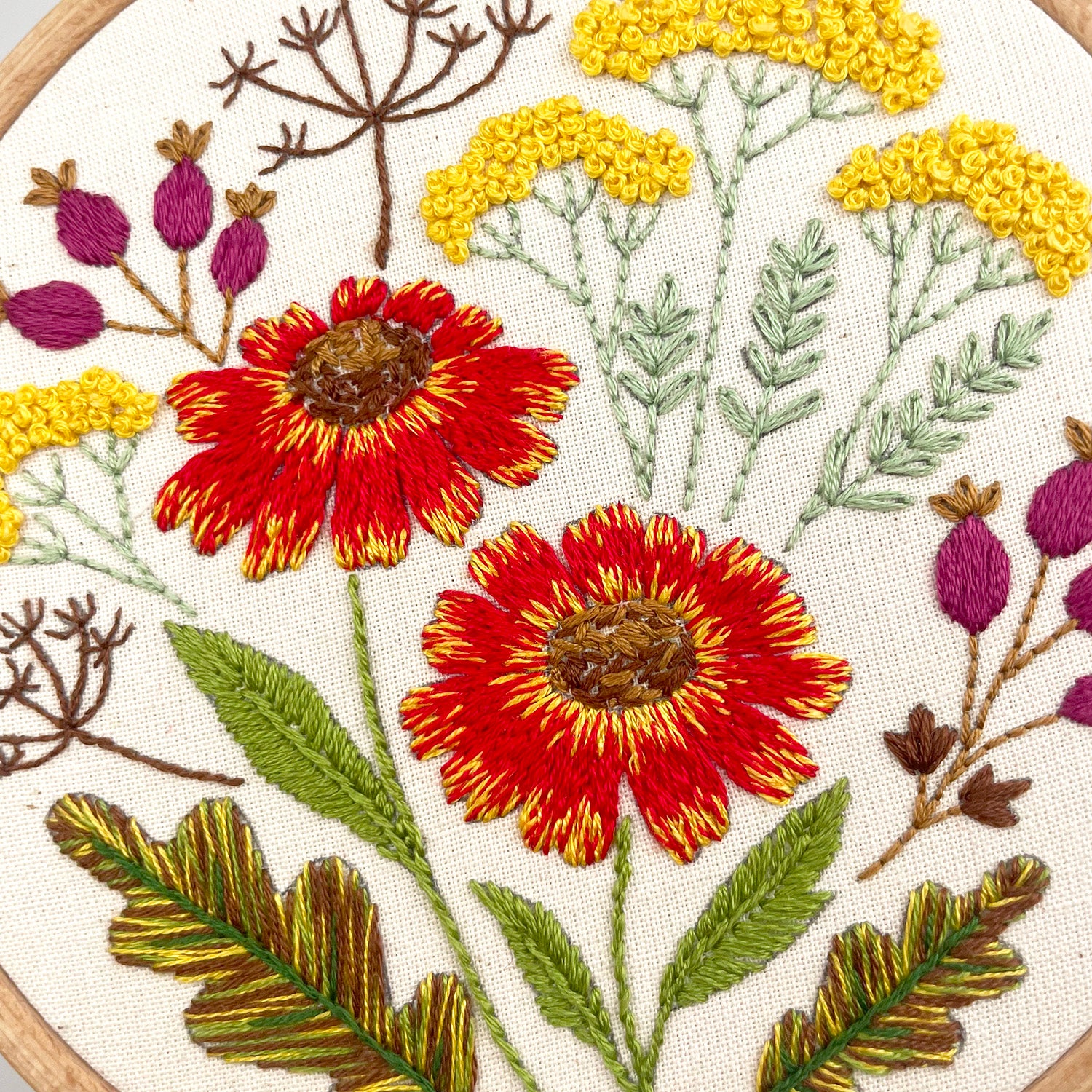
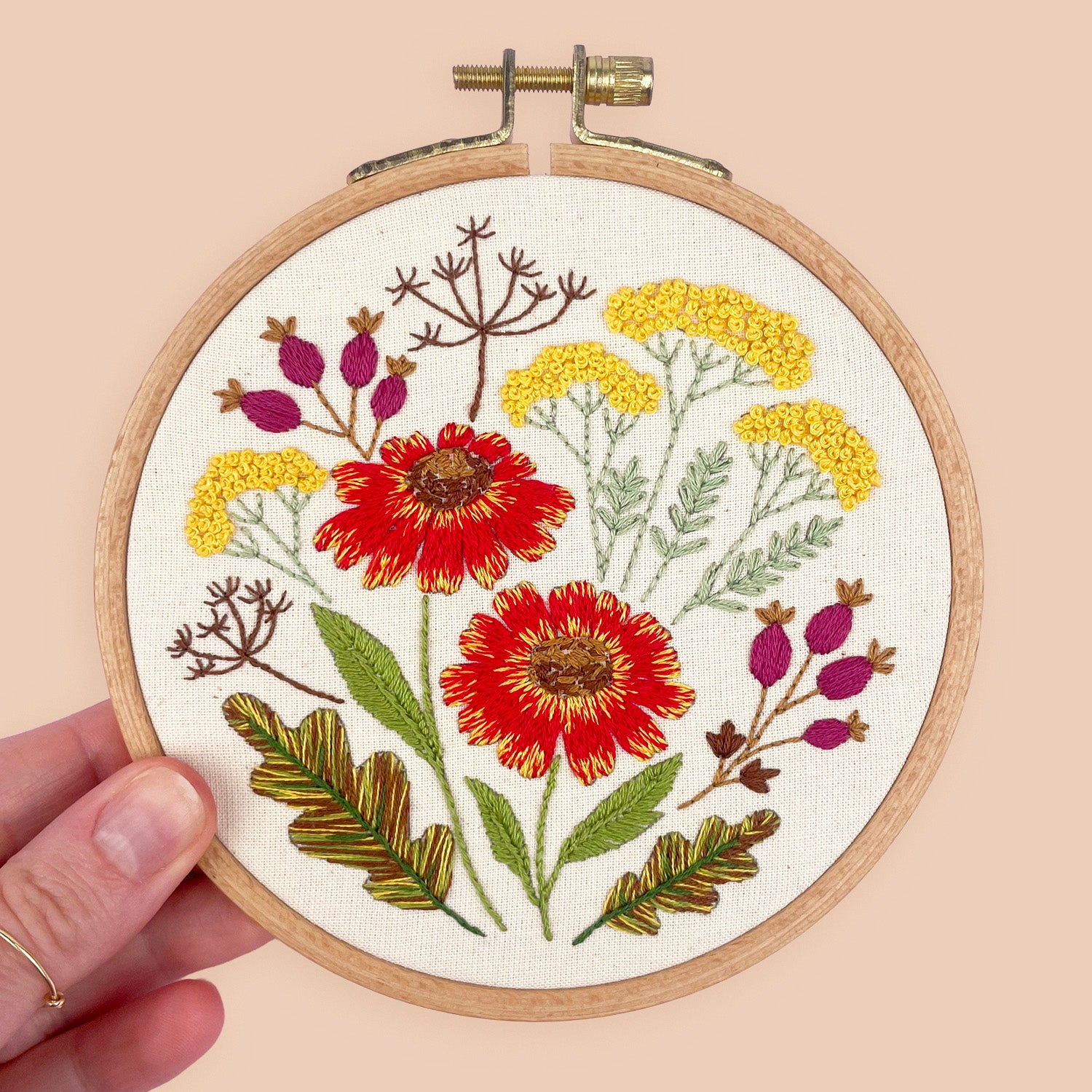
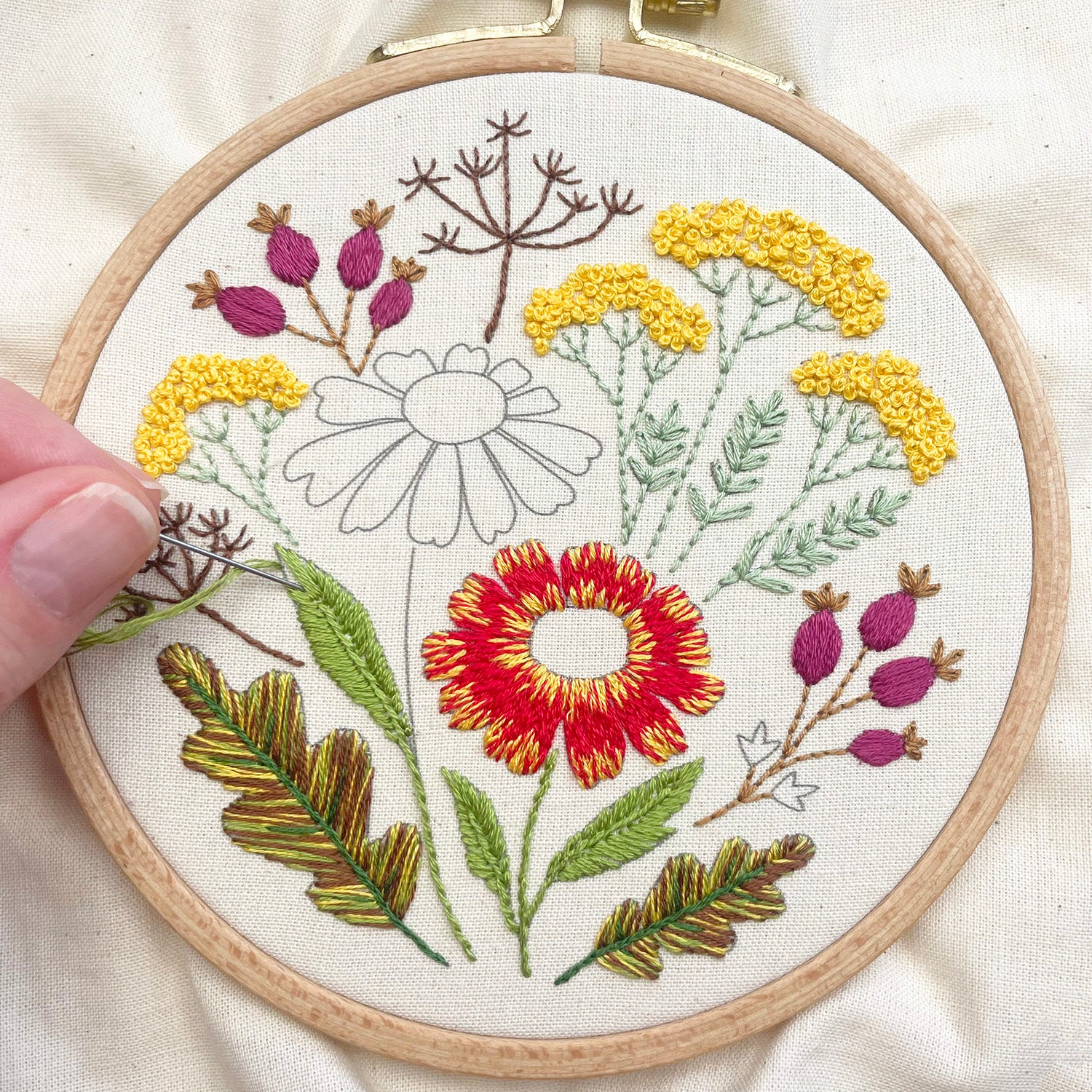
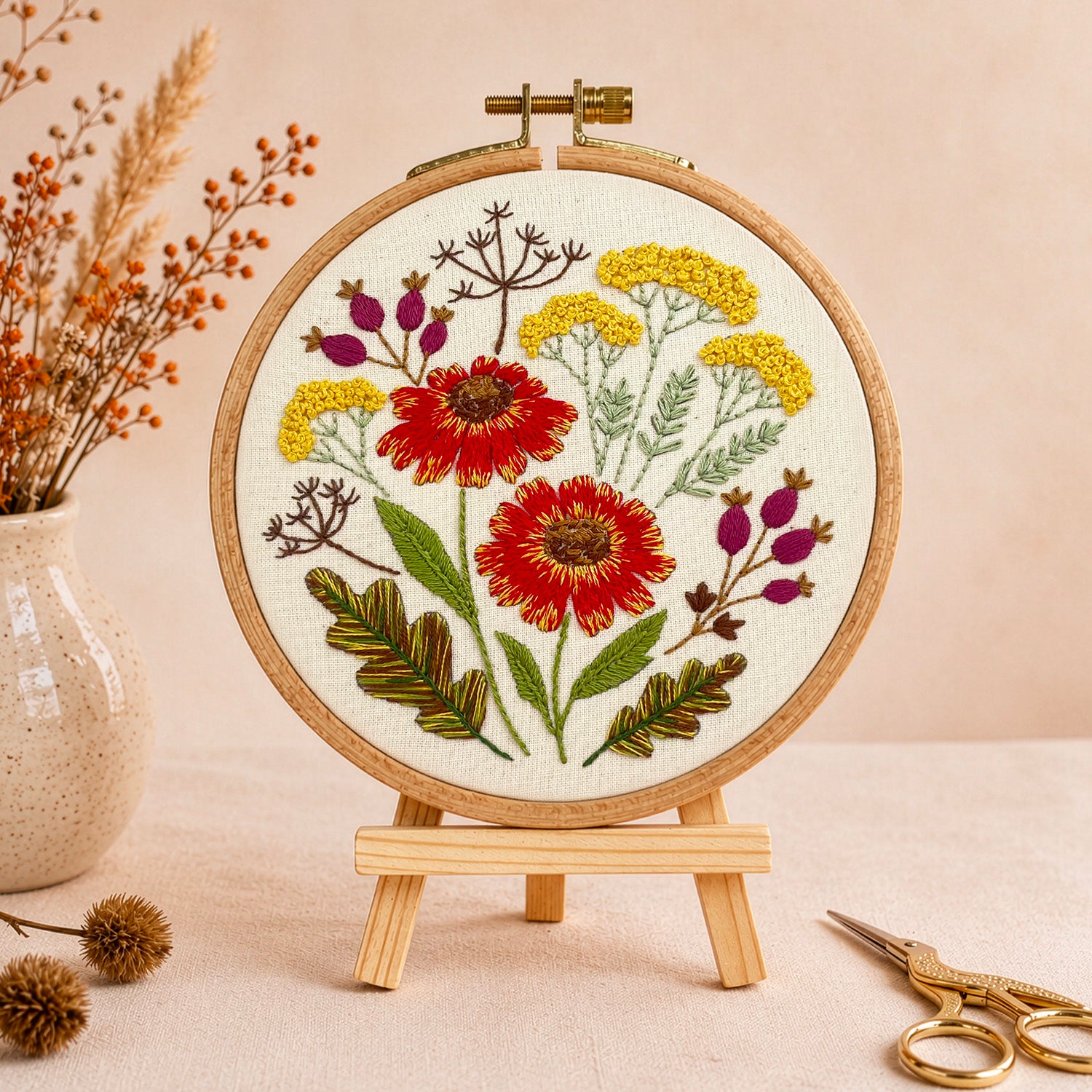
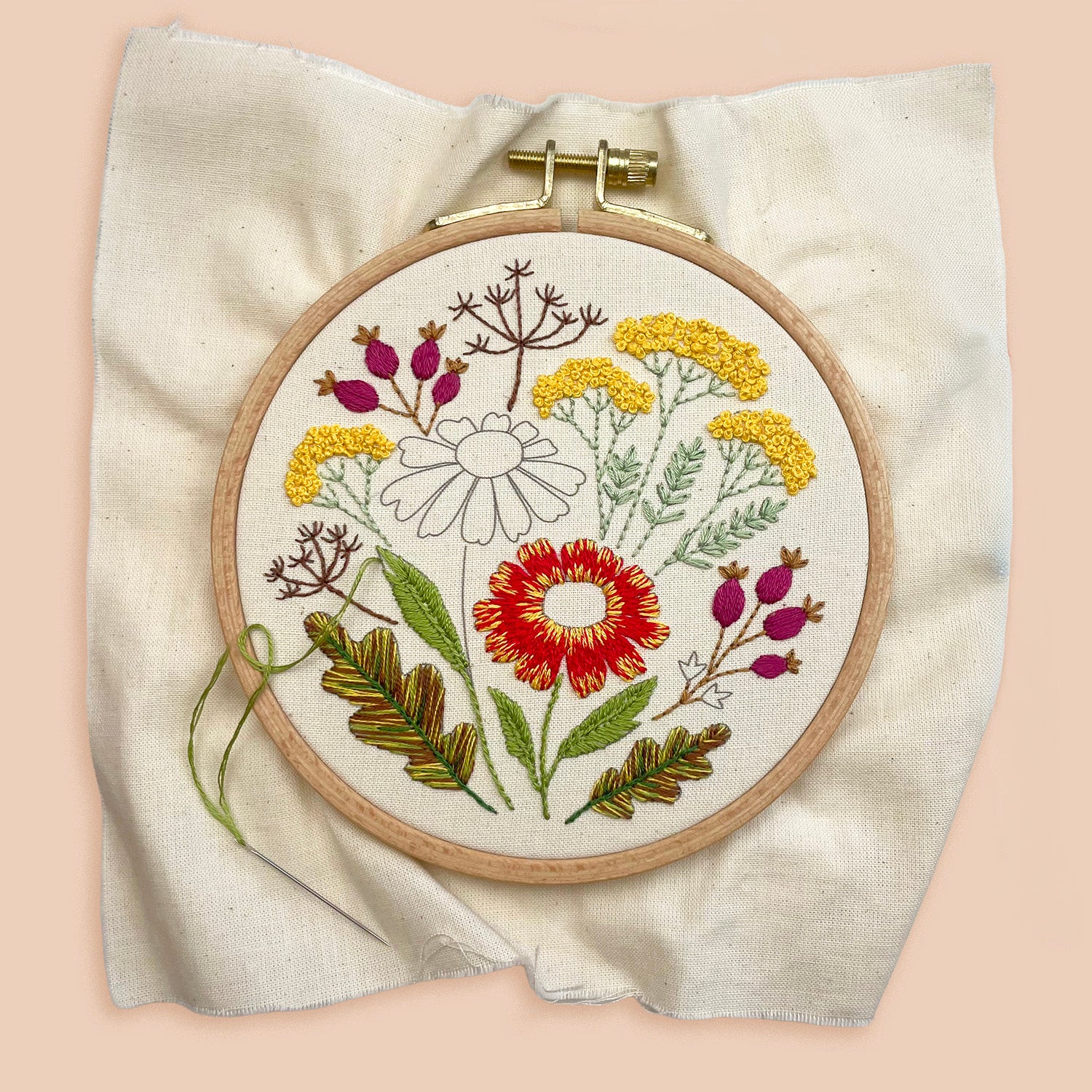
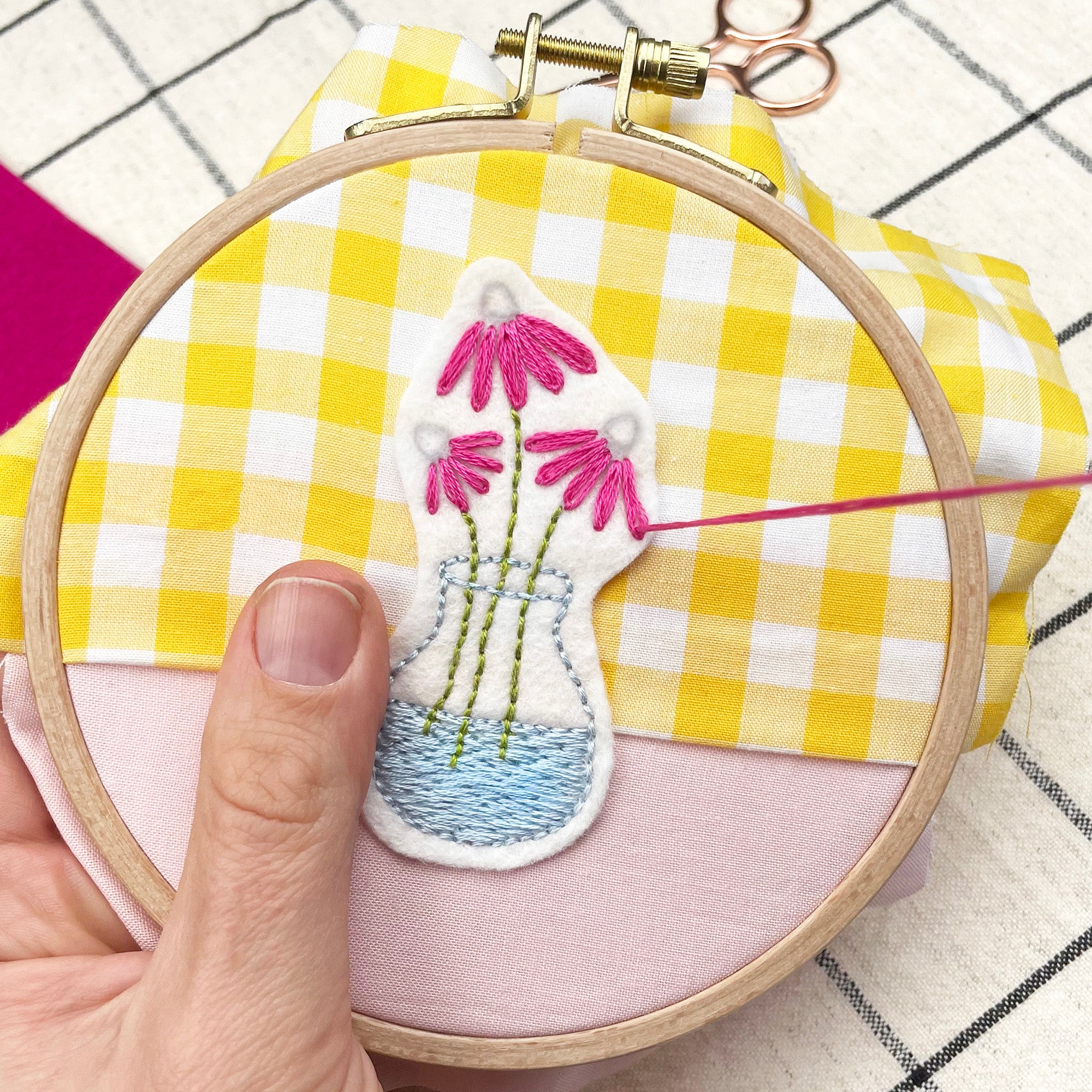
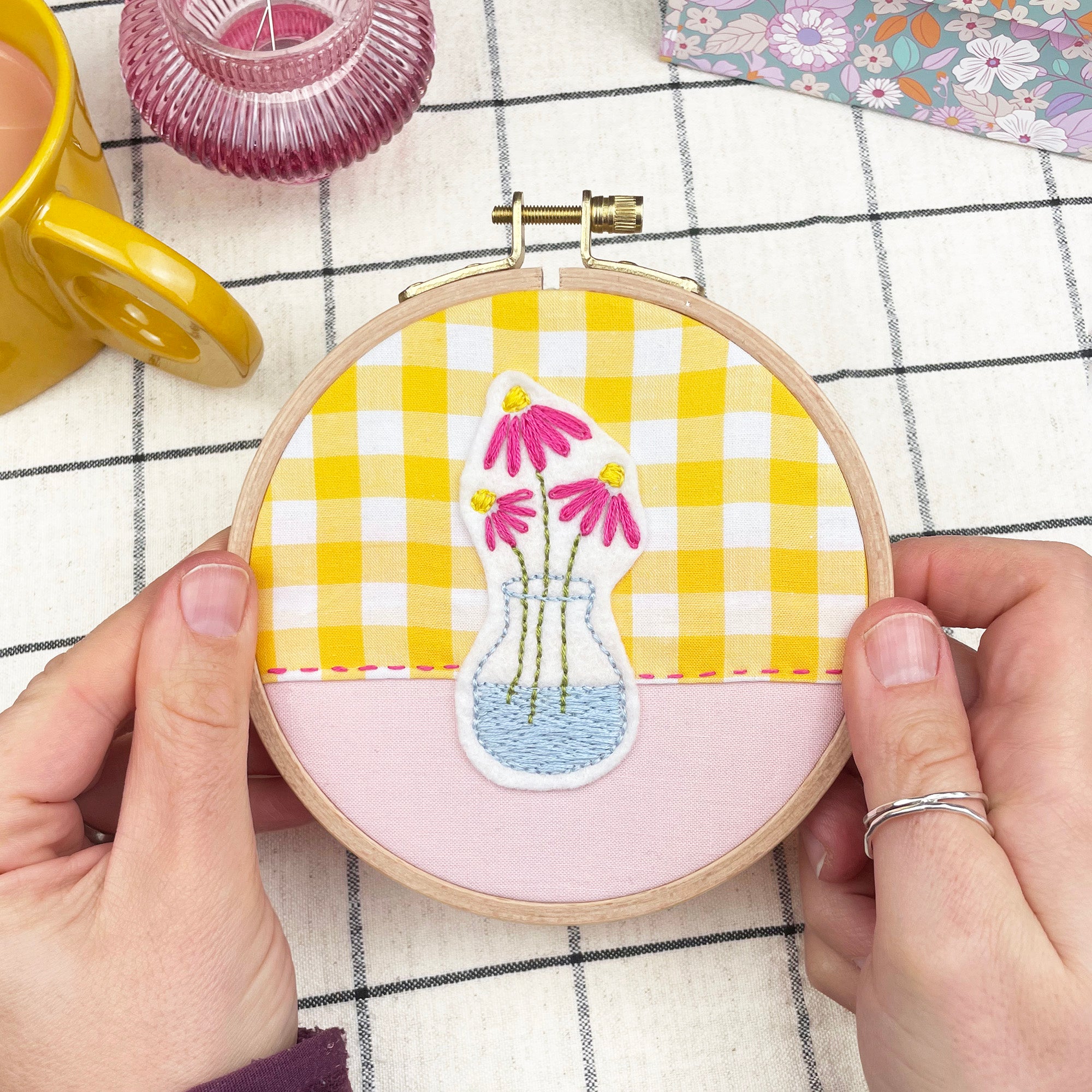
Long and short stitch is a classic embroidery filling stitch used to create smooth colour shading and realistic texture. It is often used for petals, leaves, animals and portraits, and is ideal when you want a soft, blended finish rather than a solid block of colour.

How to do long and short stitch (step-by-step)
- Transfer your design and outline the shape you want to fill, if needed.
- Bring the needle up at the edge of the shape and make your first stitch straight down into the fabric.
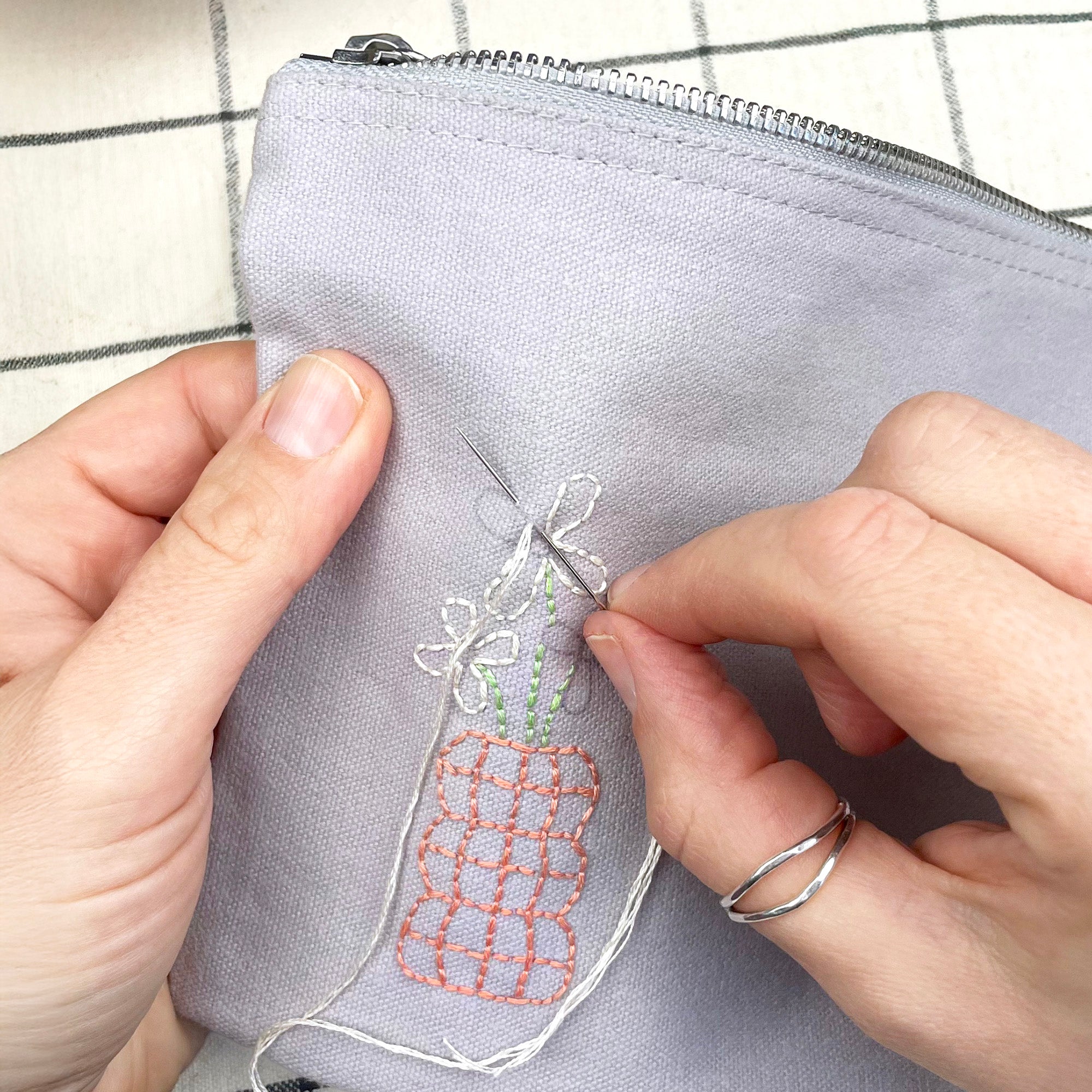
- Work a row of stitches along the edge, alternating between slightly longer and slightly shorter stitches (see 1).
- Keep the ends of the stitches uneven rather than forming a straight line.
- Continue filling the shape by stitching into the gaps created by the first row (see 2).
- Work row by row, keeping the stitches close together so the fabric does not show through (see 3).
The uneven ends of the stitches are what allow the rows to interlock, helping to create a smooth, natural-looking fill.

Blending colours with long and short stitch
Long and short stitch is especially well suited to colour blending. To blend shades smoothly, start with your darkest or lightest colour and work the first few rows using long and short stitch.
When you introduce the next colour, stitch it into the ends of the previous stitches rather than starting a new row. This overlapping helps the colours merge gradually instead of forming harsh lines.
You can blend as many shades as you like by repeating this process, always stitching into the uneven ends of the previous row to soften the transition.
New to embroidery? Start with a beginner-friendly kit
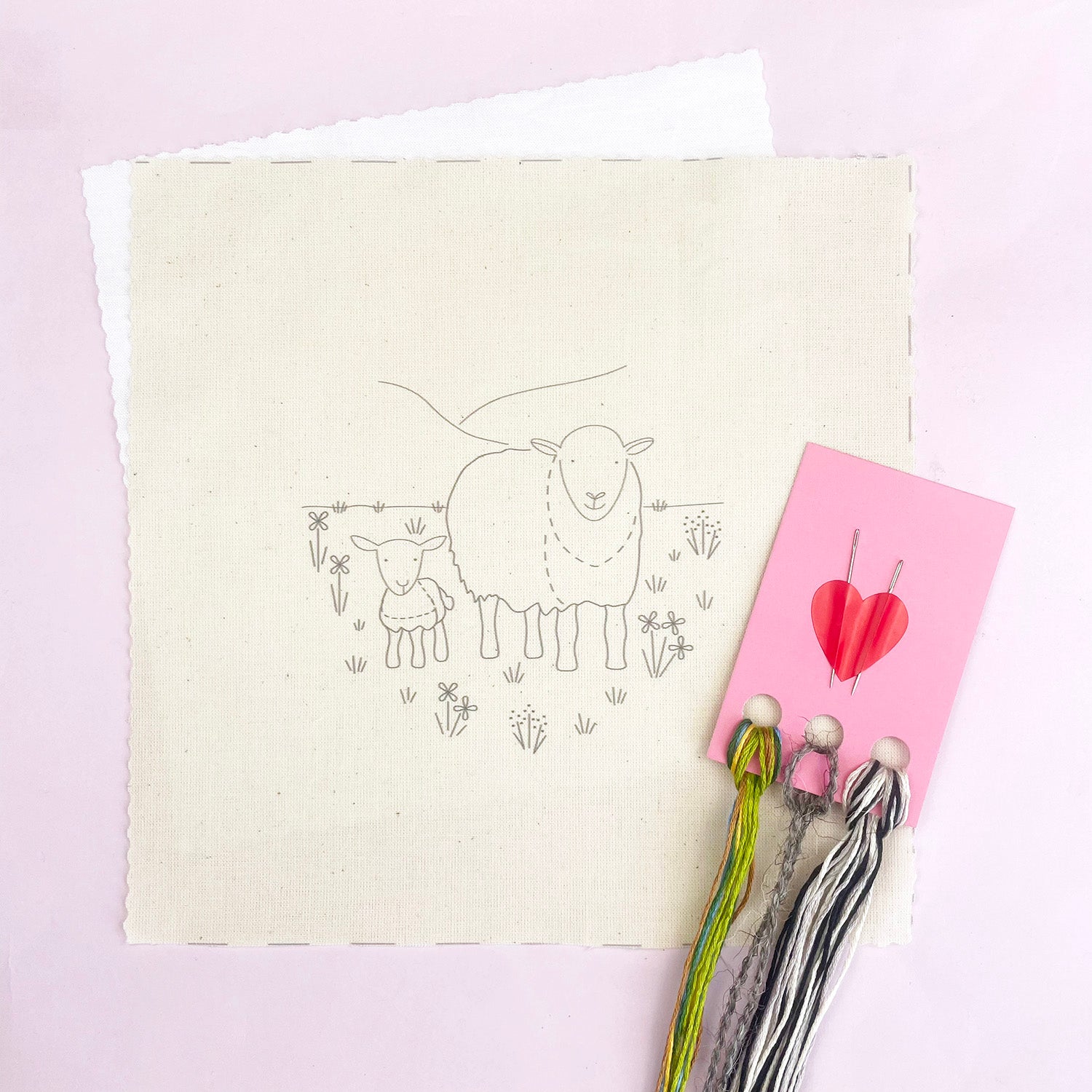
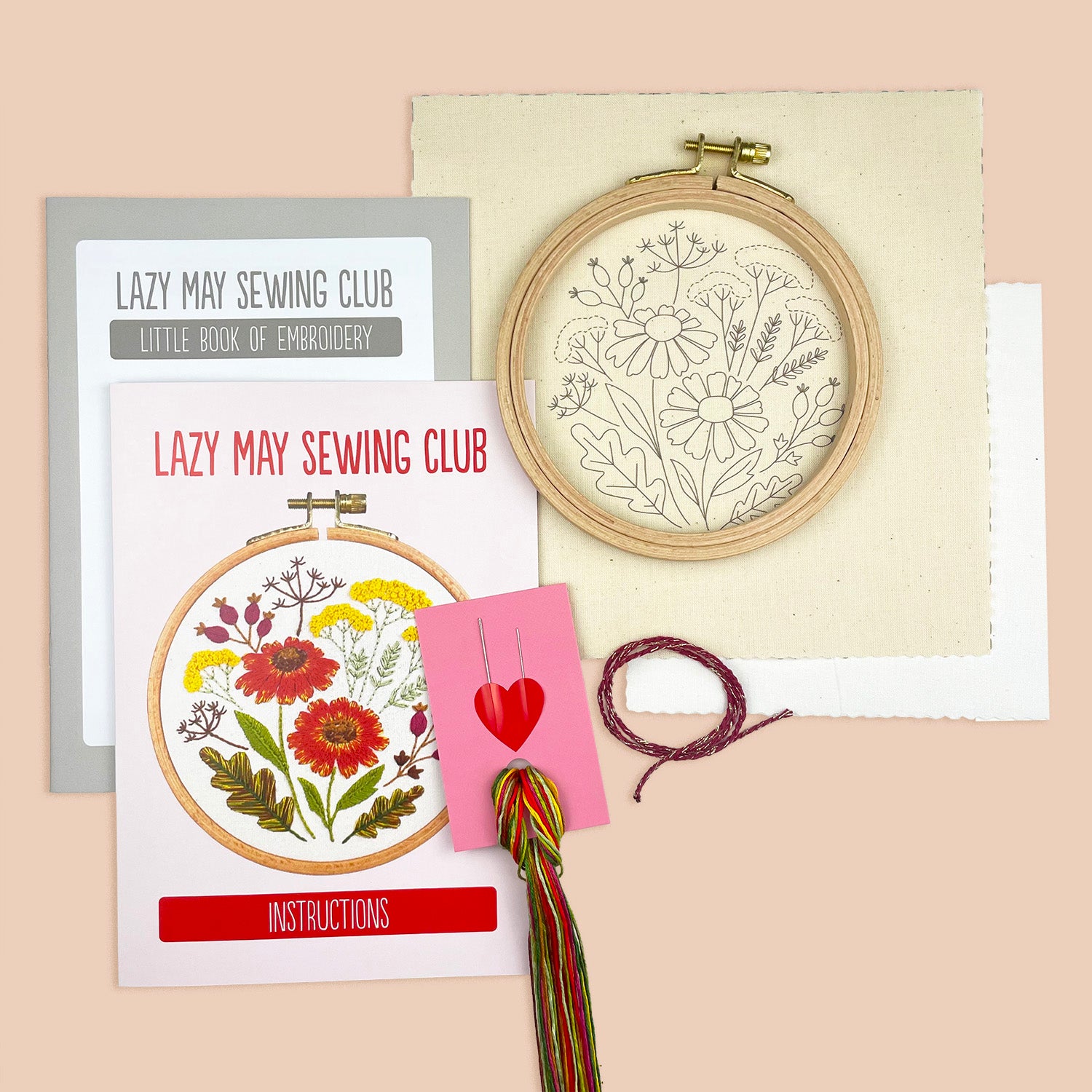
Long and short stitch is a more detailed filling stitch, so if you are still building your confidence, a beginner-friendly kit is a lovely place to start. These embroidery kits include printed fabric, threads, a hoop, needle and clear step-by-step instructions, so you can enjoy stitching without gathering supplies first.

Beginner Stitch Sampler Embroidery Kit
Learn 13 essential embroidery stitches with a calm pastel sampler design, perfect for building confidence and practising each stitch at your own pace.
Shop the sampler kit
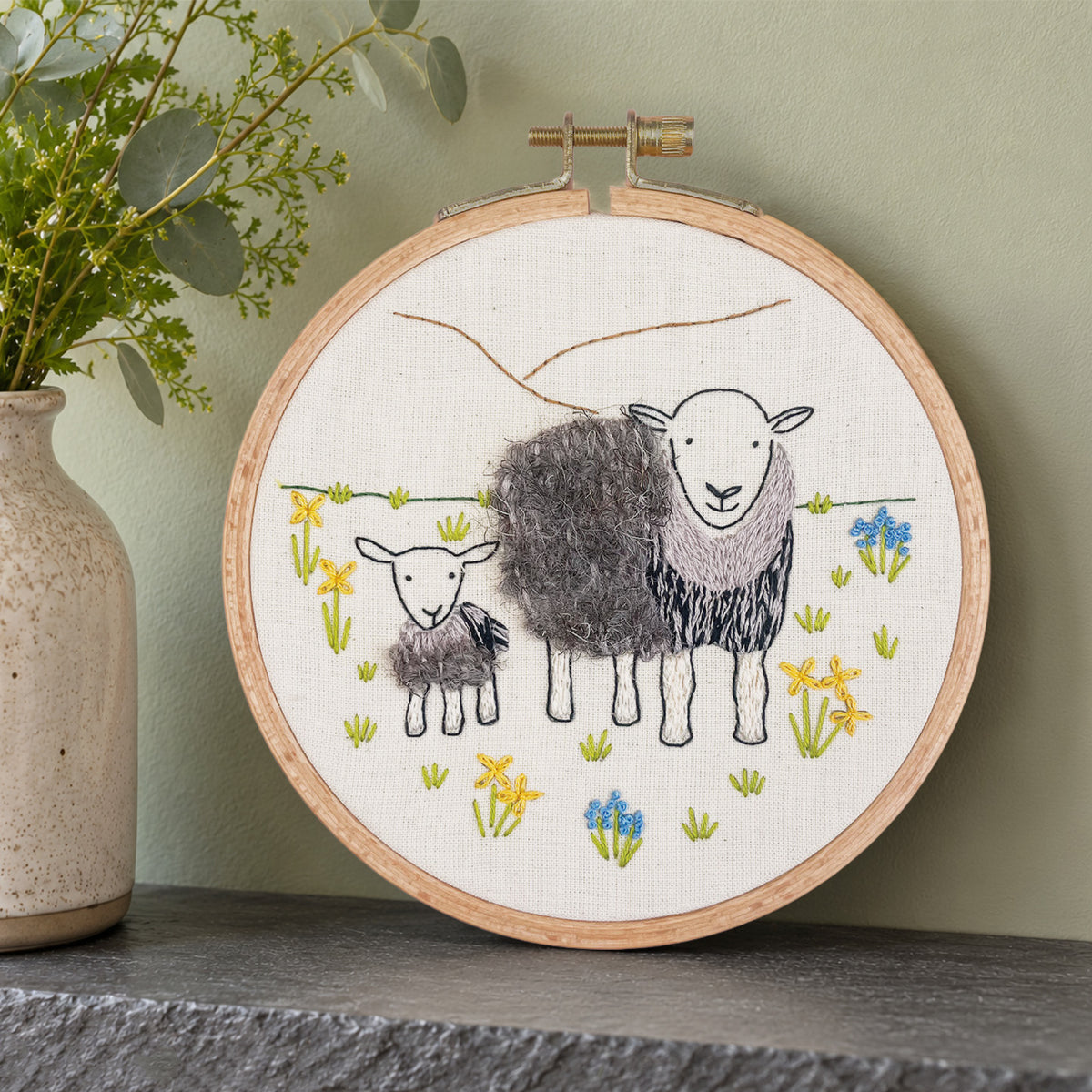
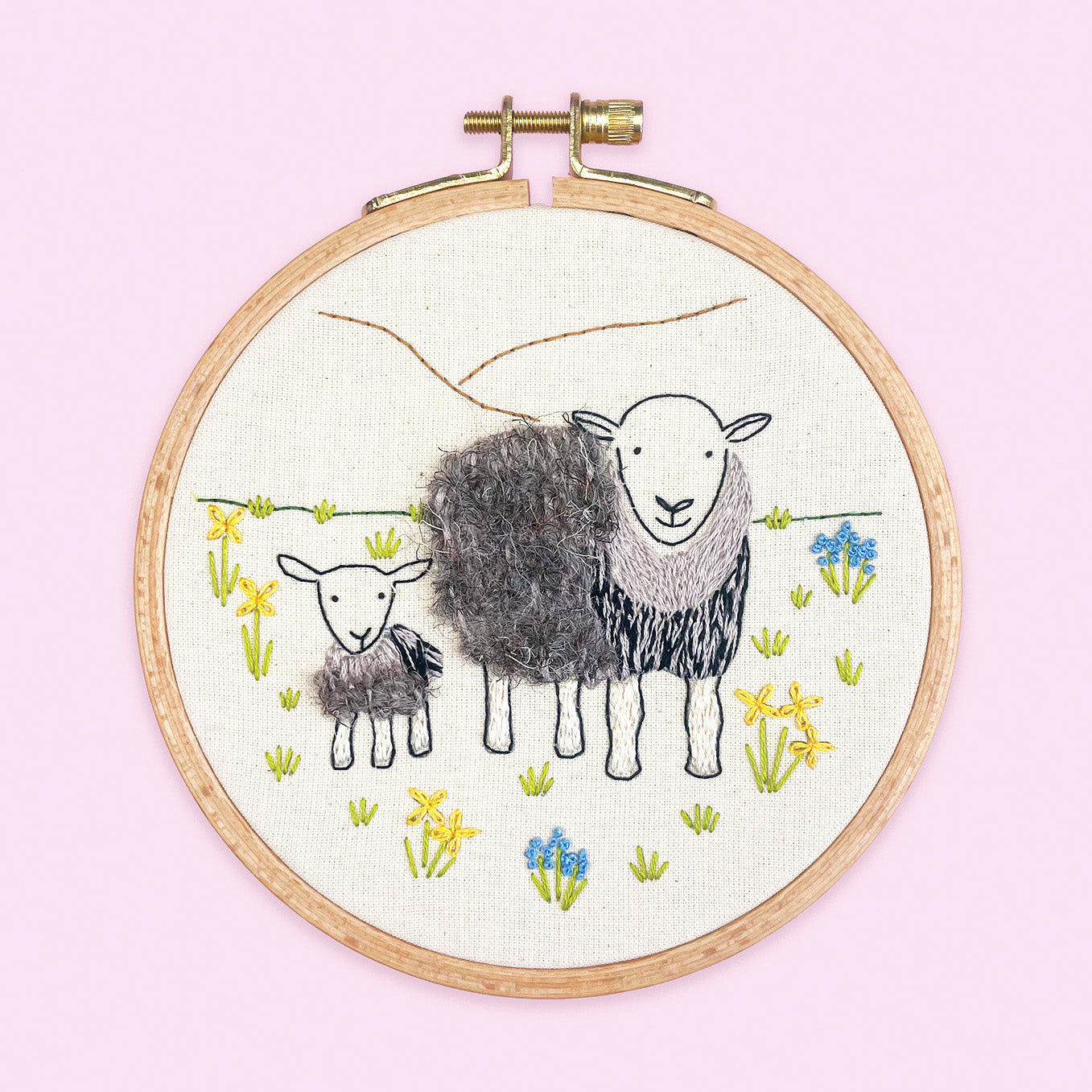
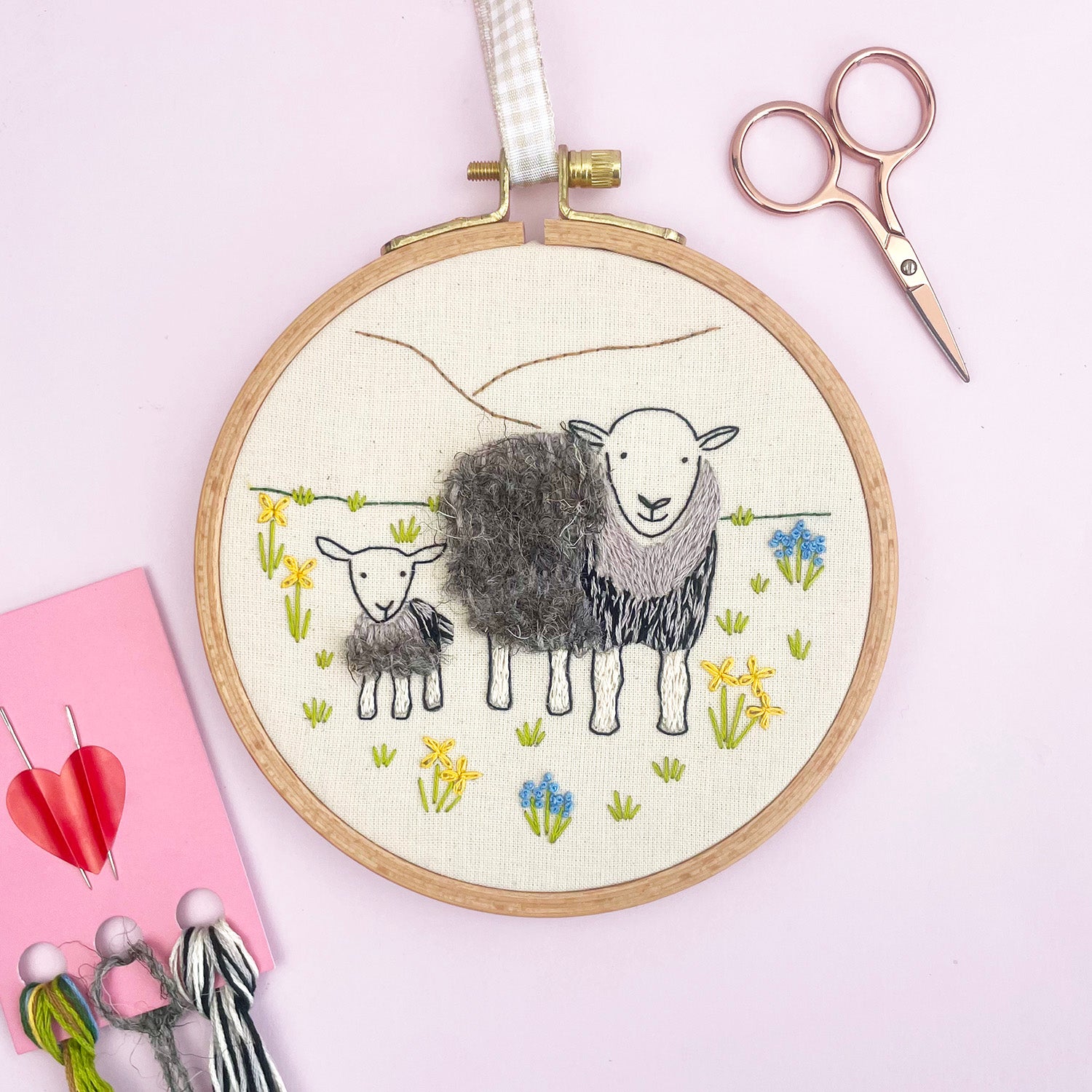
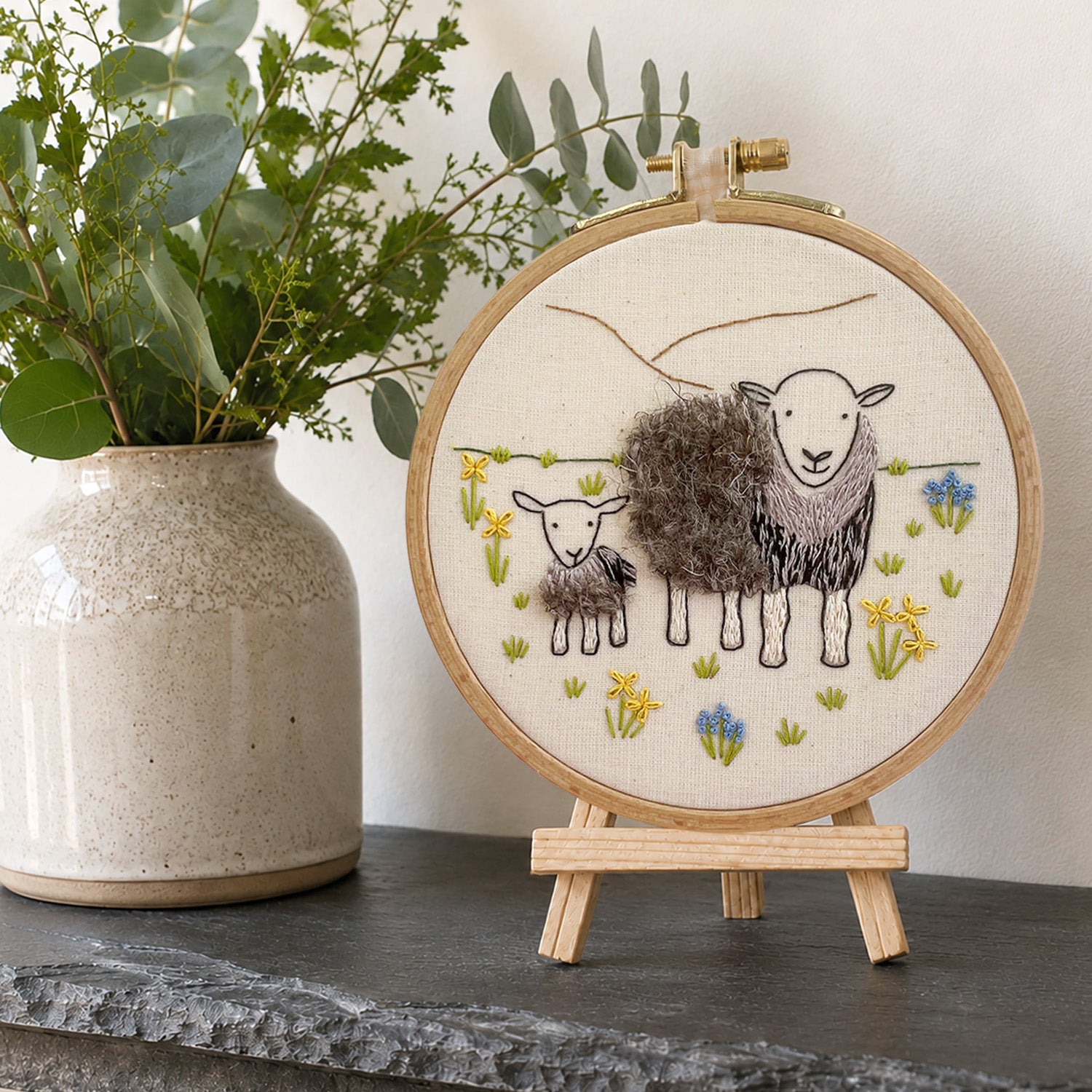
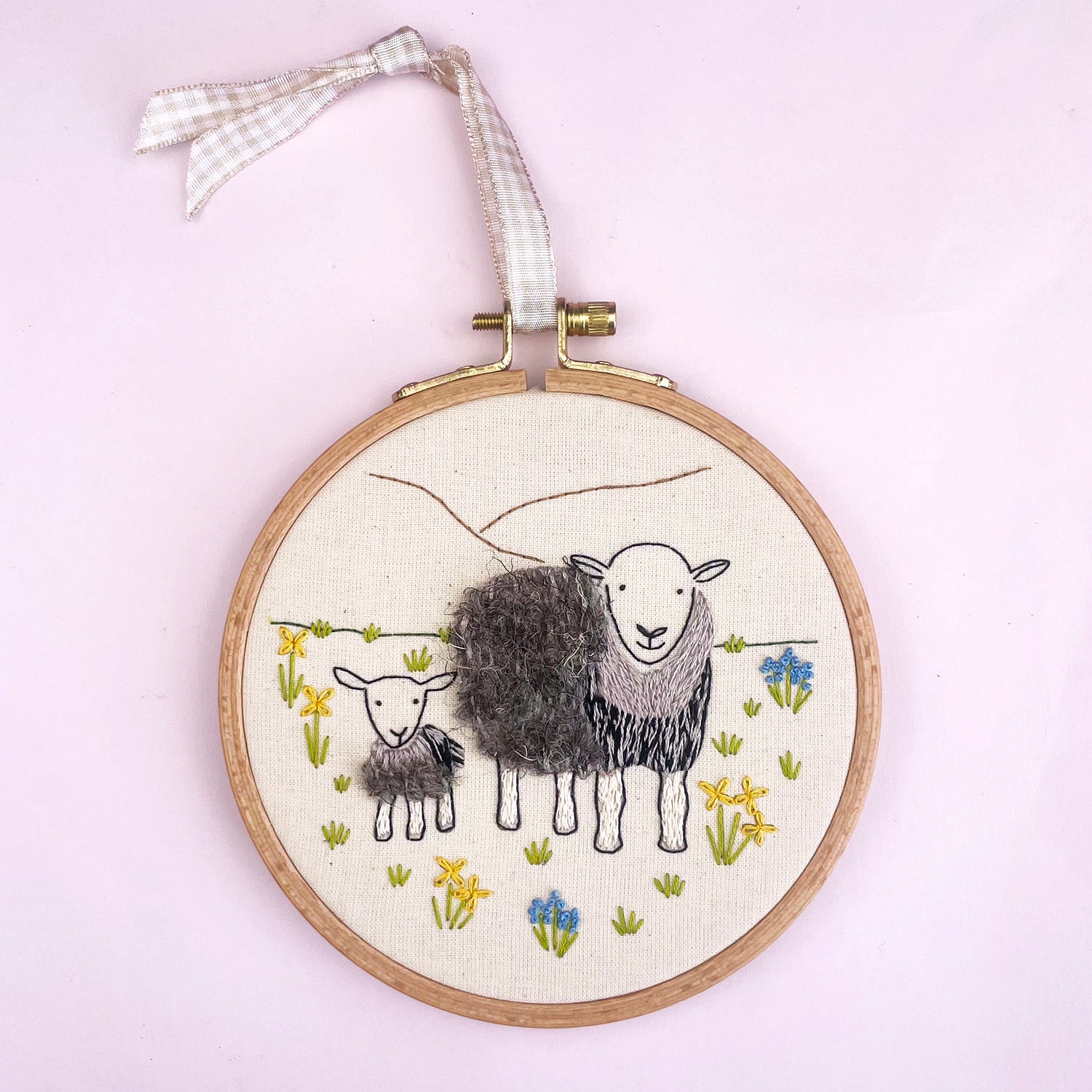
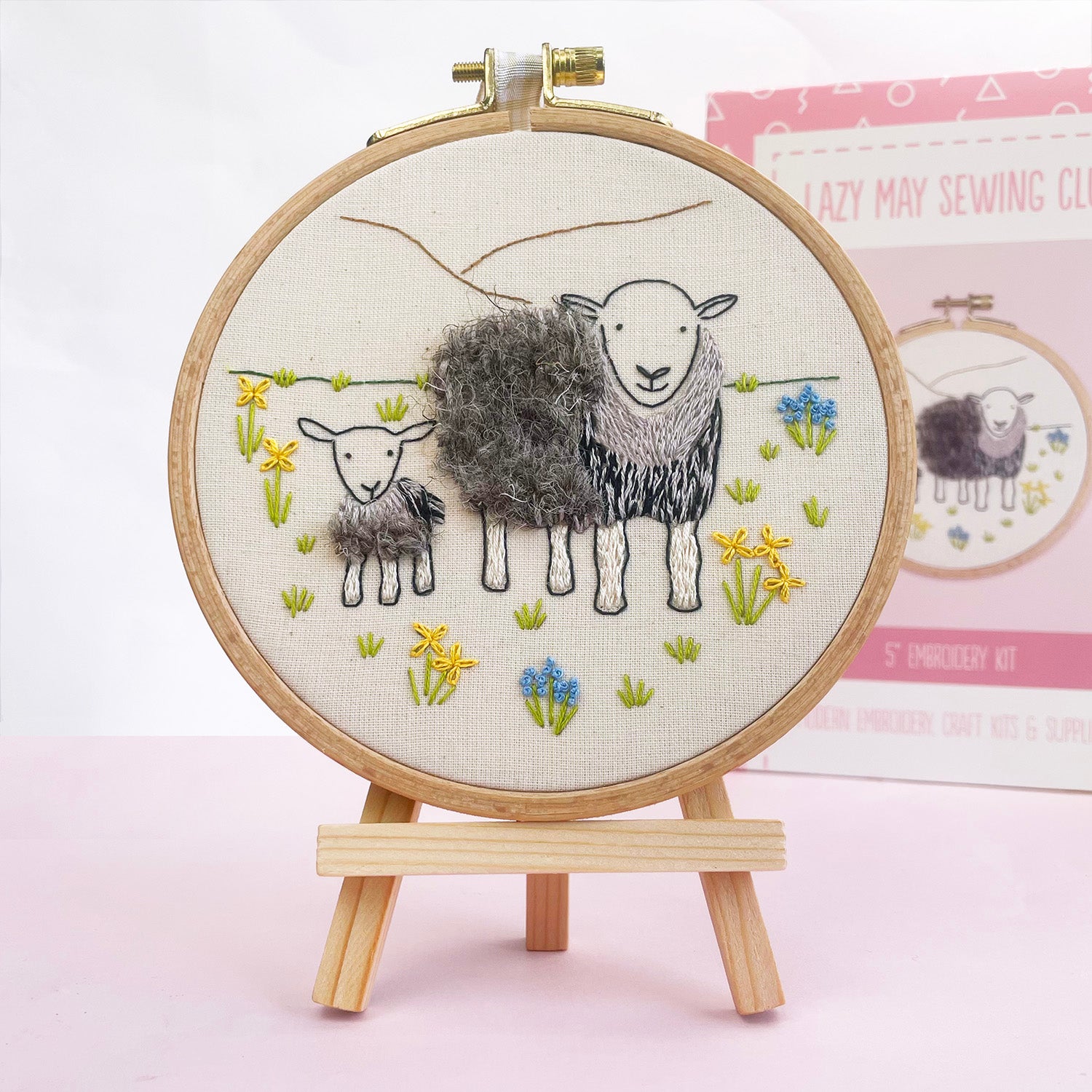
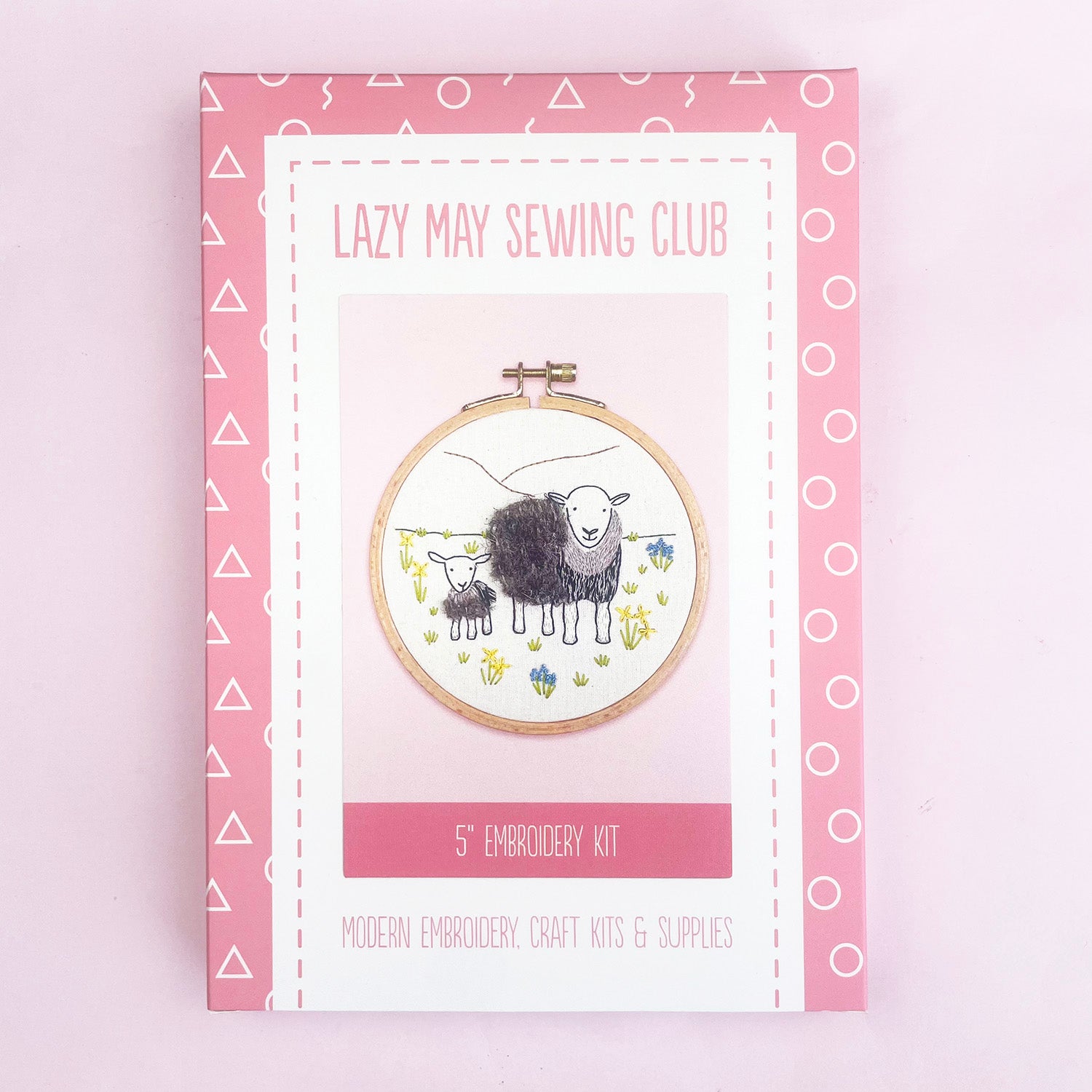
Lake District Herdwick Sheep Embroidery Kit
A relaxing beginner-friendly project featuring a Herdwick ewe and lamb, with real Herdwick wool adding soft, natural texture to the sheep’s fleece.
Shop the Herdwick Sheep kit
Kitchen Table Flowers Embroidery Kit
A colourful tulip embroidery kit made for beginners, with simple stitches and a cheerful design to enjoy over one or two relaxing evenings.
Shop Kitchen Table FlowersTips for long and short stitch
- Do not worry about making stitches perfectly even, variation is part of the stitch.
- Use fewer strands of thread for smoother blending.
- Change direction slightly to follow the shape of petals or leaves.
- Stitch slowly and adjust as you go to keep the fill smooth.
- This stitch works best when built up in layers rather than rushed.
- If you want to blend further, take 1 or 2 strands of matching thread and work them over the existing long and short stitches.