How to do stem stitch
Stem stitch is a really useful embroidery stitch for creating smooth lines. It is often used for flower stems, outlines, lettering and gentle curves, which makes it one of those stitches you will come back to again and again.
It looks quite neat and polished once it is finished, but the method is simple. The main thing is to keep your thread on the same side of the line as you stitch.

How to do stem stitch step-by-step
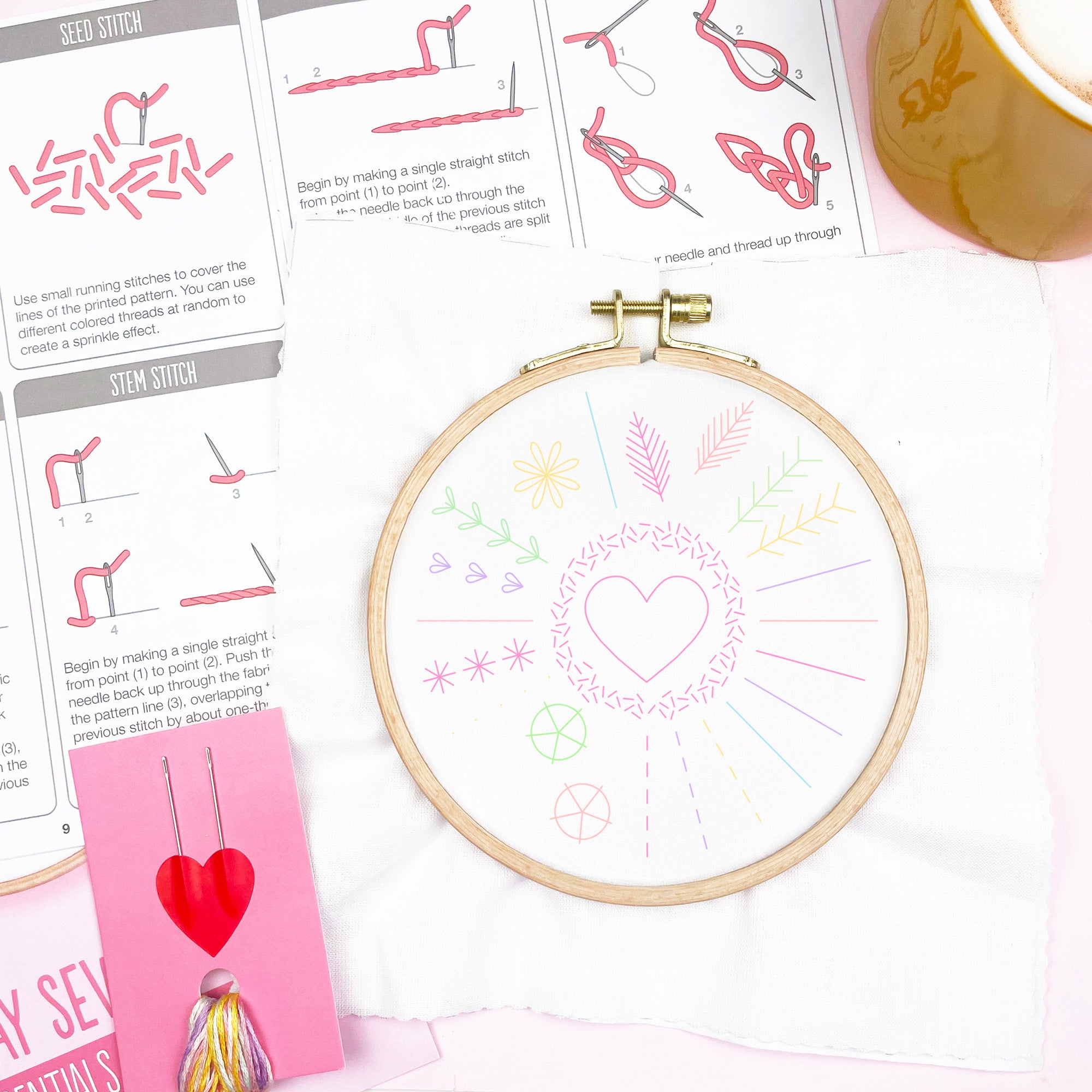
- Bring your needle up at point 1, at the start of your line.
- Take the needle down a short distance along the line at point 2.
- Bring the needle back up halfway along the stitch you have just made, at point 3.
- Keep the working thread on the same side of the line each time you stitch.
- Repeat along the line, overlapping each stitch slightly so they blend together.
- For curves, make your stitches a little shorter so the line stays smooth.
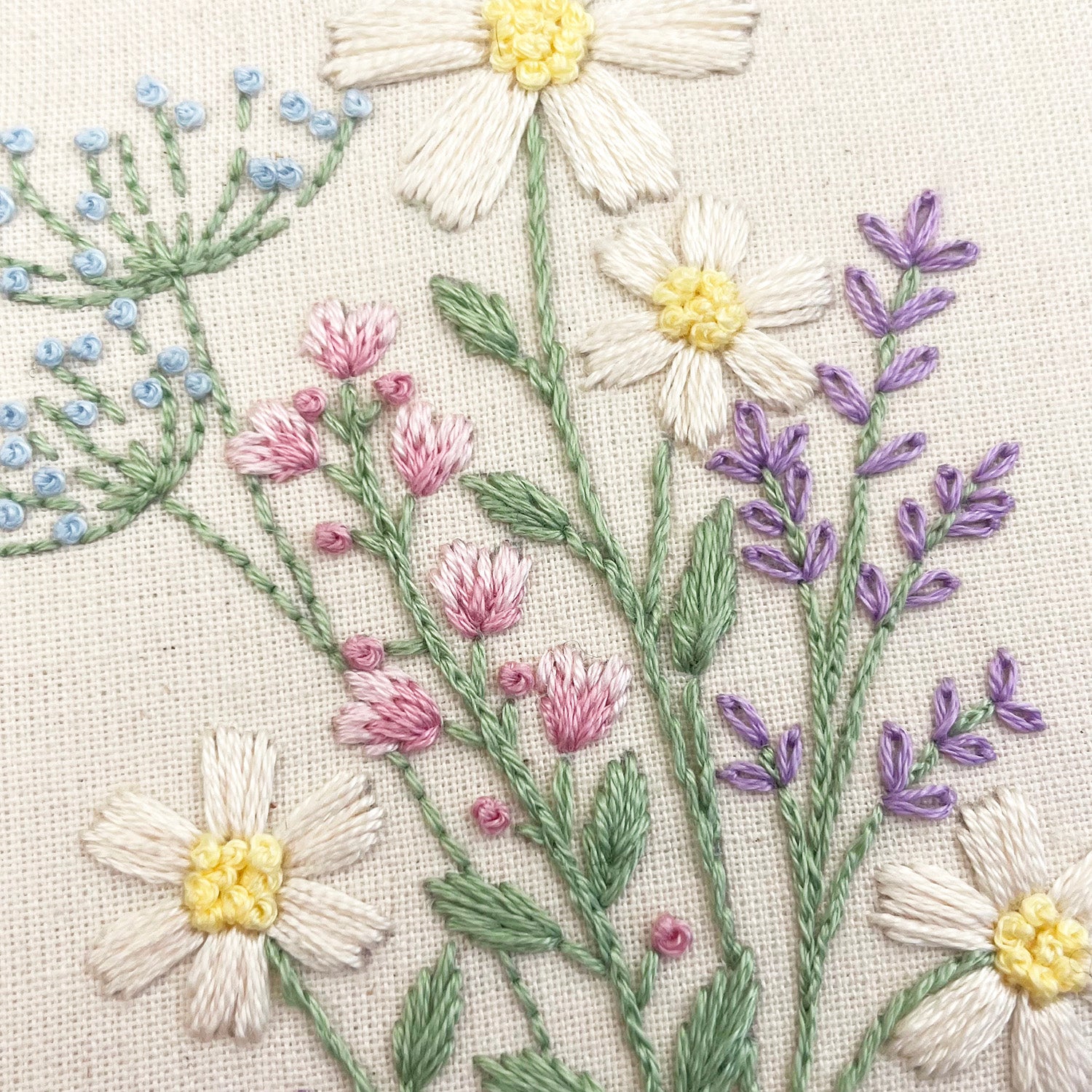
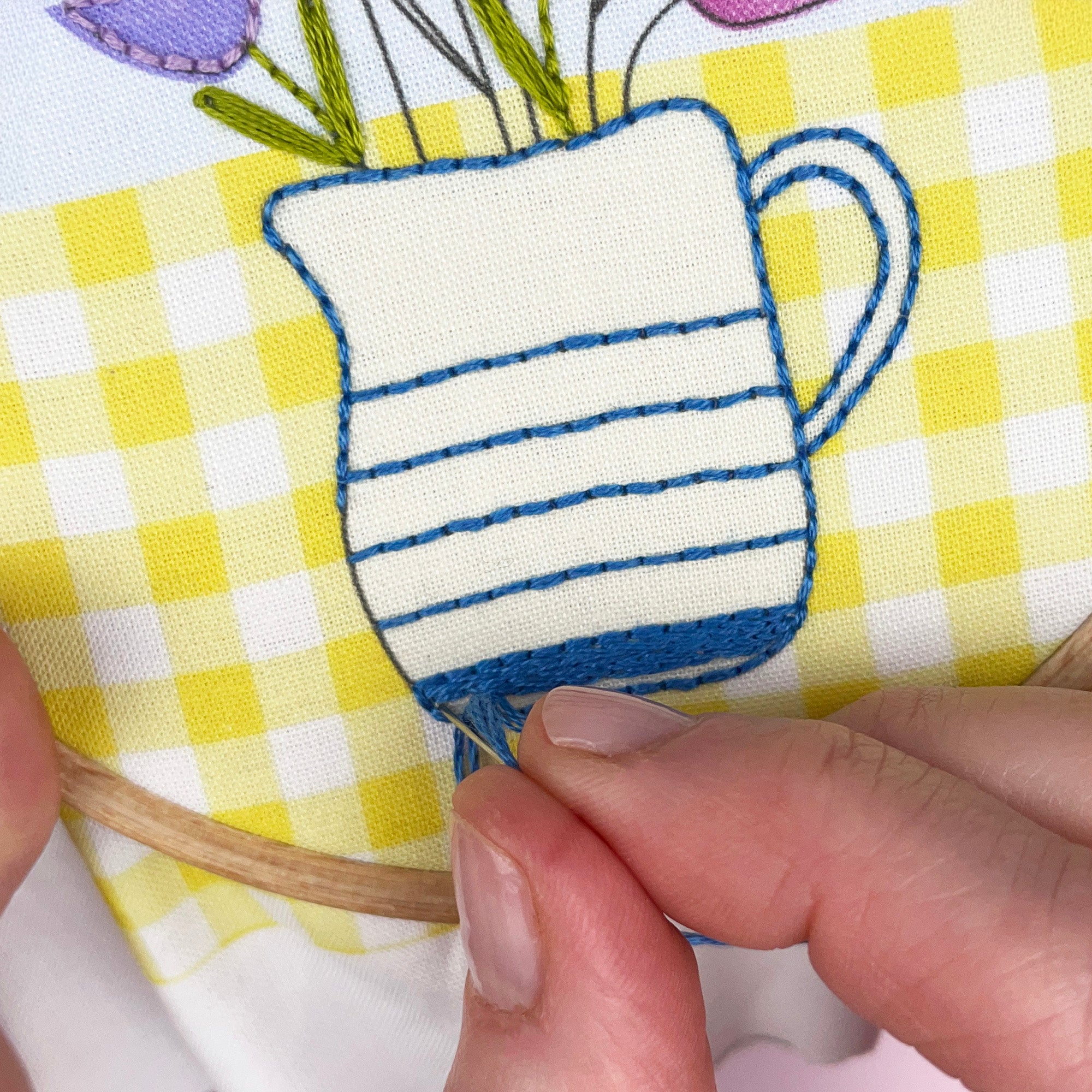
As you work along the line, each stitch slightly overlaps the one before it. This is what gives stem stitch its soft, rope-like effect.
What is stem stitch used for?
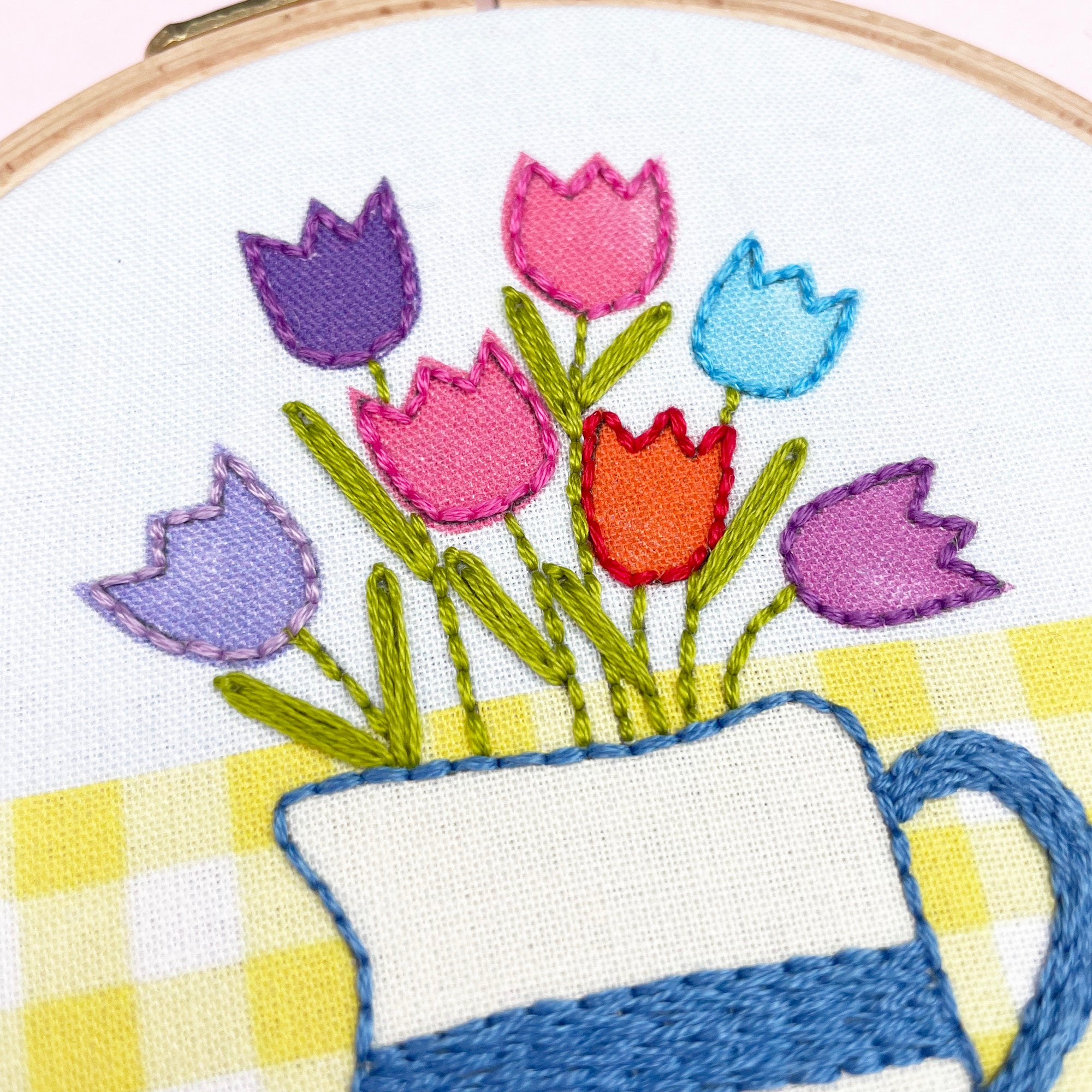
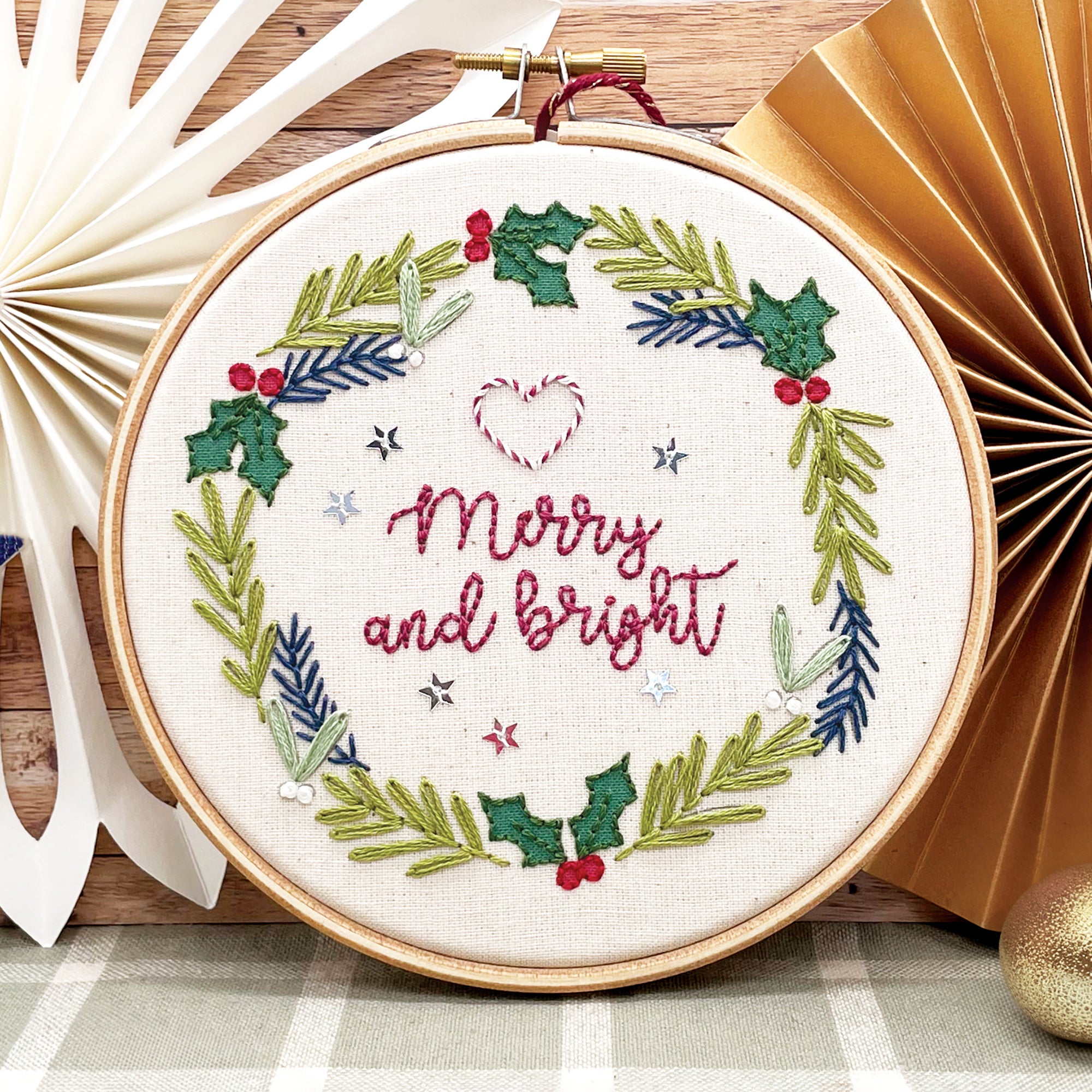
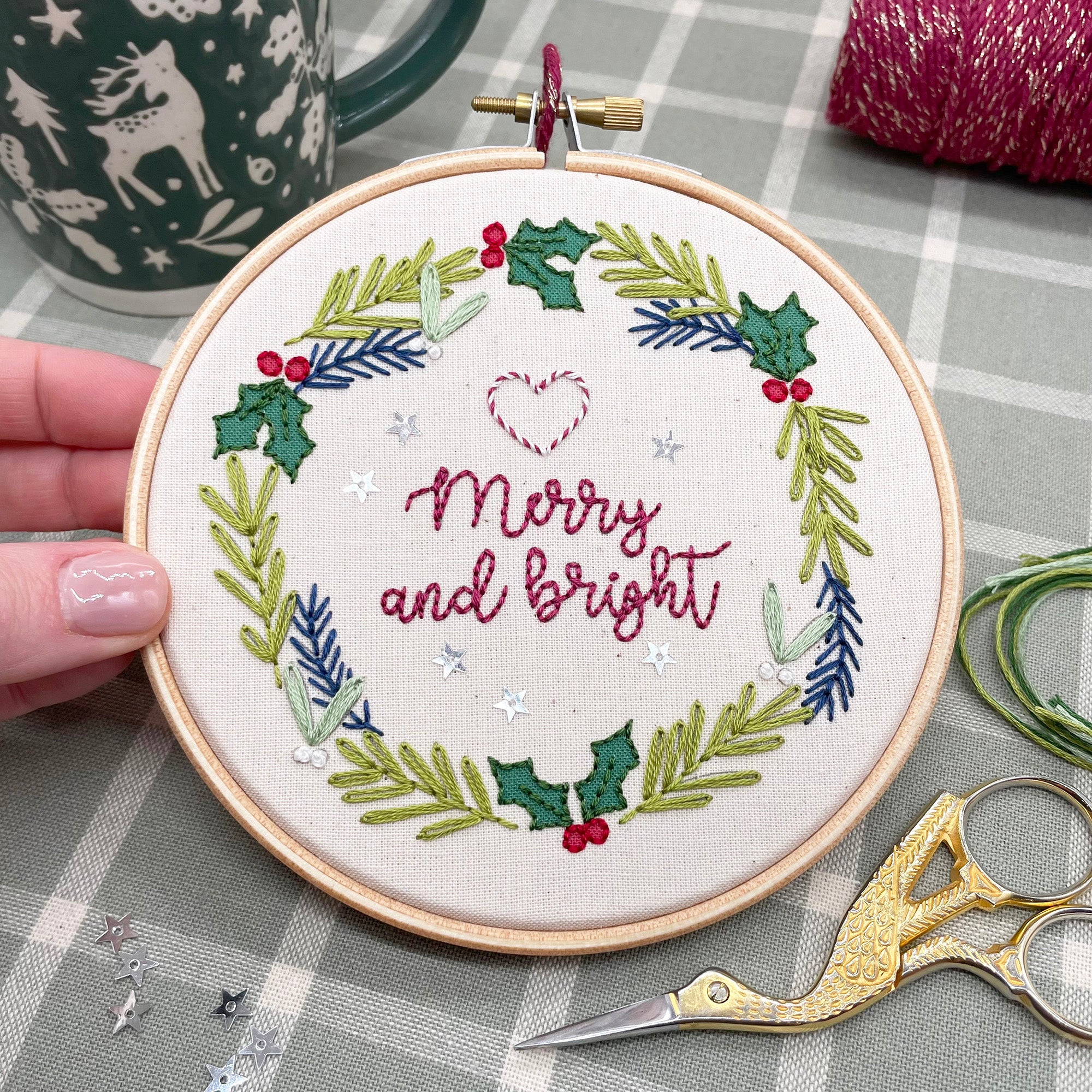
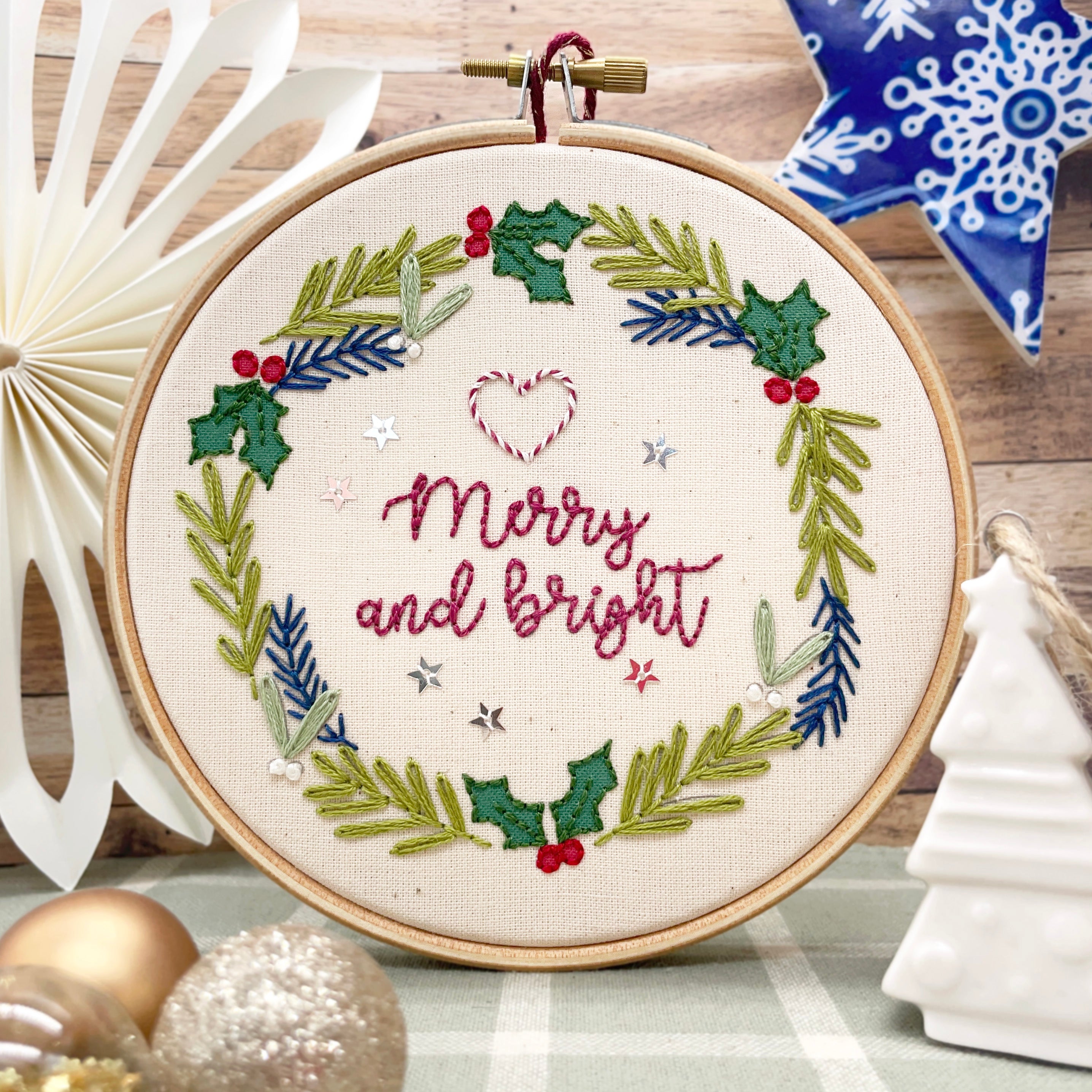
Stem stitch is most often used for flower stems, but it is useful for much more than that. It works well for outlines, vines, borders, lettering and curved details where you want a softer line than back stitch.
Because it follows curves so nicely, stem stitch is a lovely choice for botanical embroidery patterns. It also sits neatly alongside stitches like lazy daisy stitch, satin stitch, fly stitch and French knots.
Ready to practise stem stitch?
Stem stitch appears in lots of embroidery designs, from simple outlines to floral stems and leaves. These beginner-friendly embroidery kits include printed fabric, threads, a hoop, needle and clear step-by-step instructions, so you can start stitching straight away.

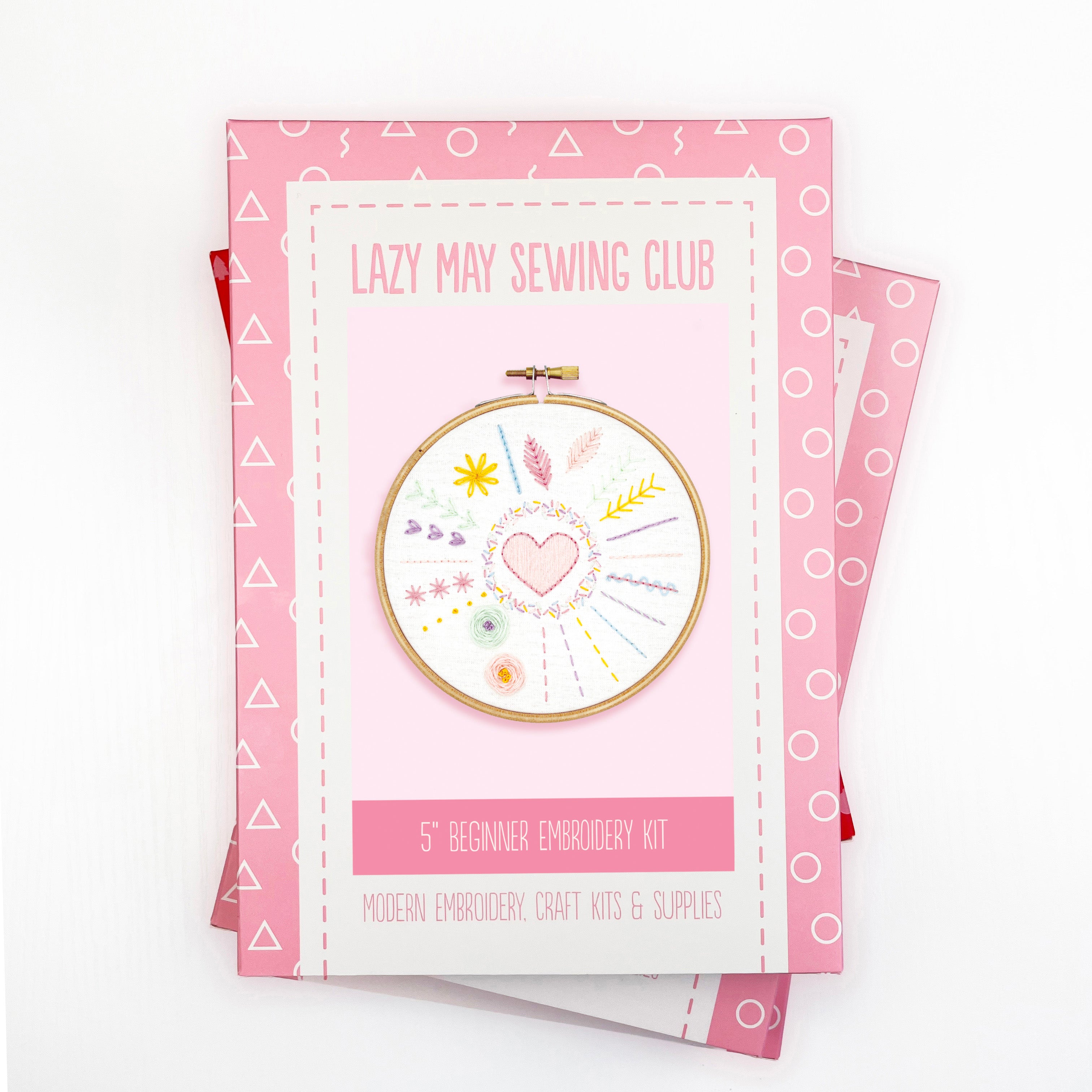
Beginner Stitch Sampler Embroidery Kit
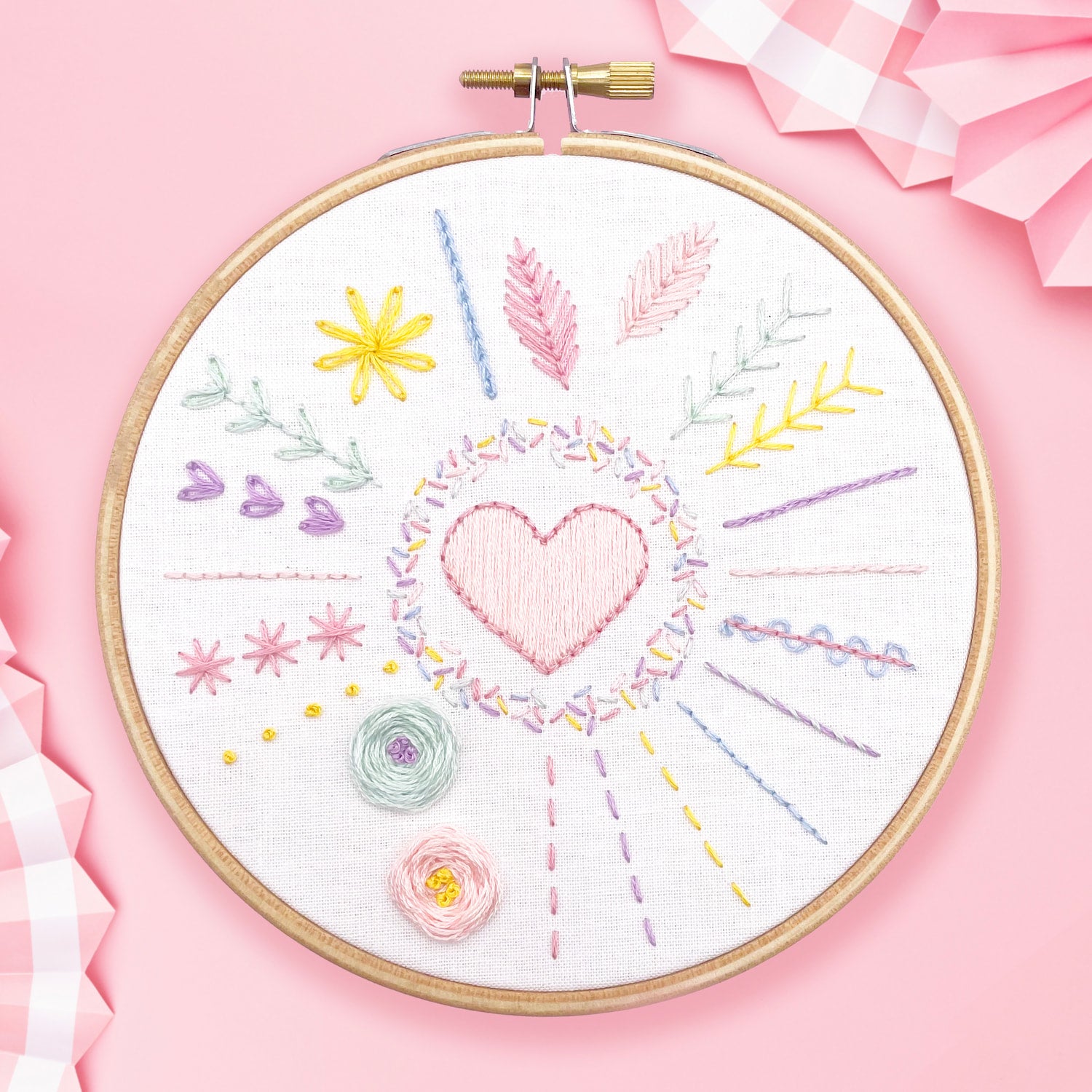
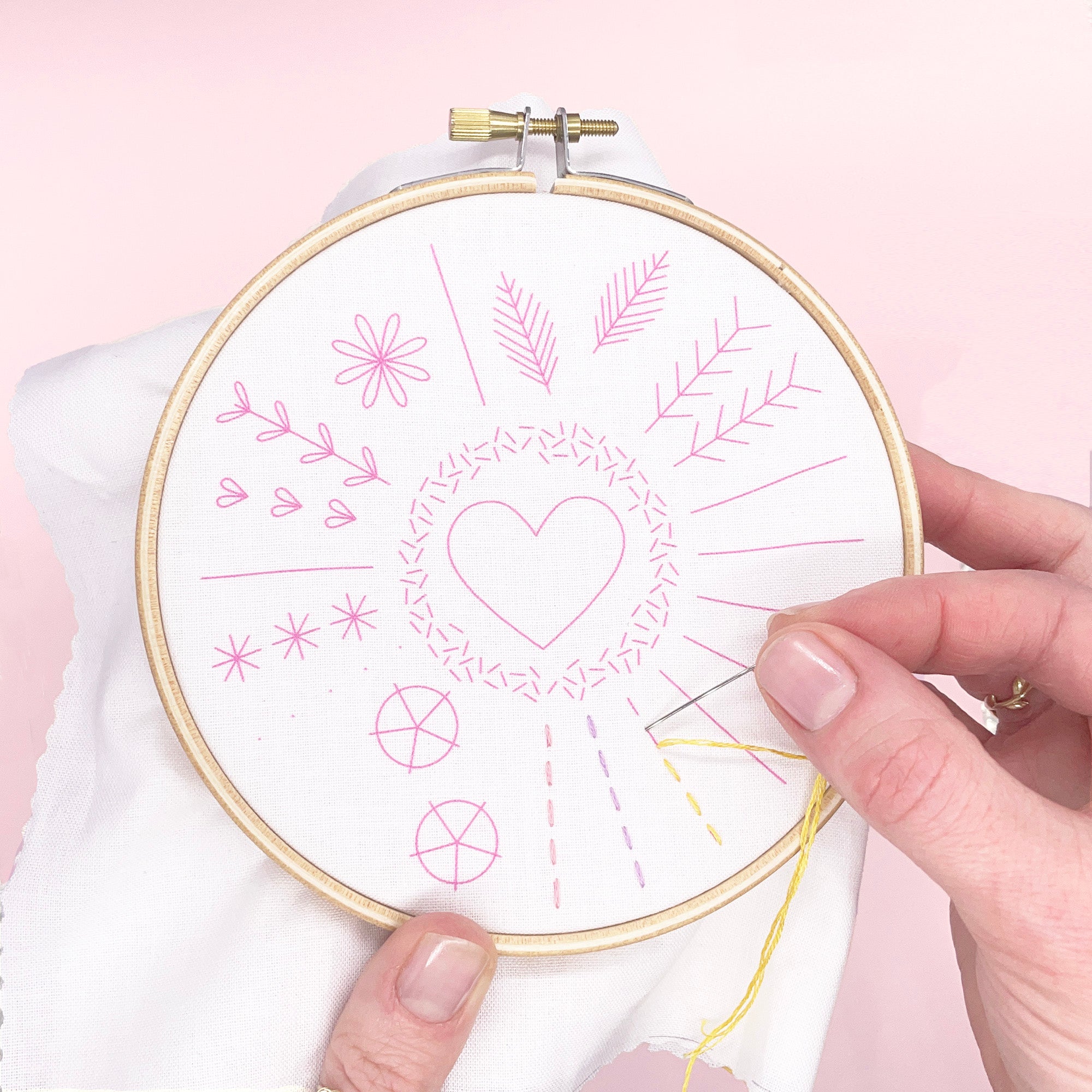
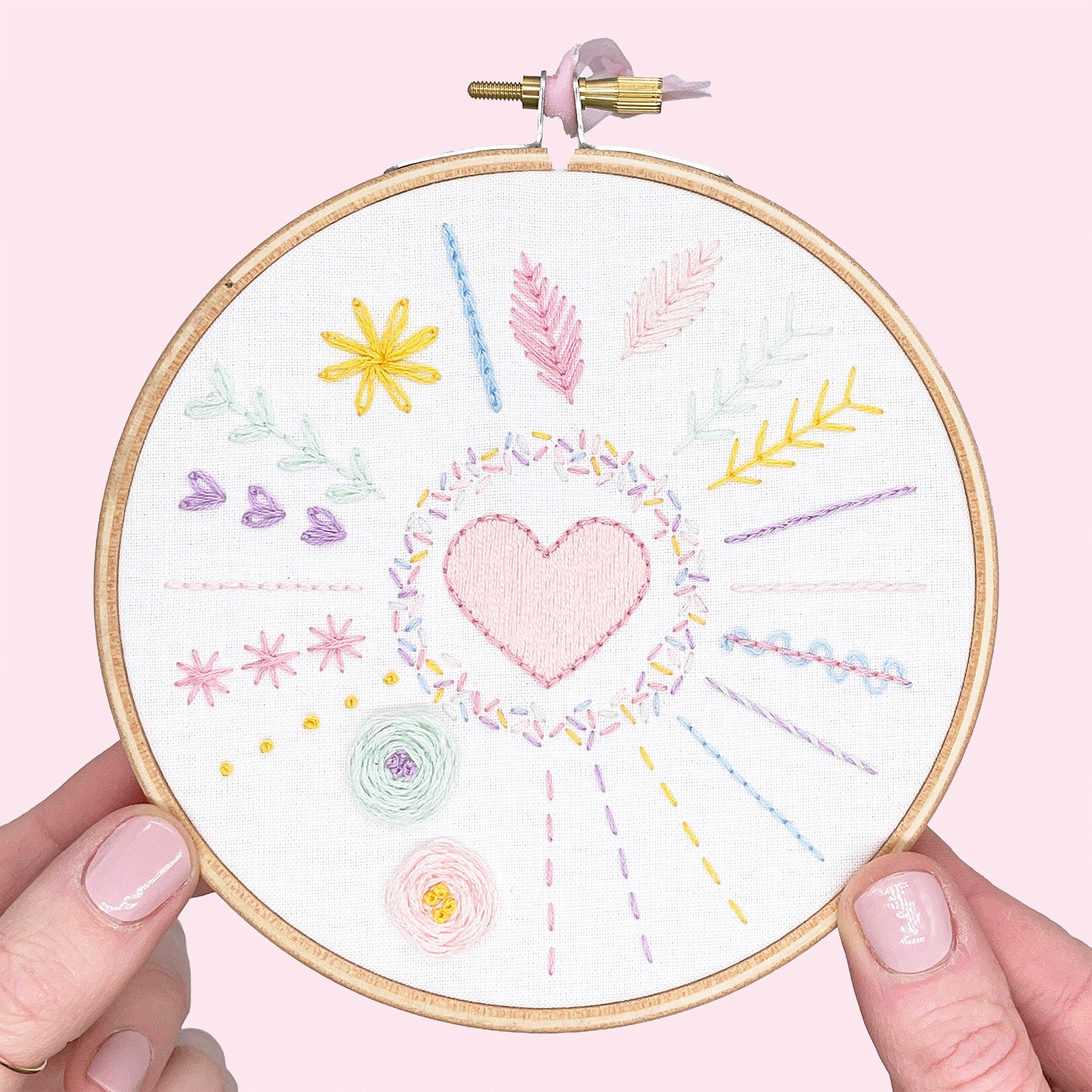
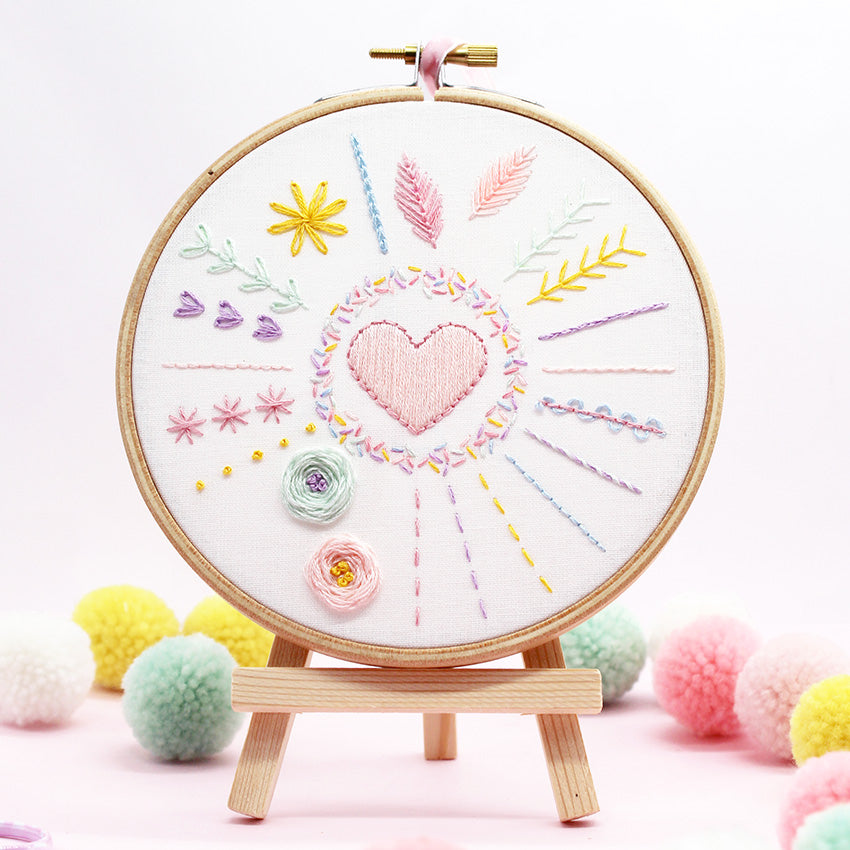
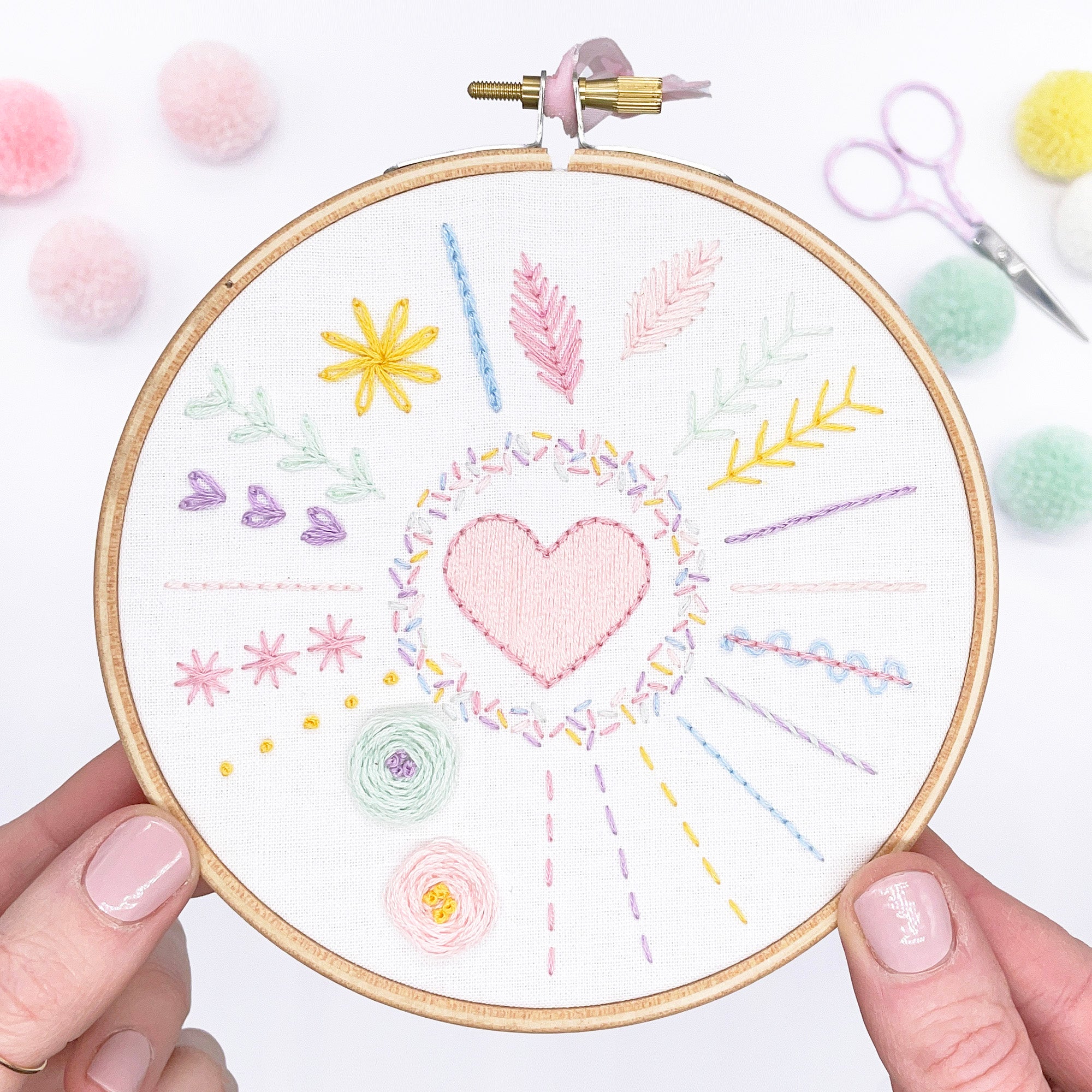
Learn 13 essential embroidery stitches, including stem stitch, with a calm pastel sampler design.
Shop the sampler kit
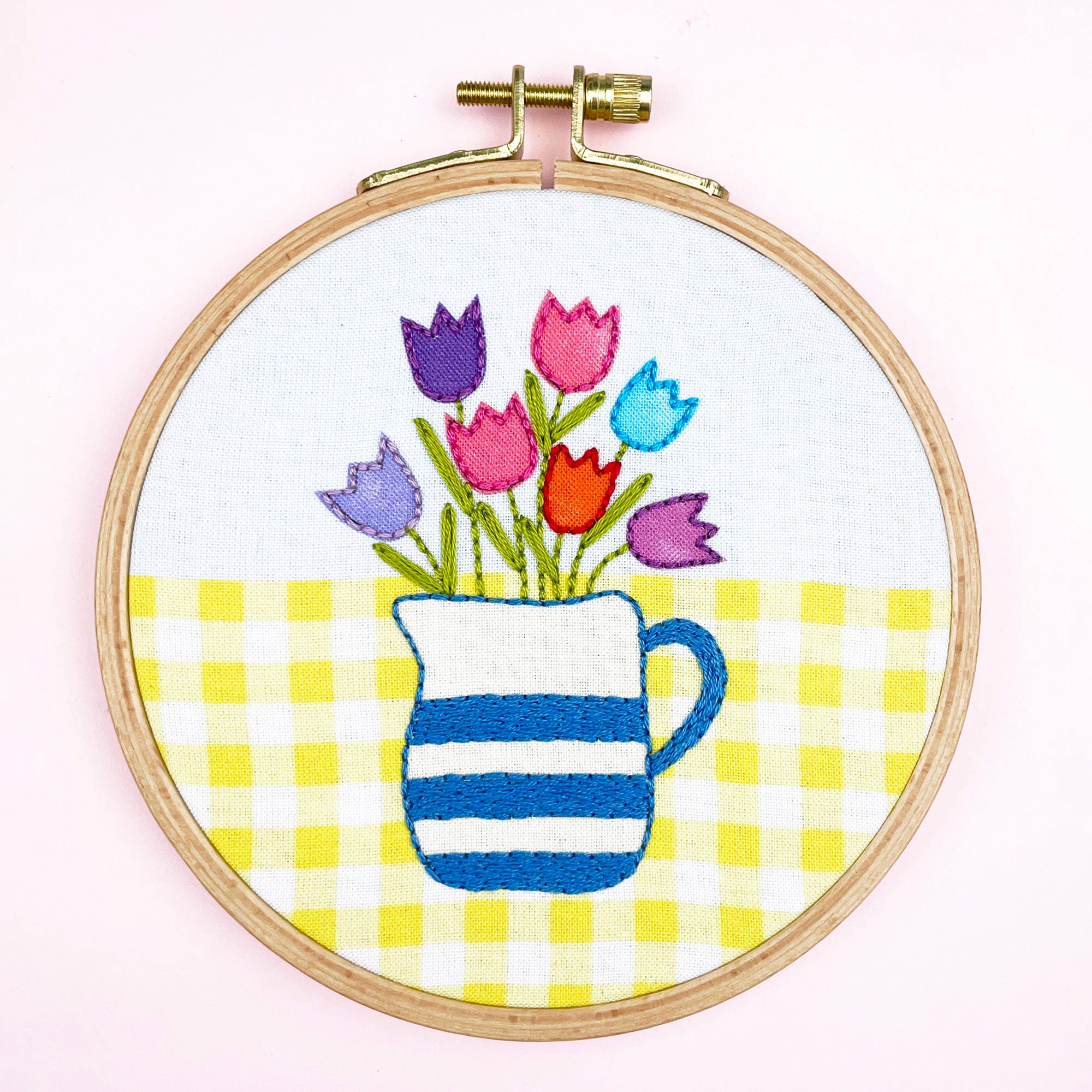
Fabulous Flowers Embroidery Kit
A cheerful beginner-friendly flower embroidery kit with everything included and clear step-by-step instructions.
Shop Fabulous Flowers
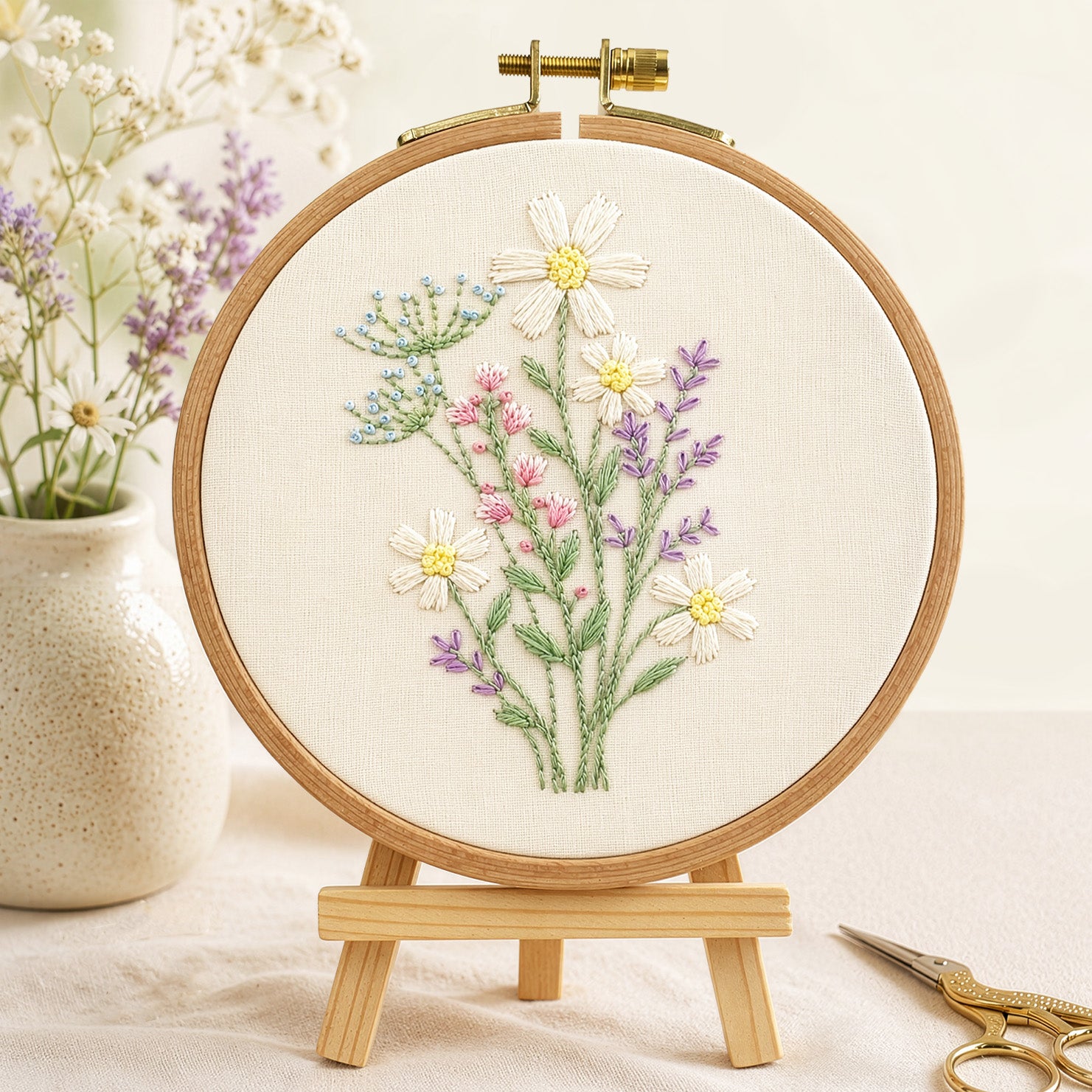
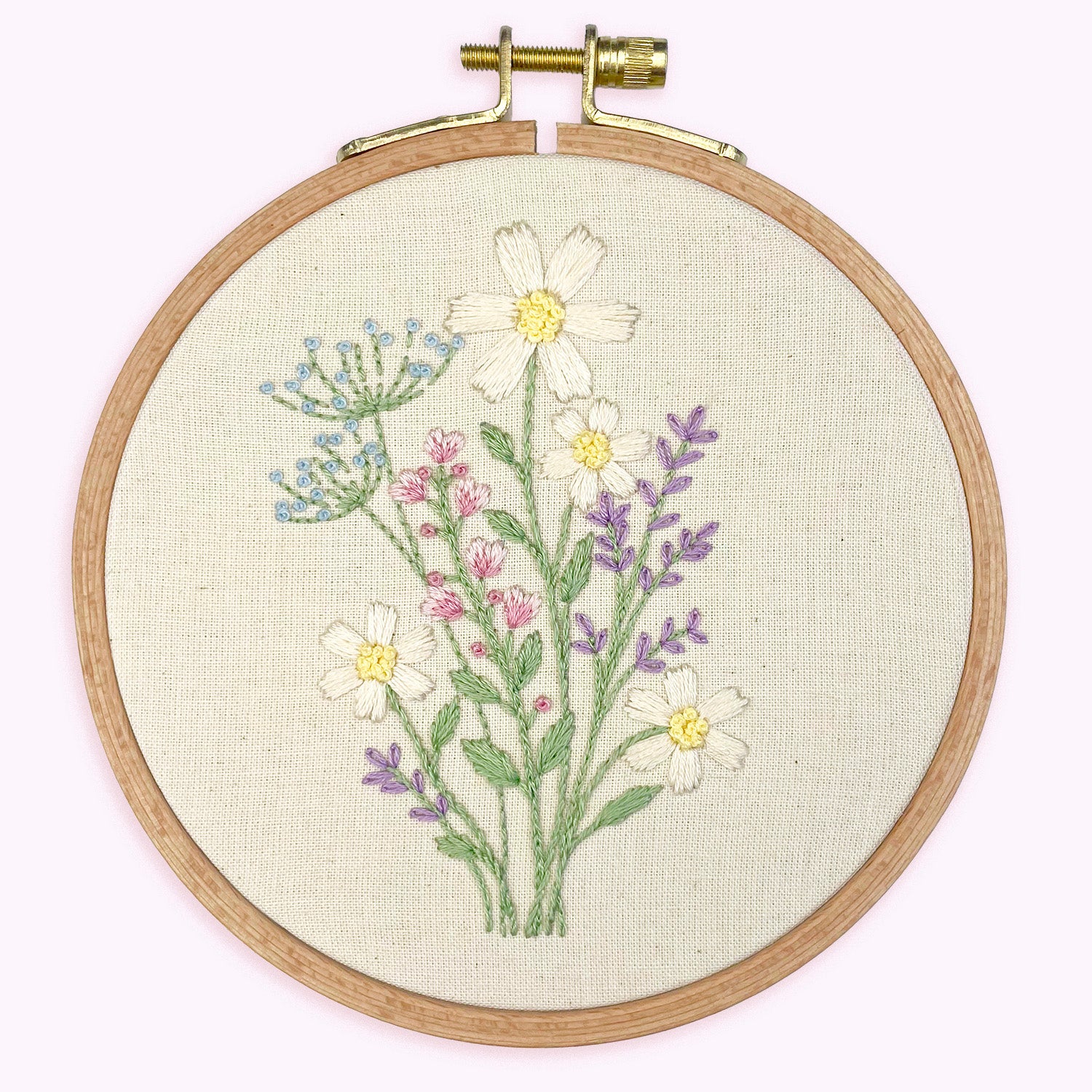
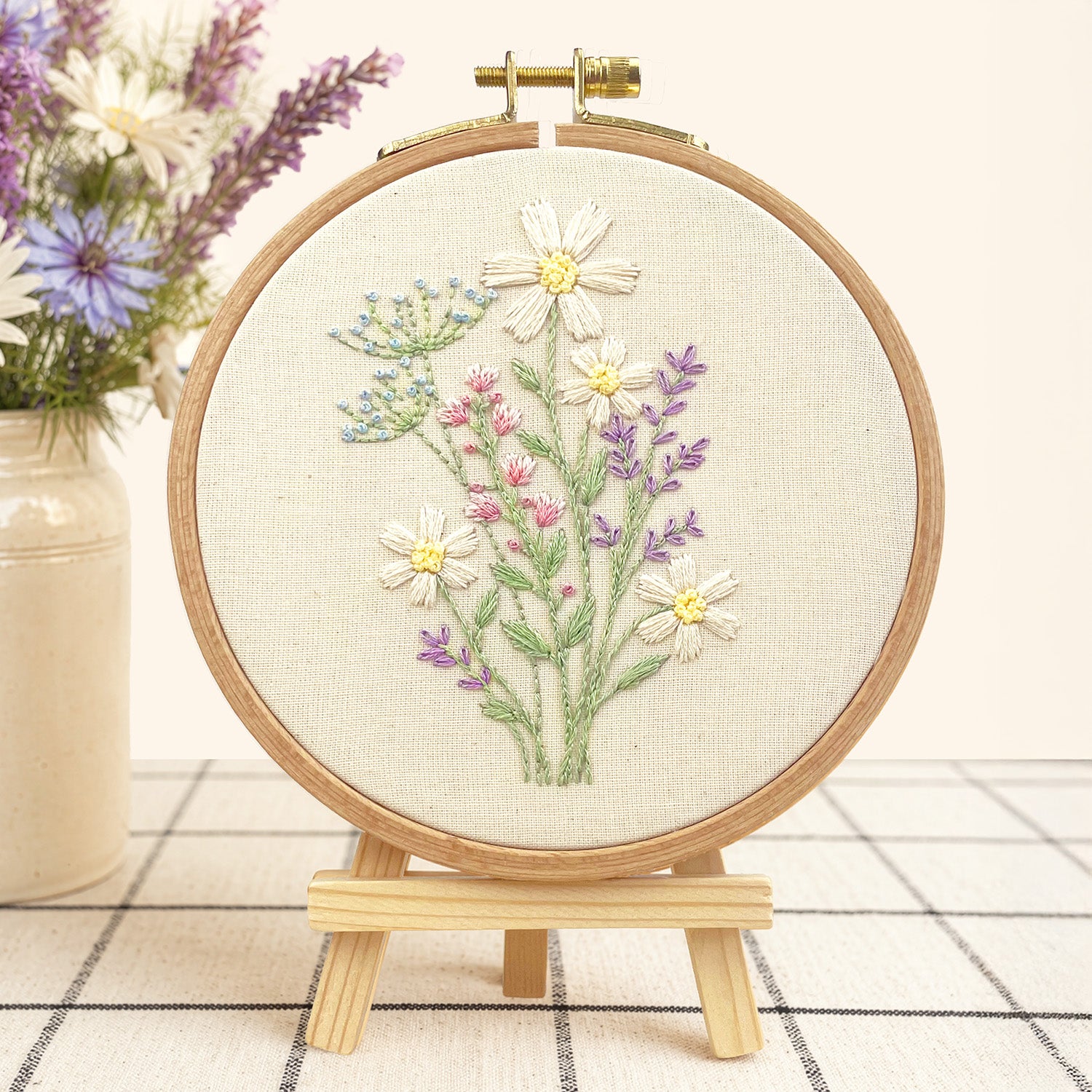
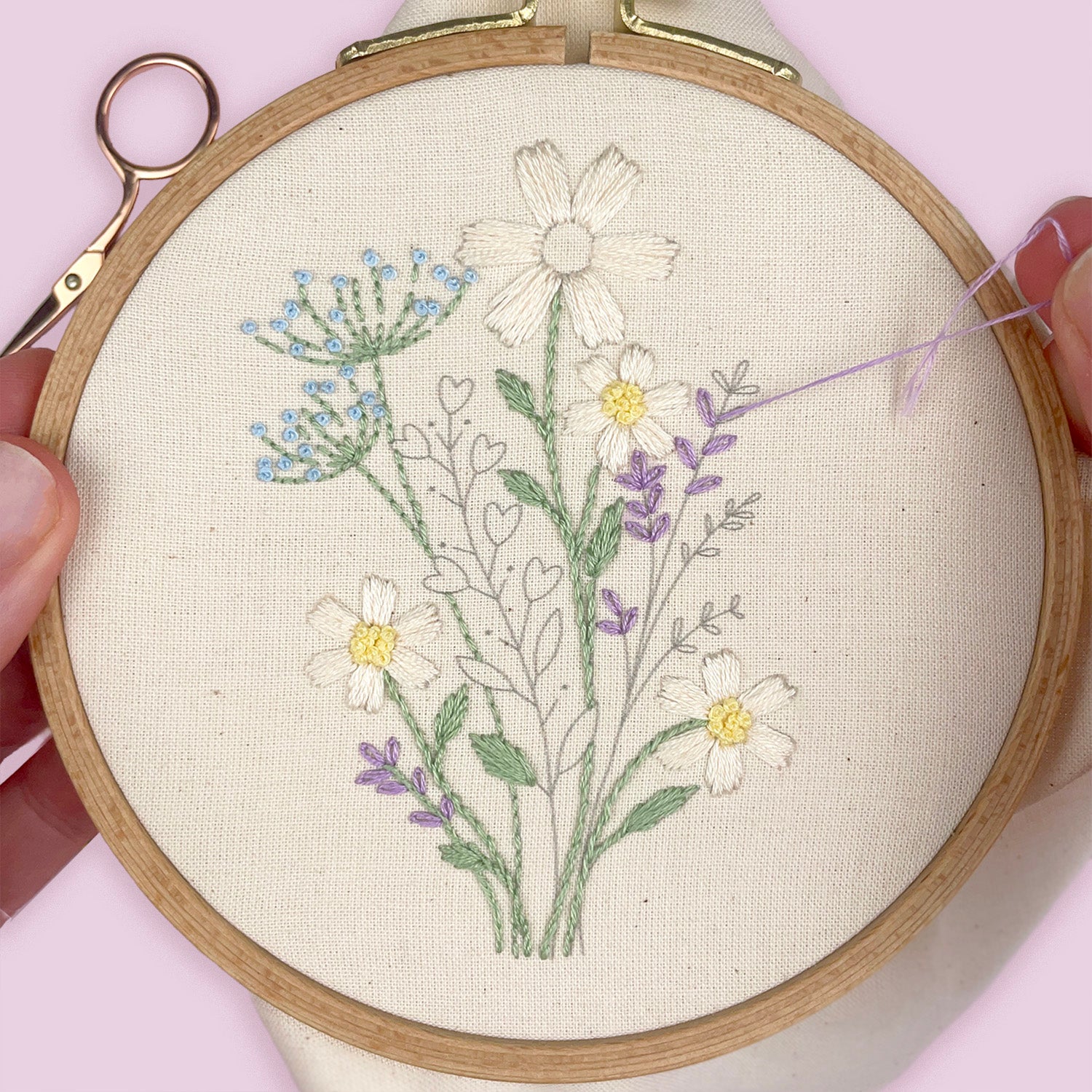
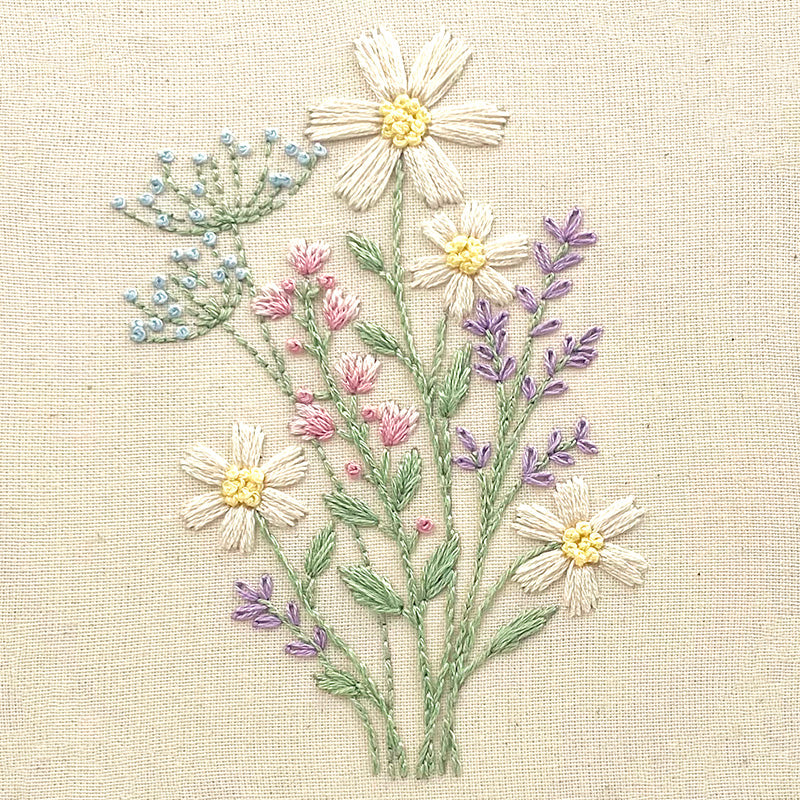
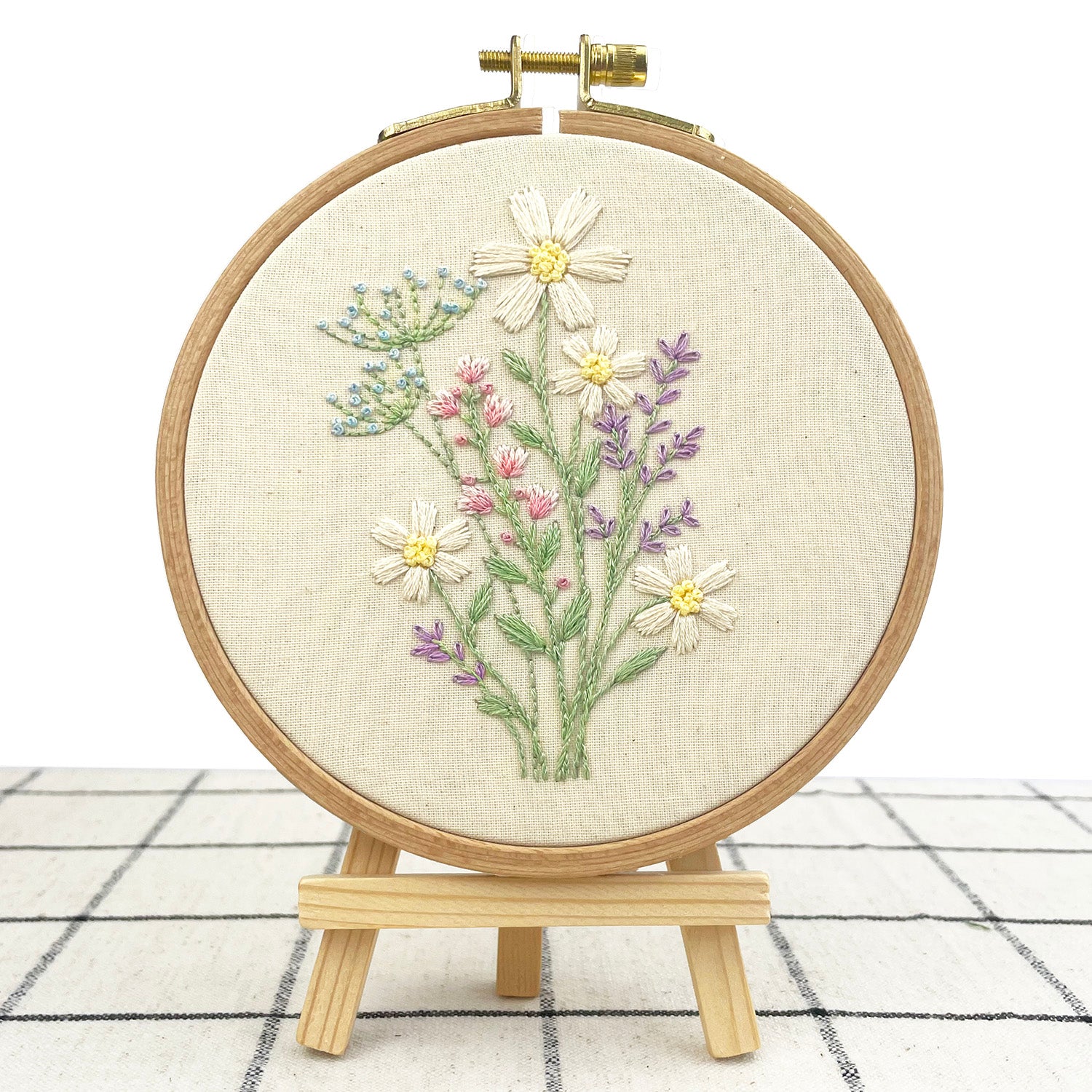
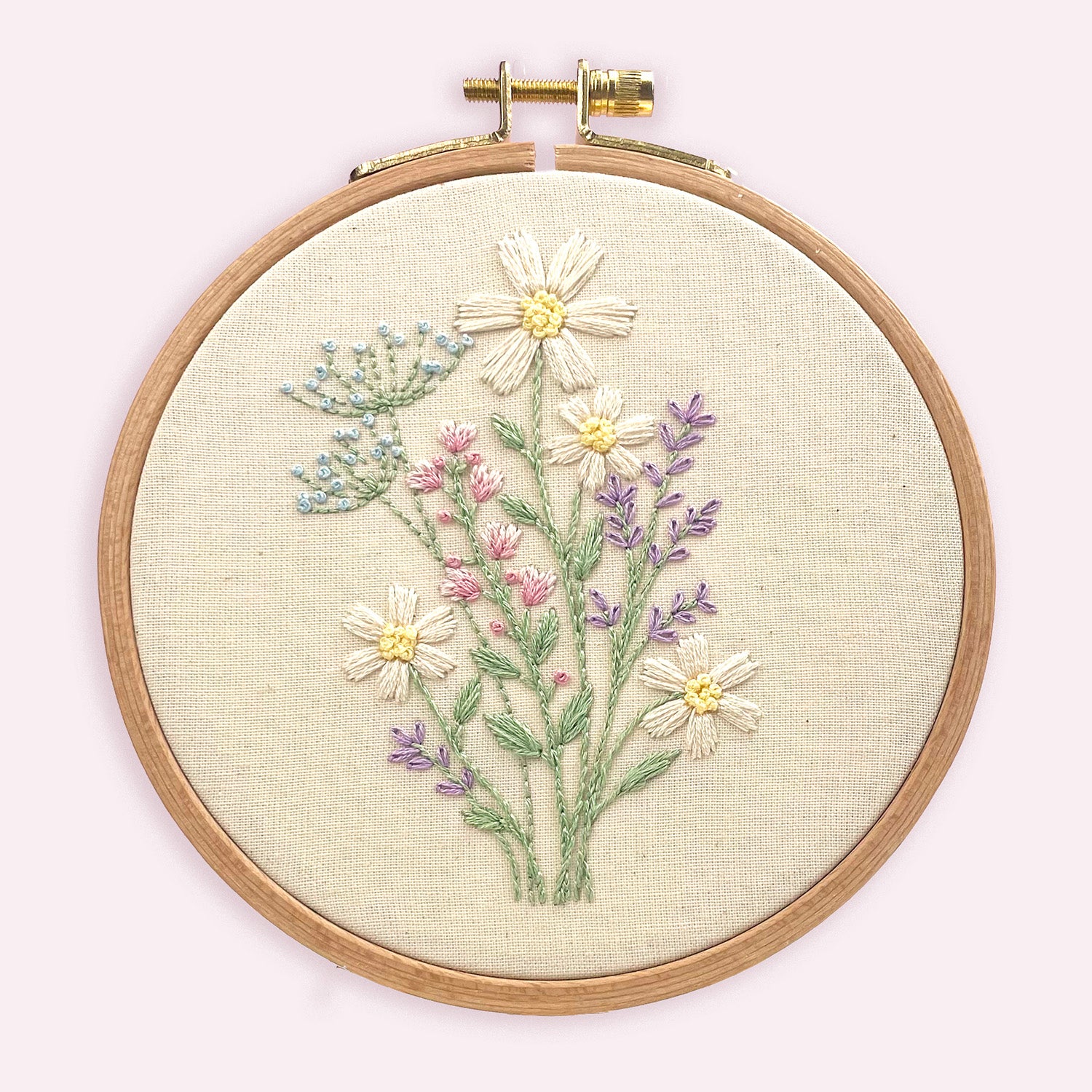
Pastel Wildflowers Embroidery Kit
A soft floral embroidery kit with a gentle, nature-inspired design to stitch over a few relaxing evenings.
Shop Pastel WildflowersTips for stem stitch
- Keep your working thread on the same side of the line for every stitch.
- Use shorter stitches when stitching around tighter curves.
- Try to keep your stitch length fairly even so the line looks smooth.
- If the line starts to look uneven, check that you are bringing the needle up halfway along the previous stitch.
- Use an embroidery hoop to keep the fabric steady and help prevent puckering.