How to do feather stitch
Feather stitch is a decorative embroidery stitch made from little looped stitches that alternate from side to side. It has a loose, natural feel, which makes it especially useful for vines, borders, stems, foliage and flowing decorative lines.
It can look a bit complicated at first glance, but it is really just a repeating rhythm of catching the thread under the needle as you stitch. Once you get used to alternating sides, it becomes a relaxing stitch to work.

How to do feather stitch step-by-step
- Bring your needle up at the top of the line where you want your feather stitch to begin.
- Take the needle down slightly to one side of the central line, then bring it back up on the centre line a little lower down.
- Keep the working thread tucked under the needle before you pull the stitch through. This creates the first loop.
- Pull the thread gently so the loop sits neatly on the fabric, but do not pull it too tight.
- Repeat on the opposite side of the central line, again catching the thread under the needle to form the next loop.
- Continue alternating from side to side, keeping the stitches fairly even as you work down the line.
The little loops are what give feather stitch its open, leafy shape. If the stitch starts to look too tight, loosen your tension slightly and let the thread sit softly on the surface of the fabric.
What is feather stitch used for?
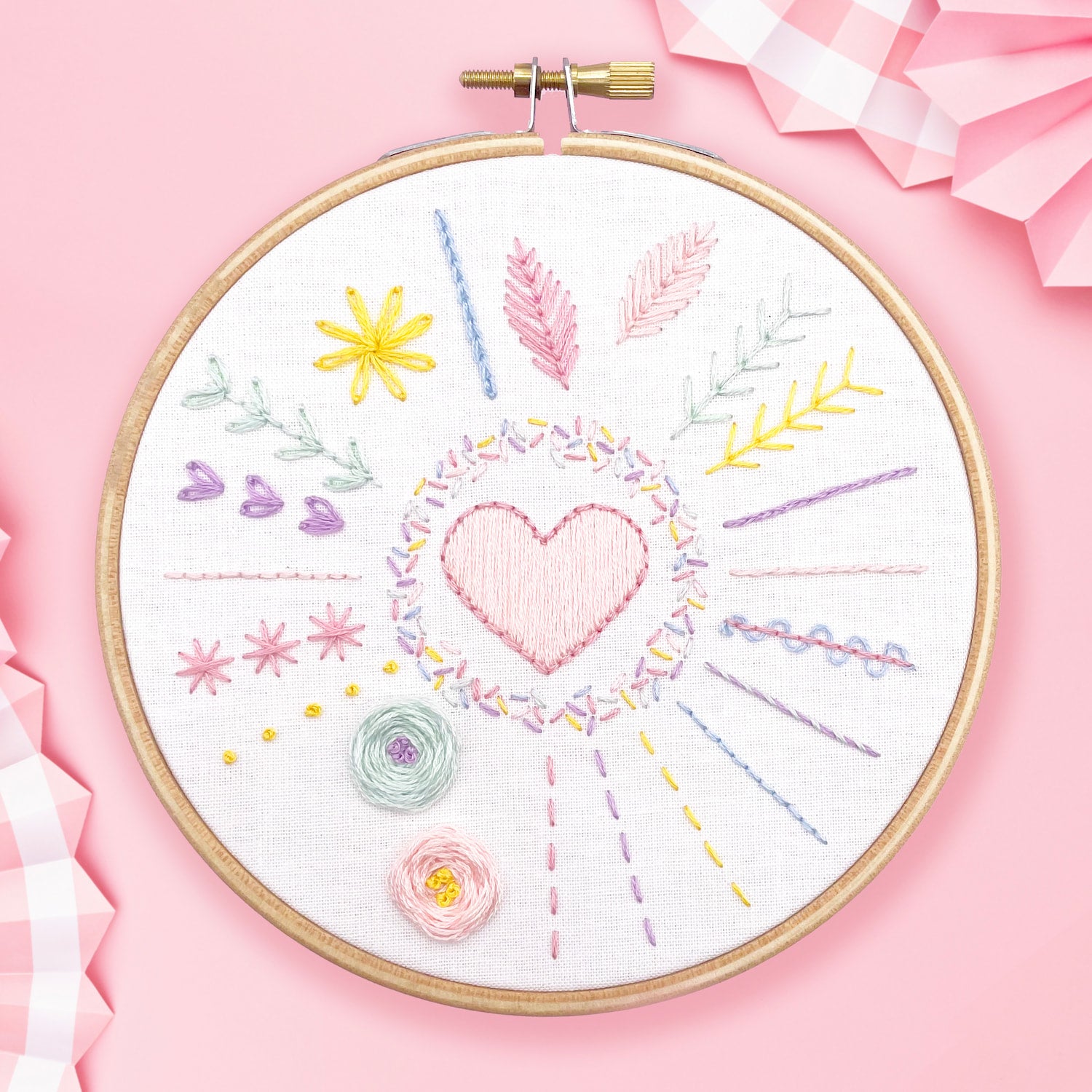
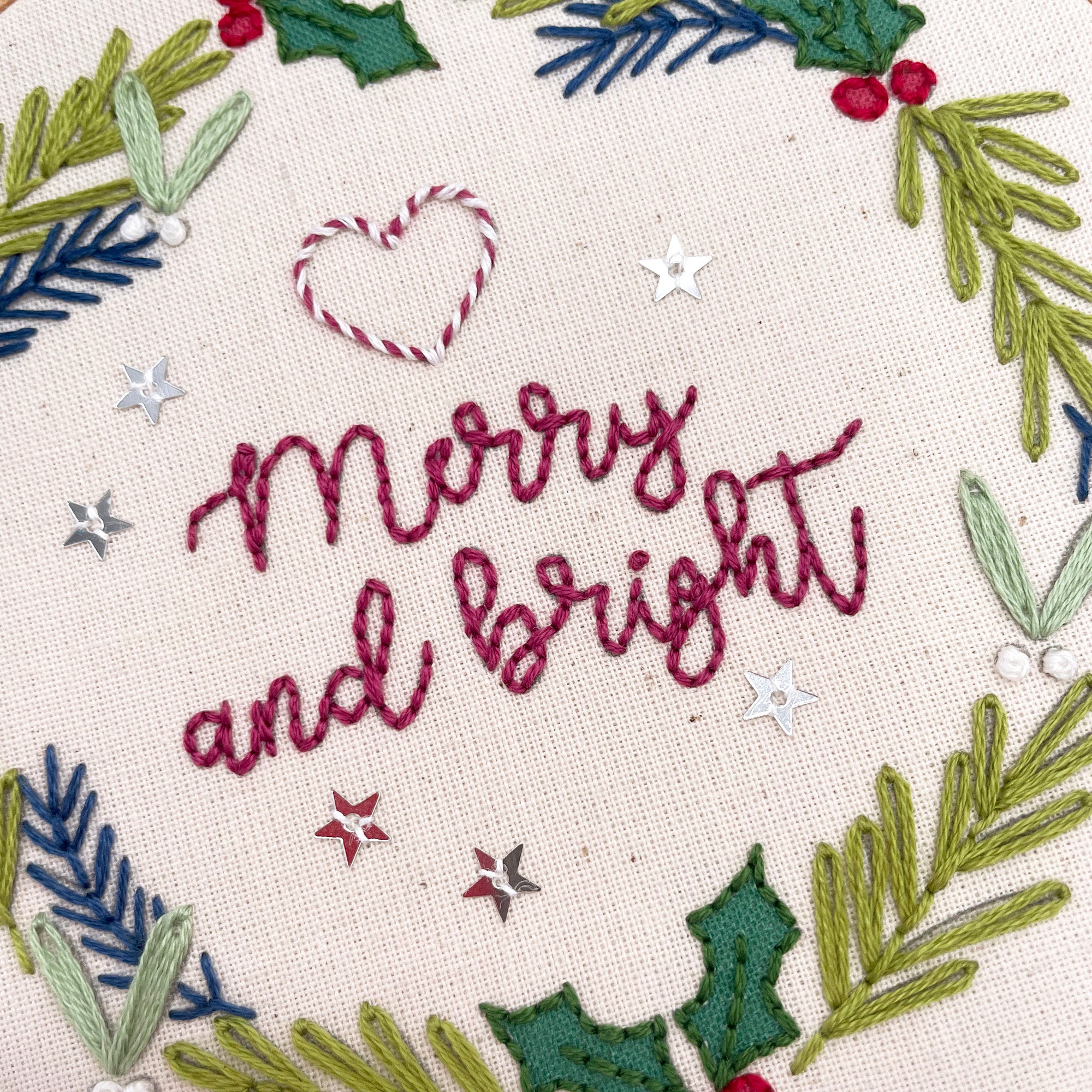
Feather stitch is often used for decorative borders, trailing vines, foliage, flower stems and soft, organic lines. It is a useful stitch when you want something more open and textured than a plain outline.
You can also use feather stitch as a loose filling stitch by working rows close together. It pairs nicely with floral stitches such as lazy daisy stitch, fly stitch, French knots and simple straight stitches.
Tips for feather stitch
- Use a central guideline to help keep the stitch balanced as you work.
- Keep the working thread under the needle each time to form the loop.
- Pull the thread gently so the loops sit neatly without puckering the fabric.
- Space the loops further apart for a lighter, airier effect.
- Work the loops closer together if you want a fuller, more textured line.
- Use shorter stitches around curves so the feather stitch follows the shape more smoothly.