How to do fly stitch
Fly stitch is a simple decorative embroidery stitch made with a loose loop of thread and a small anchoring stitch. It can be worked as a single V shape, a Y shape, or repeated in rows to create leaves, borders, branches and textured details.
It is one of those stitches that is easy to adapt once you understand the basic movement. You can make it wide and open, small and delicate, or layer it up to create more detail.

How to do fly stitch step-by-step
- Bring your needle up at point 1, where you want one side of the stitch to begin.
- Take the needle down at point 2, level with point 1 and a short distance away.
- Bring the needle back up at point 3, below the centre of points 1 and 2. Keep the working thread underneath the needle so it forms a loose loop.
- Gently pull the thread until the loop forms a neat V shape. Try not to pull too tightly, as this can make the stitch pucker.
- Take the needle down just below point 3 to make a small anchoring stitch.
- Repeat the stitch on its own, in a row, or in groups depending on the effect you want.
The distance between the two top points changes the shape of the stitch. A wider gap gives you a more open V, while a smaller gap creates a tighter, neater stitch.
What is fly stitch used for?
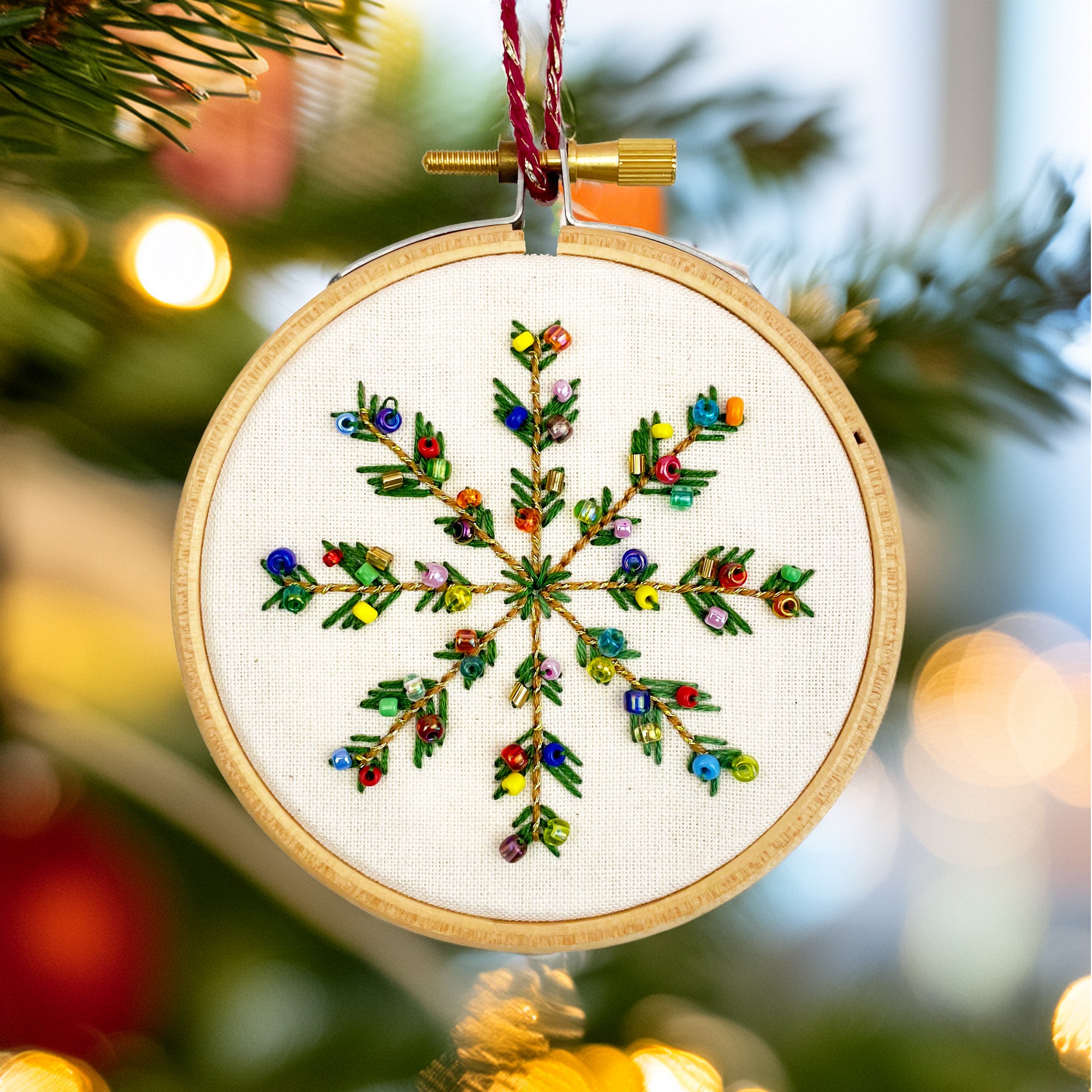
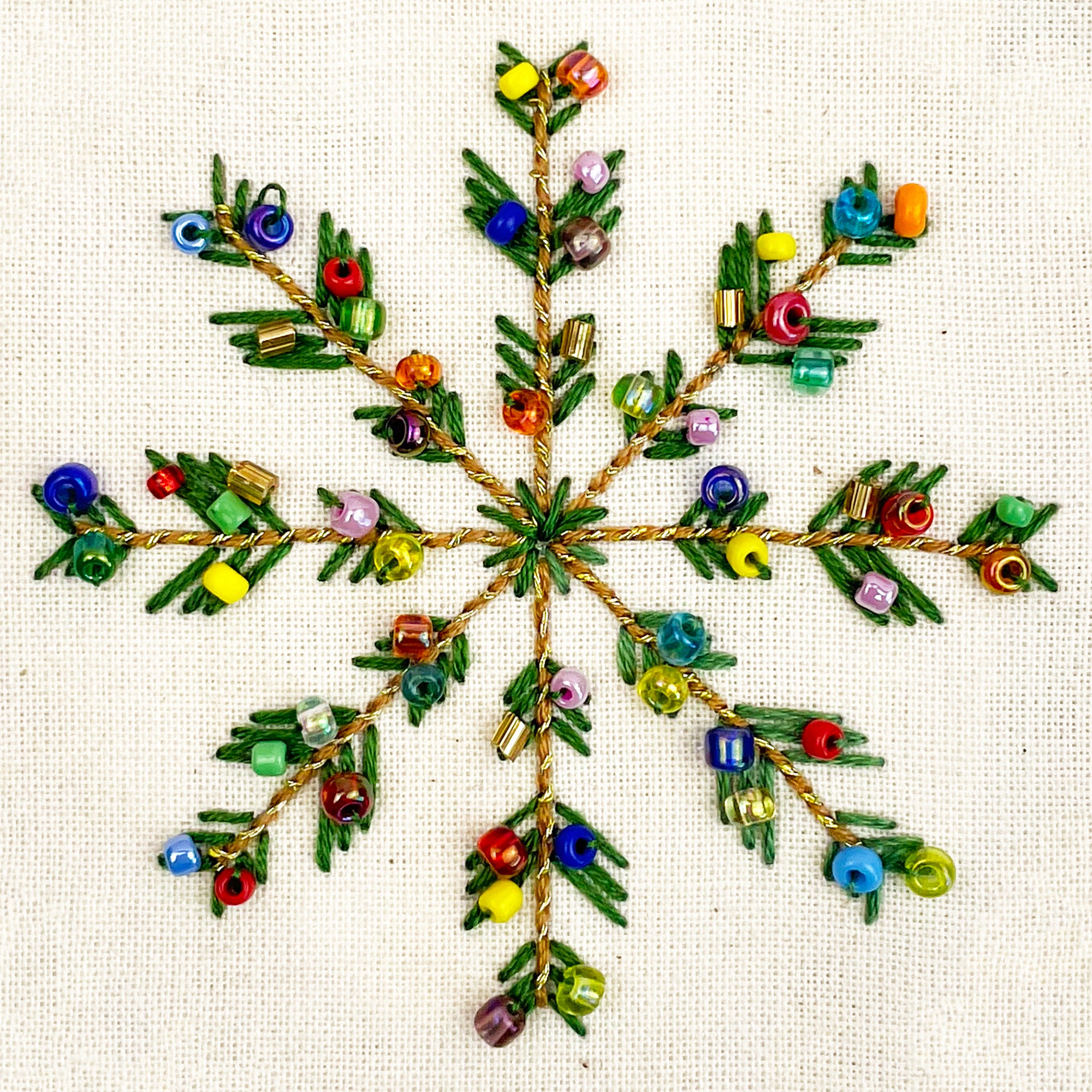
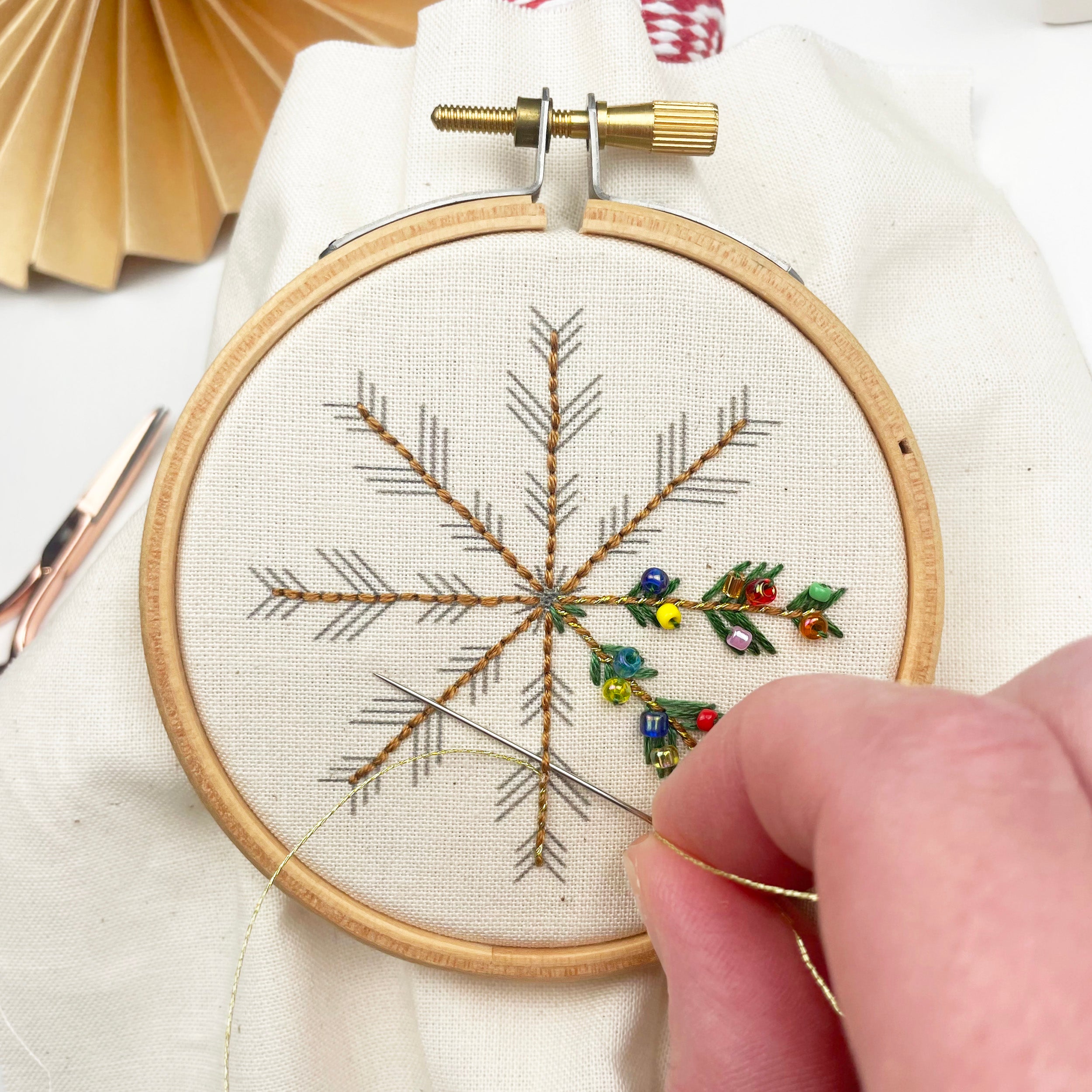
Fly stitch is often used for leaves, little sprigs, grasses and decorative plant details, but it is useful beyond floral embroidery too. You can use it for feathers, borders, small scattered marks, textured fills and simple repeating patterns.
It also works well when you want a stitch that feels a bit more decorative than a straight stitch, but not too complicated. Try changing the length of the anchoring stitch to make the shape look more like a V or more like a Y.
Practise fly stitch with the beginner stitch sampler
Fly stitch is included in the Beginner Stitch Sampler Embroidery Kit, where you can try it alongside 12 other useful stitches. It is a gentle way to practise different ways to use fly stitch, from simple V shapes to decorative details, without having to plan a project from scratch.

Beginner Stitch Sampler Embroidery Kit
A colourful embroidery kit for learning 13 essential stitches, including fly stitch. The design is printed onto pastel fabric and includes threads, a hoop, needle and step-by-step instructions, so you can sit down and start practising.
View the sampler kitTips for fly stitch
- Keep the loop loose until the stitch shape looks right, then secure it with the anchoring stitch.
- Use a small anchoring stitch for a neat V shape, or a longer one if you want more of a Y shape.
- Try shorter stitches on curves or tiny leaf shapes.
- Keep your thread tension gentle so the fabric does not pucker.
- Work fly stitches close together to create borders, or space them out for a lighter scattered texture.