How to do chain stitch
Chain stitch is a lovely textured embroidery stitch made from a row of linked loops. It is brilliant for outlines, borders and hand-stitched lettering, and once you get into the rhythm it becomes a really satisfying stitch to work.

How to do chain stitch step-by-step
- Bring your needle up at point 1.
- Insert the needle back into the same hole, leaving a small loop of thread on the surface of the fabric.
- Bring the needle up again a short distance away at point 3, making sure the loop sits underneath the needle.
- Gently pull the thread through so the loop catches around the new stitch.
- Repeat along your line to form a chain of linked loops.
- When you reach the end, secure the final loop with a tiny straight stitch over the top.
Once the first loop is in place, chain stitch starts to feel very steady because each new stitch links into the one before it. The main thing to watch is your tension. If you pull too tightly, the loops can lose their rounded shape.
What is chain stitch used for?
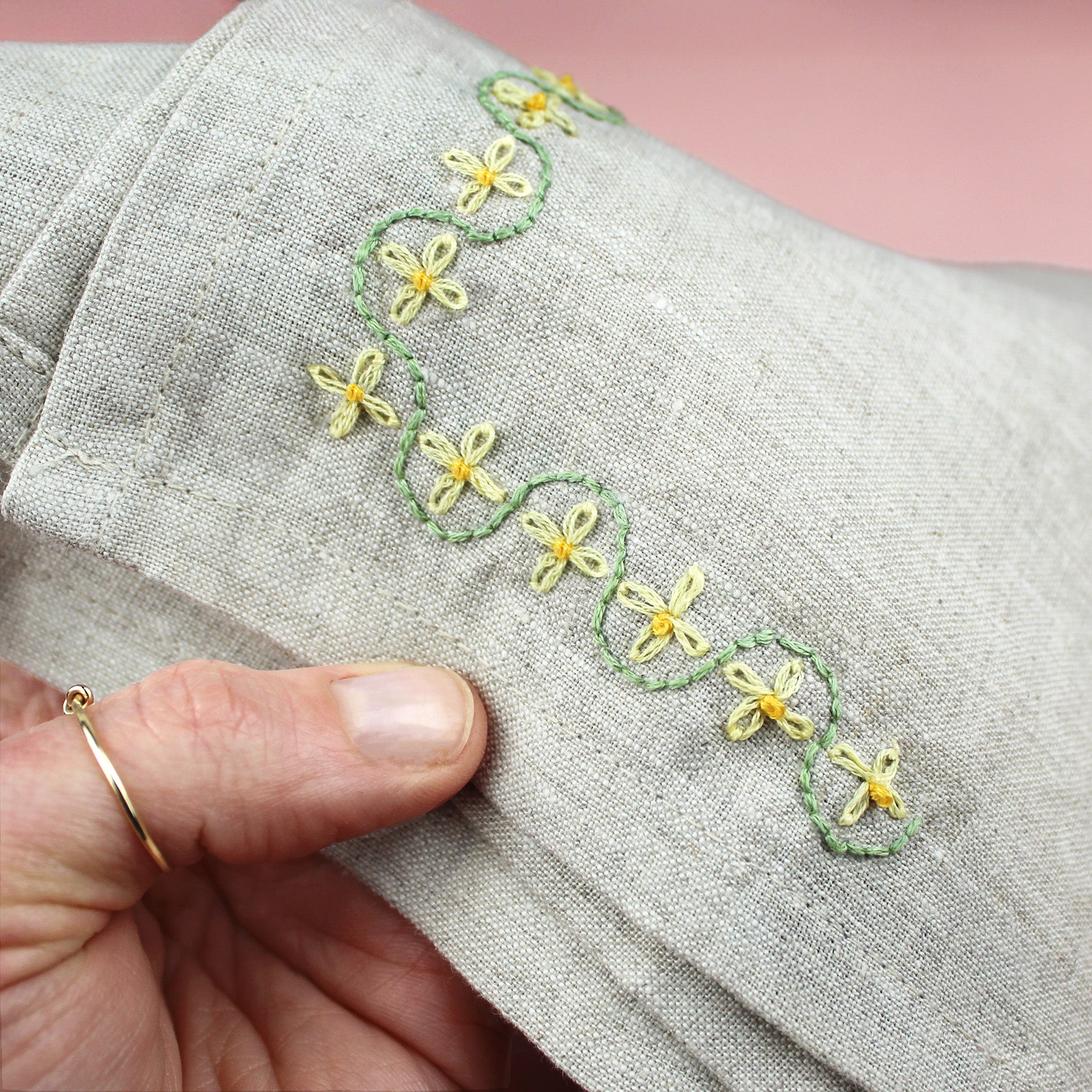
Chain stitch forms a line of connected loops that sits slightly raised on the surface of the fabric. It is a great choice when you want an outline to look bolder than back stitch, and it works beautifully for borders, swirls, stems, lettering and simple decorative lines.
You can stitch chain stitch in straight lines or gentle curves. For tighter curves, make your stitches a little shorter so the chain can turn smoothly without looking angular.
Ready to practise chain stitch?
Chain stitch is a lovely one to practise if you enjoy bold outlines, borders, lettering and decorative details. These beginner-friendly embroidery kits include printed fabric, threads, a hoop, needle and clear step-by-step instructions, so you can start stitching straight away.

Beginner Stitch Sampler Embroidery Kit
Learn 13 essential embroidery stitches, including chain stitch, with a calm pastel sampler design.
Shop the sampler kit
Fabulous Flowers Embroidery Kit
A cheerful beginner-friendly flower embroidery kit with everything included and clear step-by-step instructions.
Shop Fabulous Flowers
Pastel Wildflowers Embroidery Kit
A soft floral embroidery kit with a gentle, nature-inspired design to stitch over a few relaxing evenings.
Shop Pastel WildflowersTips for chain stitch
- Before you pull through, check the loop is sitting underneath your needle so the stitch catches properly.
- Try to keep your stitch length consistent so the loops look even.
- For curves, use shorter stitches to help the chain turn smoothly.
- If your loops look tight, loosen your tension slightly so the stitch keeps its rounded shape.
- Finish the row with a tiny straight stitch over the last loop to secure it neatly.