How to do running stitch
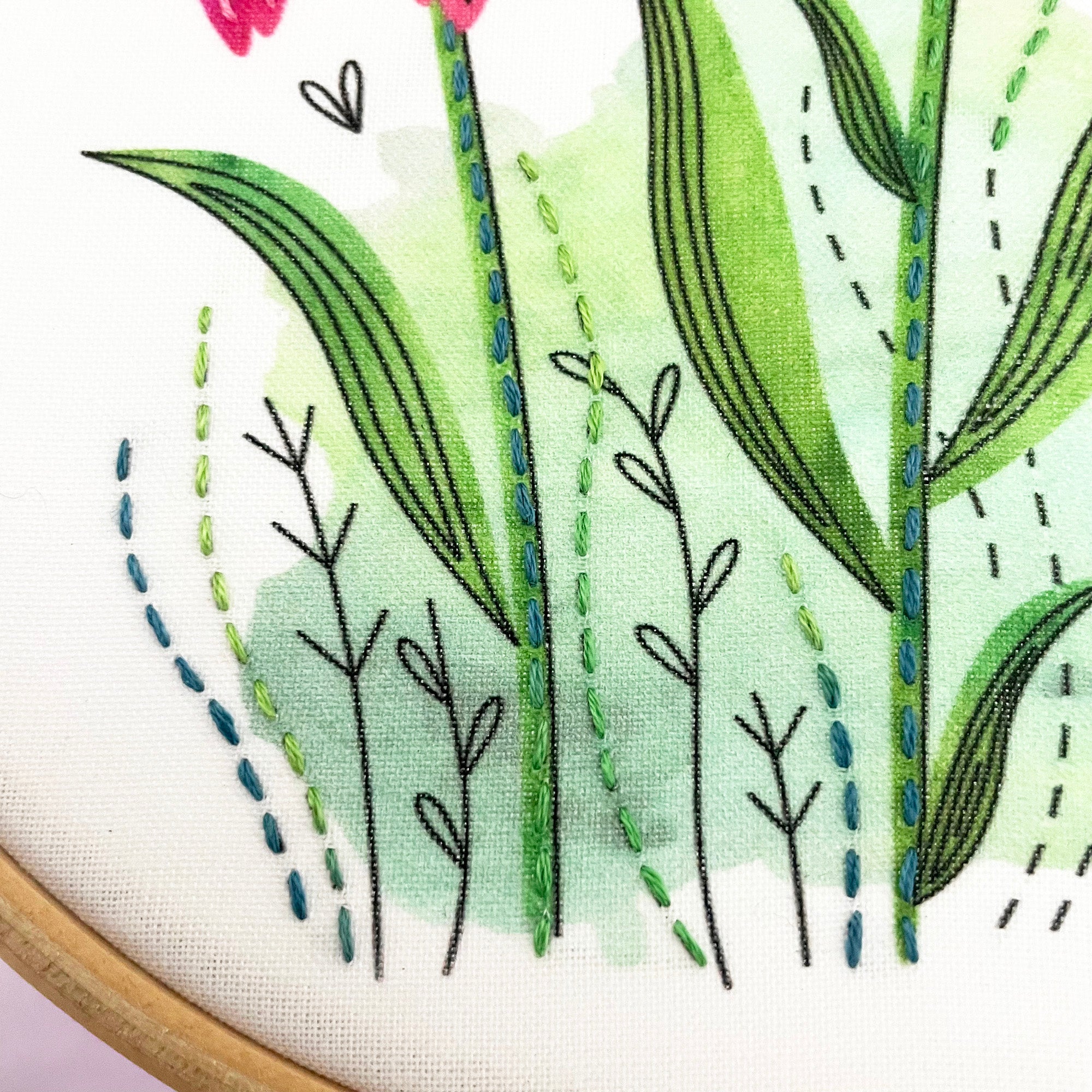
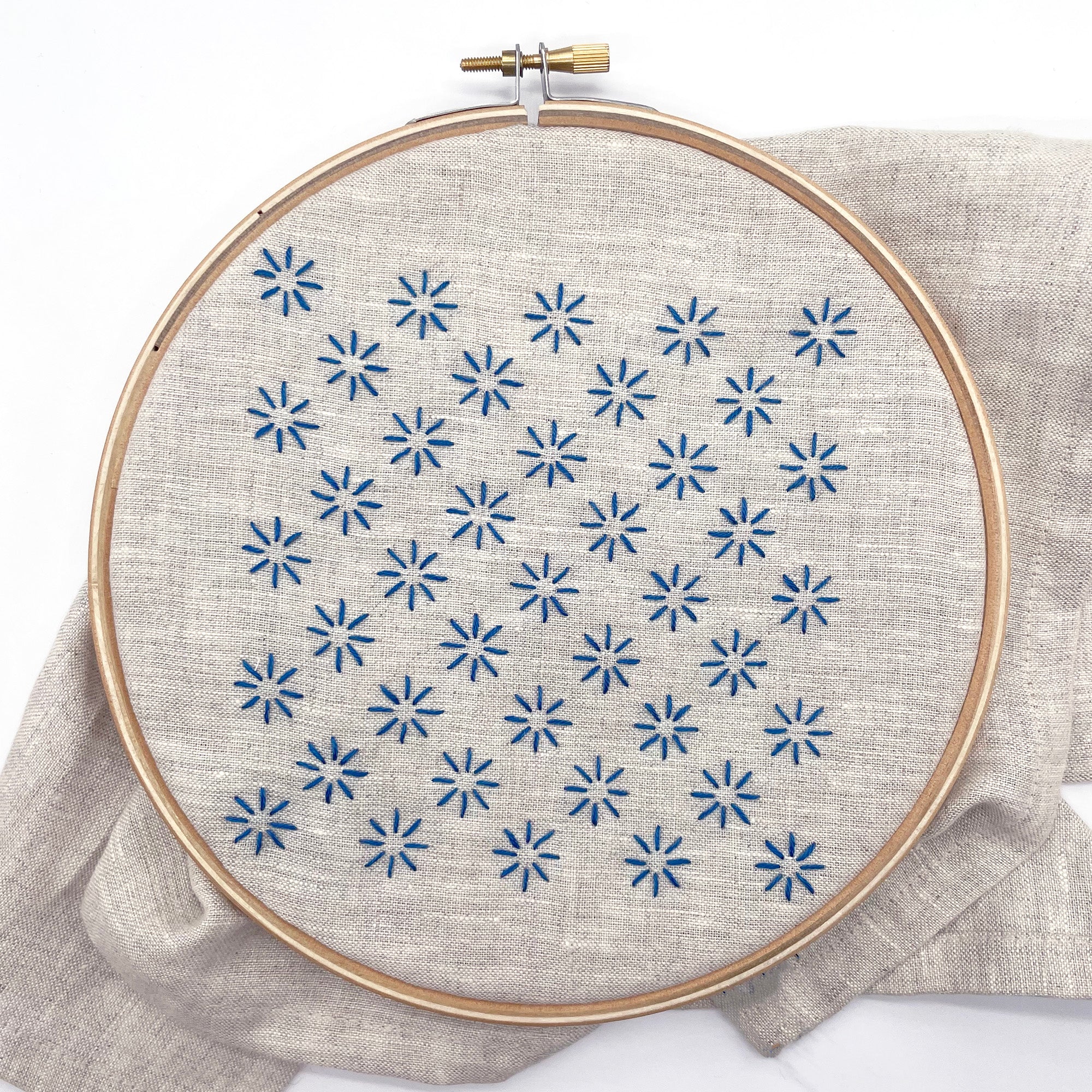
Running stitch is one of the simplest embroidery stitches to learn, and it is a really useful one to have in your stitching toolkit. It is made from small straight stitches with little gaps in between, creating a neat dashed line.
It is a lovely stitch for beginners because the movement is simple and easy to repeat. You can use it for outlines, borders, decorative rows, visible mending and simple stitched details.

How to do running stitch step-by-step
- Bring your needle up through the fabric at point 1, where you want your line of stitching to start.
- Take the needle down a short distance along the line at point 2. This makes your first straight stitch.
- Continue along the line, working up and down through the fabric.
- Try to keep the stitches and gaps a similar size if you want a neat, even line.
You can work running stitch one stitch at a time, or load a few stitches onto the needle before pulling the thread through. If you are new to embroidery, I’d start with one stitch at a time until the spacing feels comfortable.
What is running stitch used for?
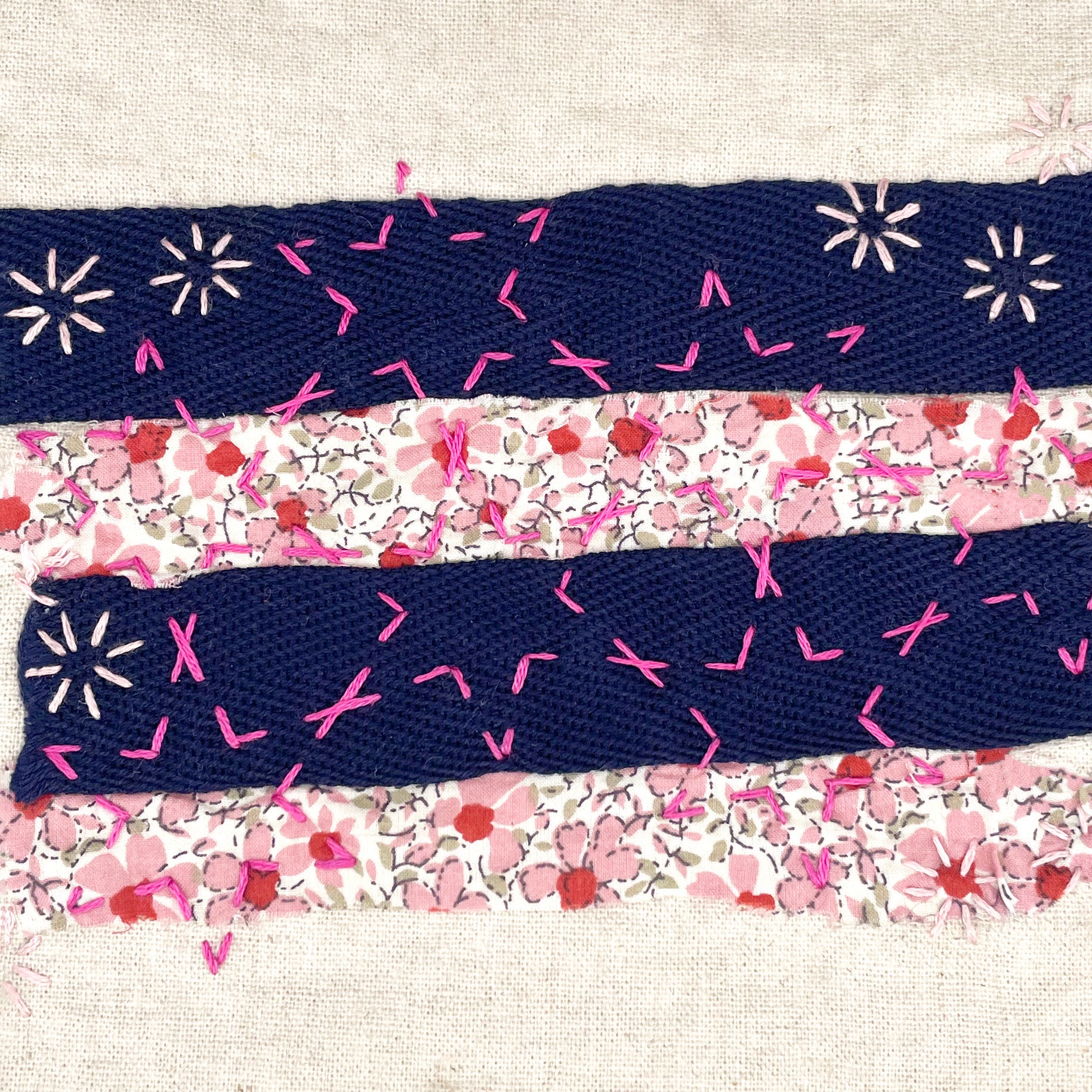
Running stitch is used in embroidery, hand sewing and visible mending. In embroidery, it can create simple outlines, borders, dashed lines, texture and decorative rows. It is also useful for adding small details around a motif without making the design feel too heavy.
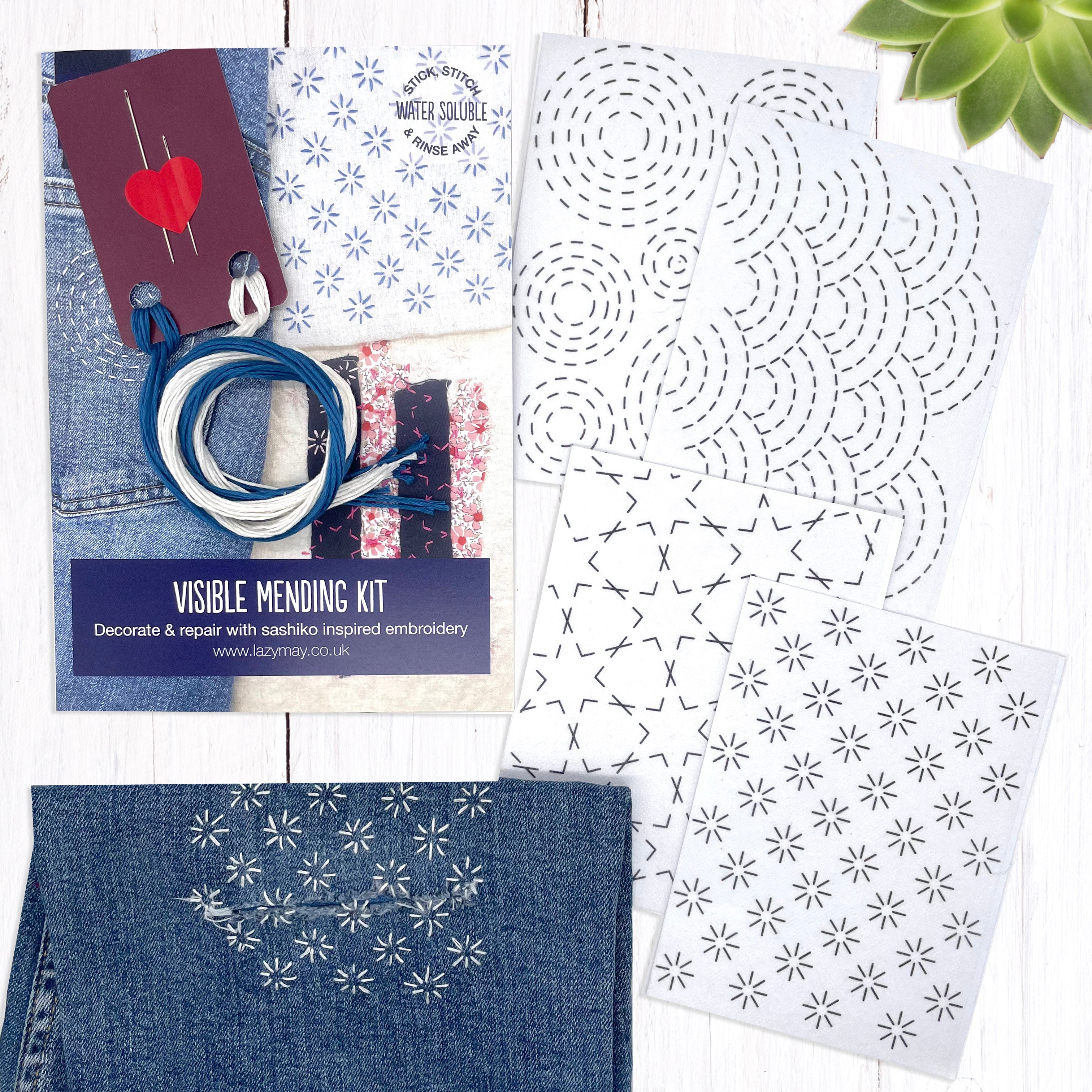
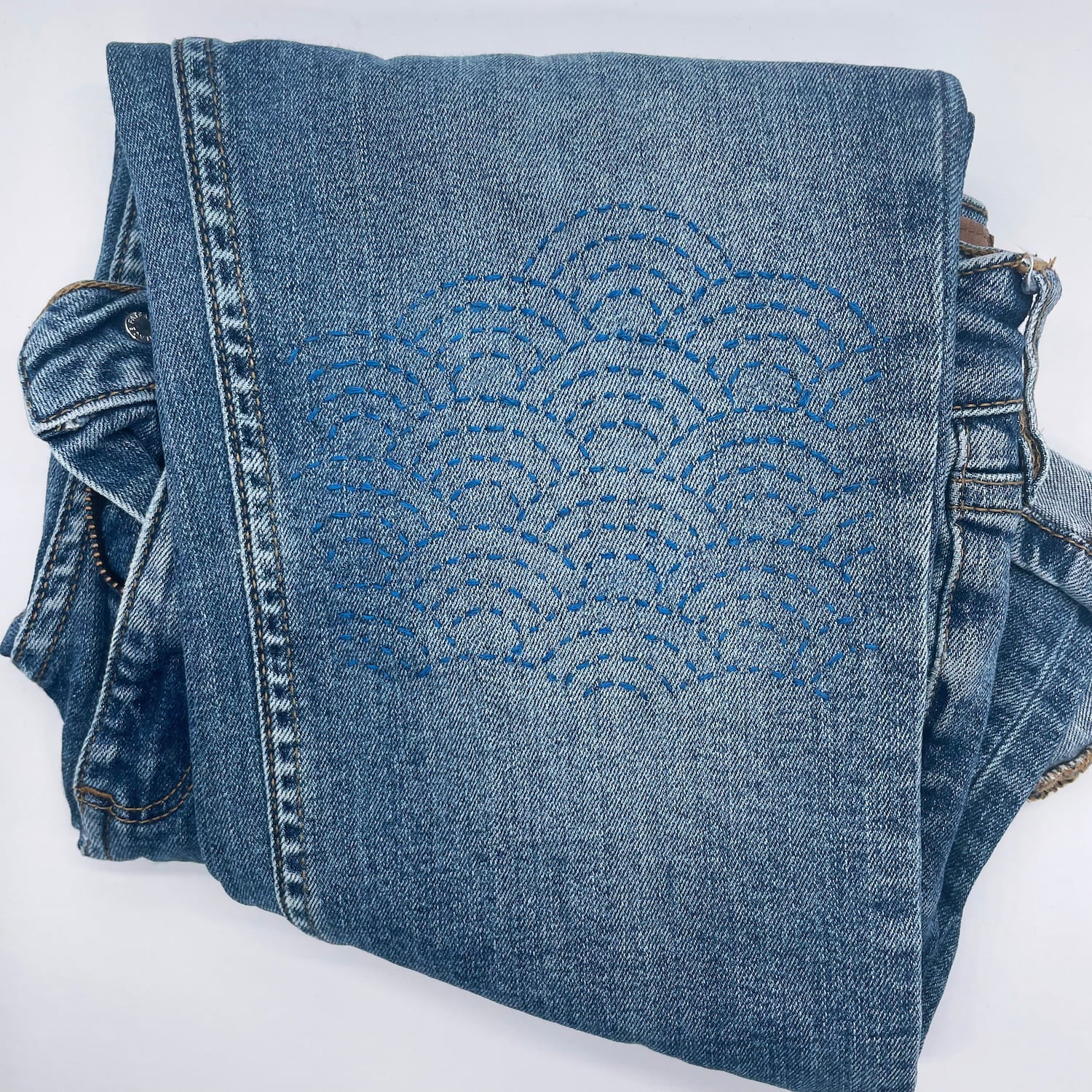
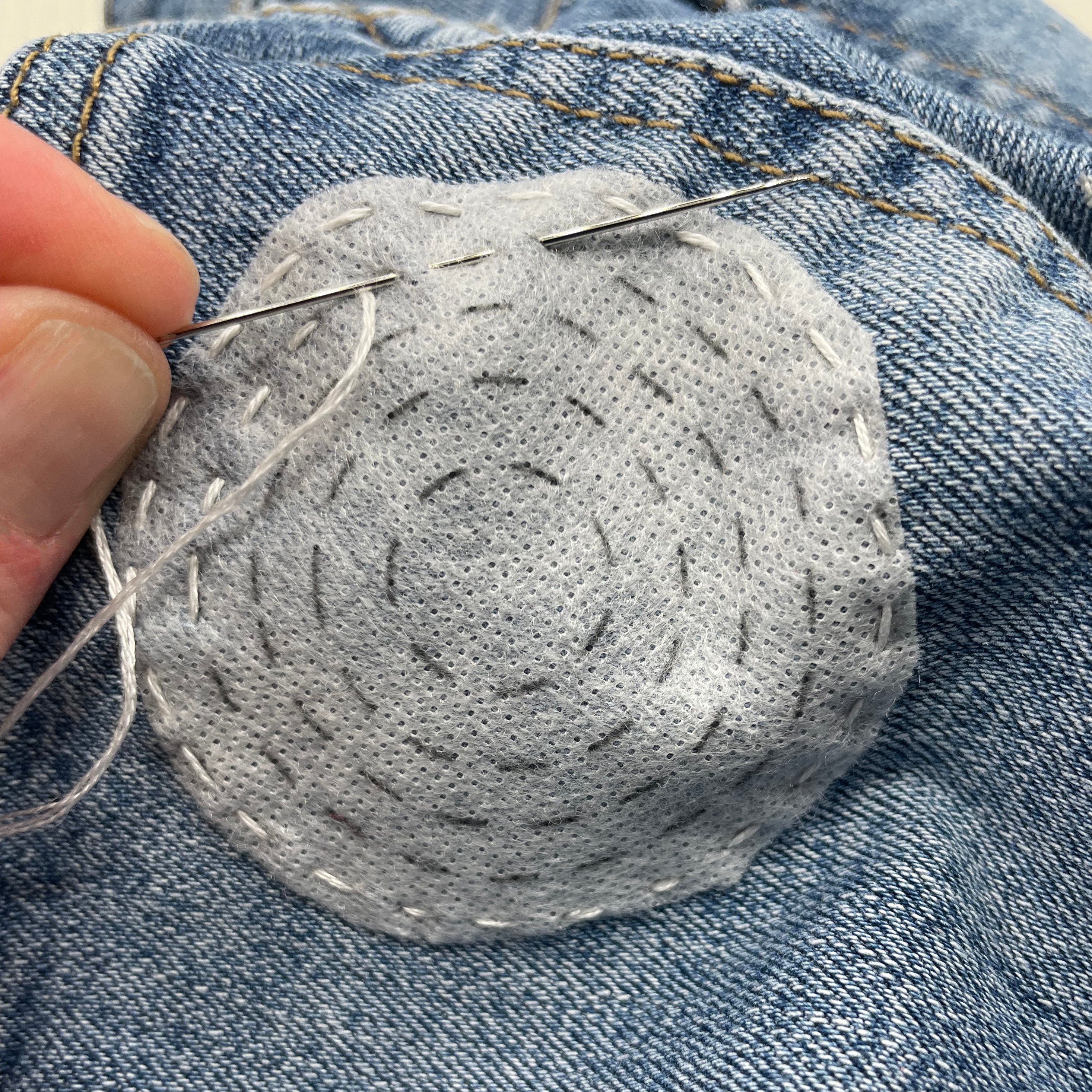
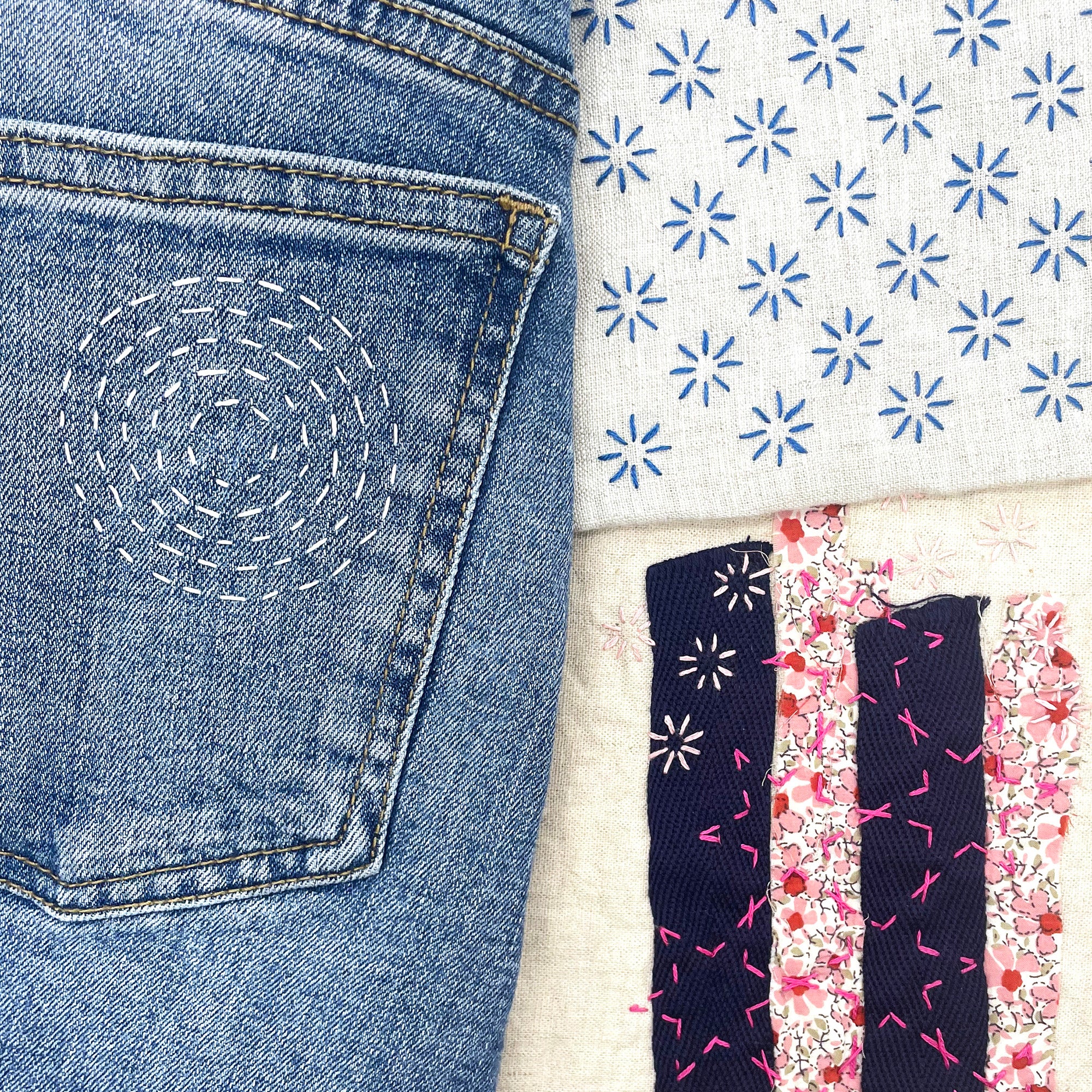
In visible mending, running stitch can be used to hold fabric patches in place, add rows of decorative stitching, or build up sashiko-inspired patterns. It is simple, rhythmic and practical, which makes it a nice stitch for slow, relaxing projects.
Practise running stitch with a visible mending project
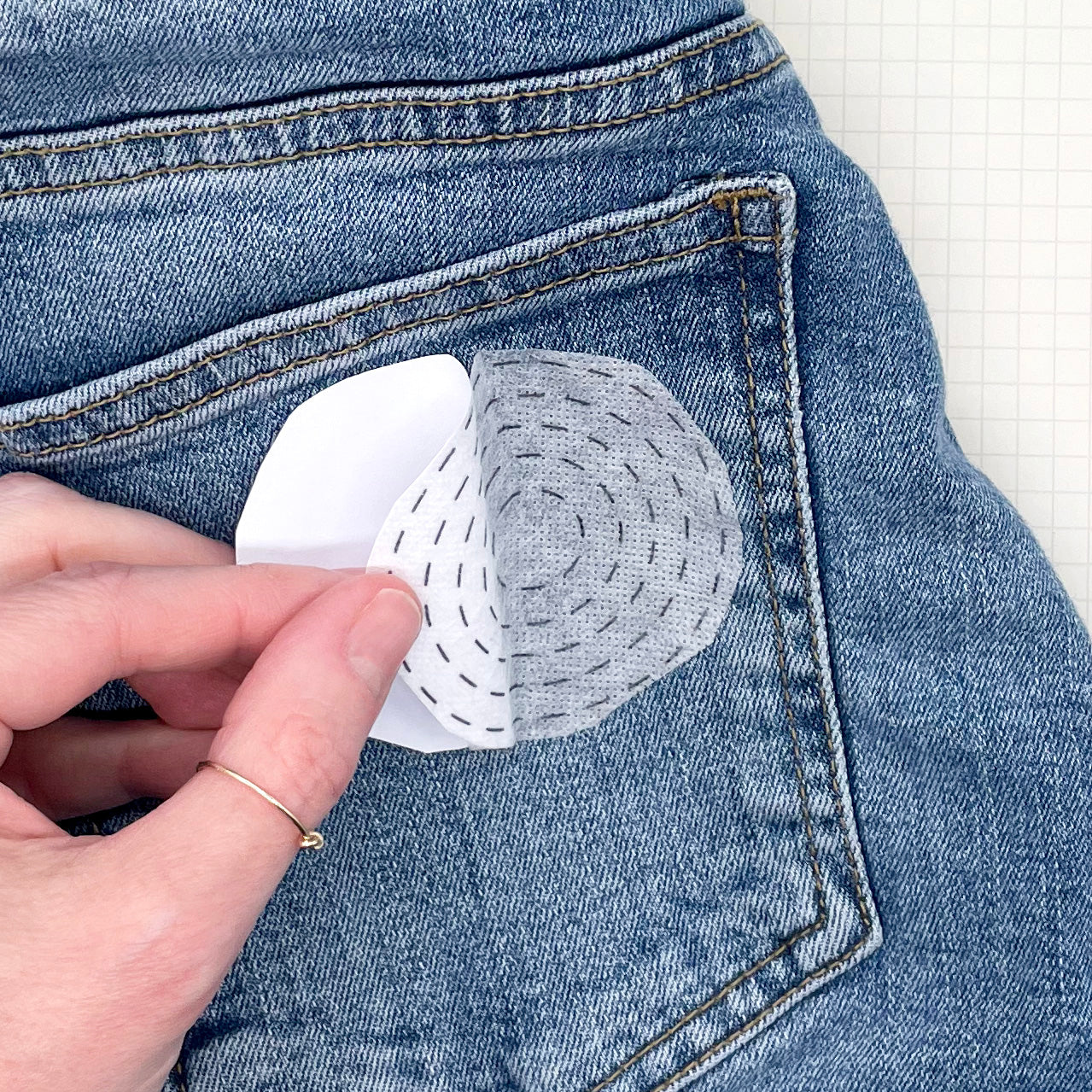
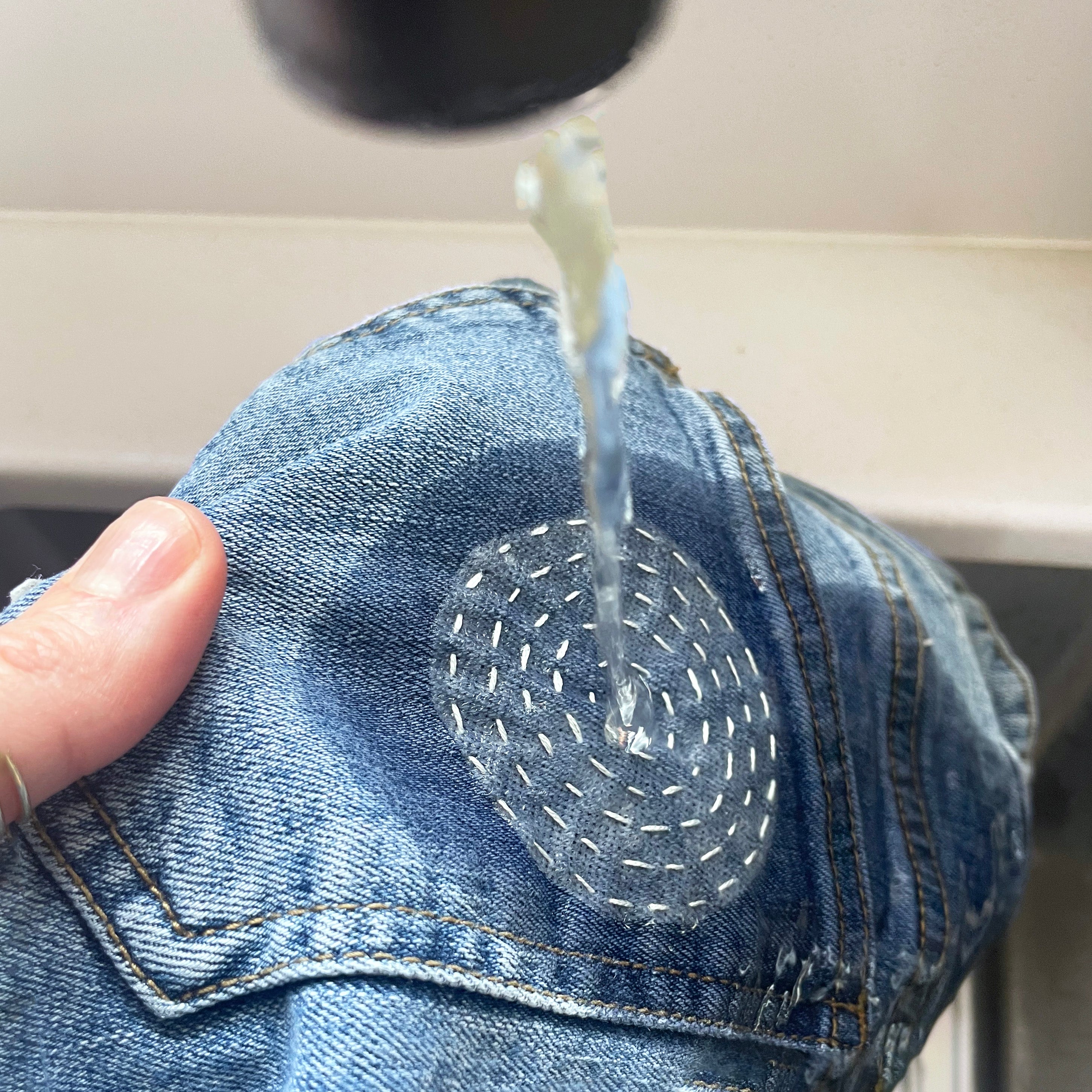
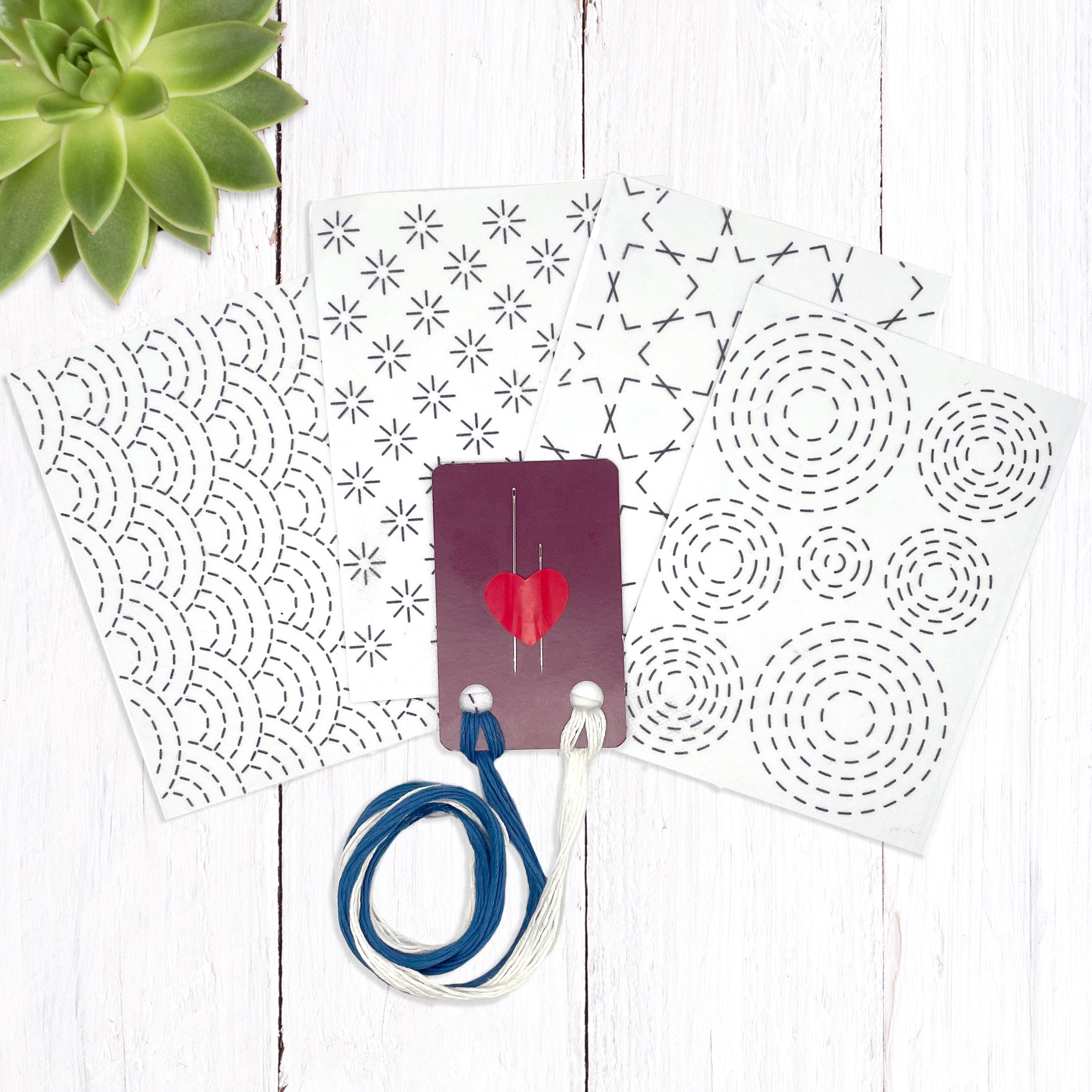
These visible mending kits use simple running stitch to create decorative sashiko-inspired patterns. Each kit contains four water-soluble stick and stitch designs, thread, needles and instructions, so you can repair or decorate clothes without drawing the pattern by hand.

Visible Mending Kit: Set 1
Use simple running stitch to add decorative geometric patterns to jeans, jackets, bags and other fabric projects.
Shop Set 1
Visible Mending Kit: Set 2
A second set of sashiko-inspired designs for repairing worn fabric, securing patches or adding stitched detail to your clothes.
Shop Set 2
Visible Mending Kit: Set 3
Four more water-soluble patterns for creating practical repairs and decorative running stitch designs on everyday fabrics.
Shop Set 3Tips for running stitch
- Keep your stitch length and gap length similar if you want a tidy, balanced line.
- Use an embroidery hoop to keep the fabric steady and help prevent puckering.
- Try shorter stitches around curves so the line follows the shape more smoothly.
- Use a faint guideline if you are stitching a straight border or long line.
- For visible mending, try stitching several rows next to each other to build up simple texture.