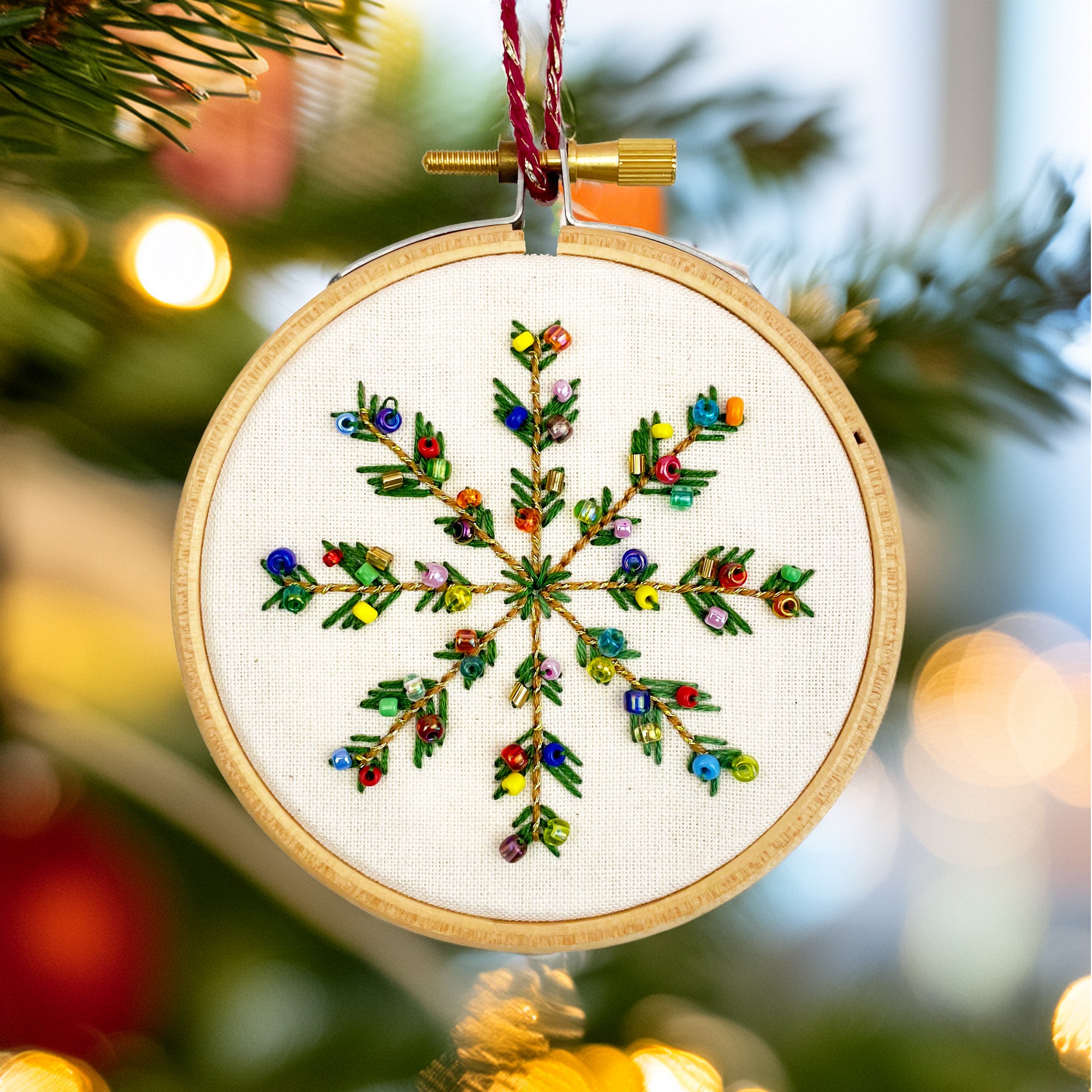
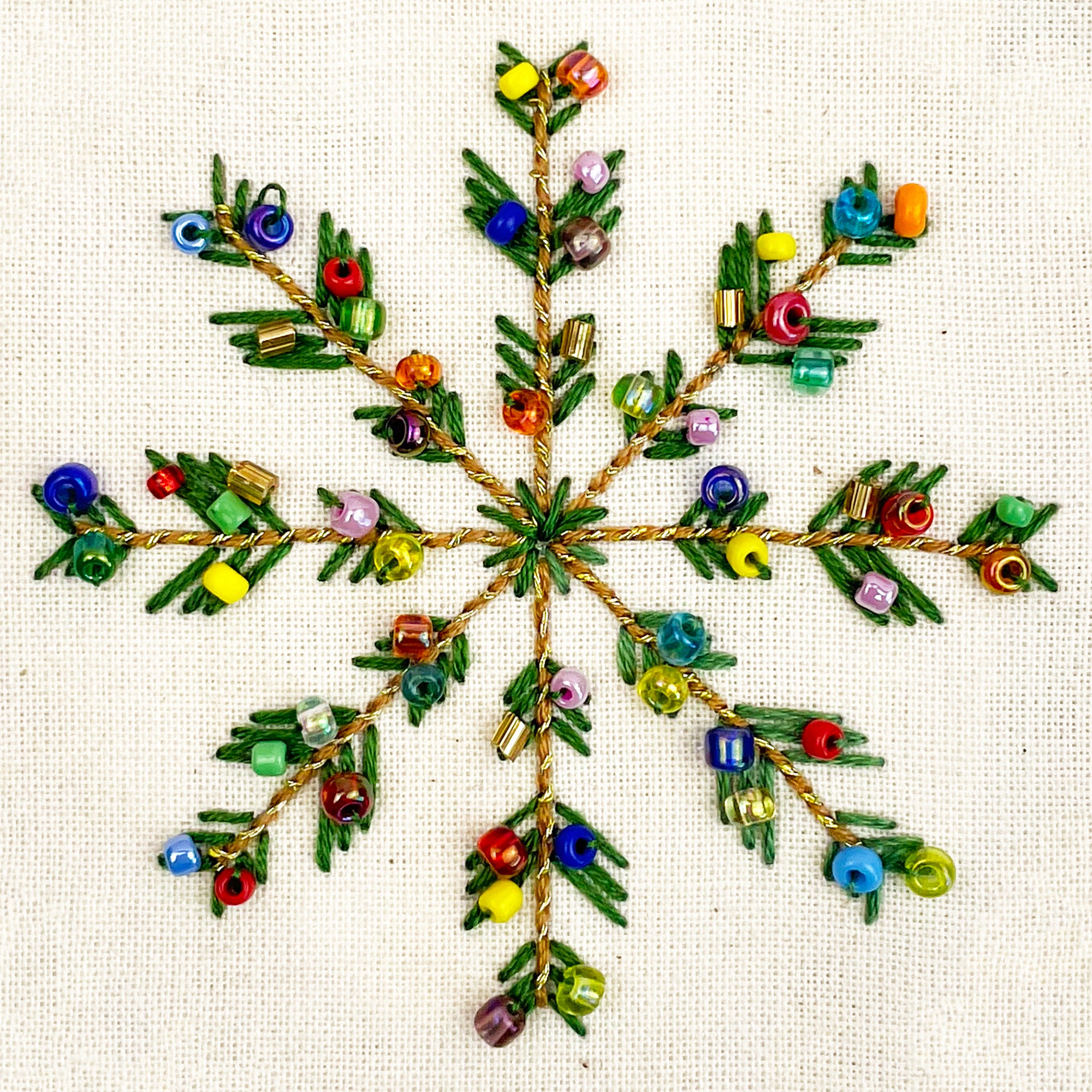
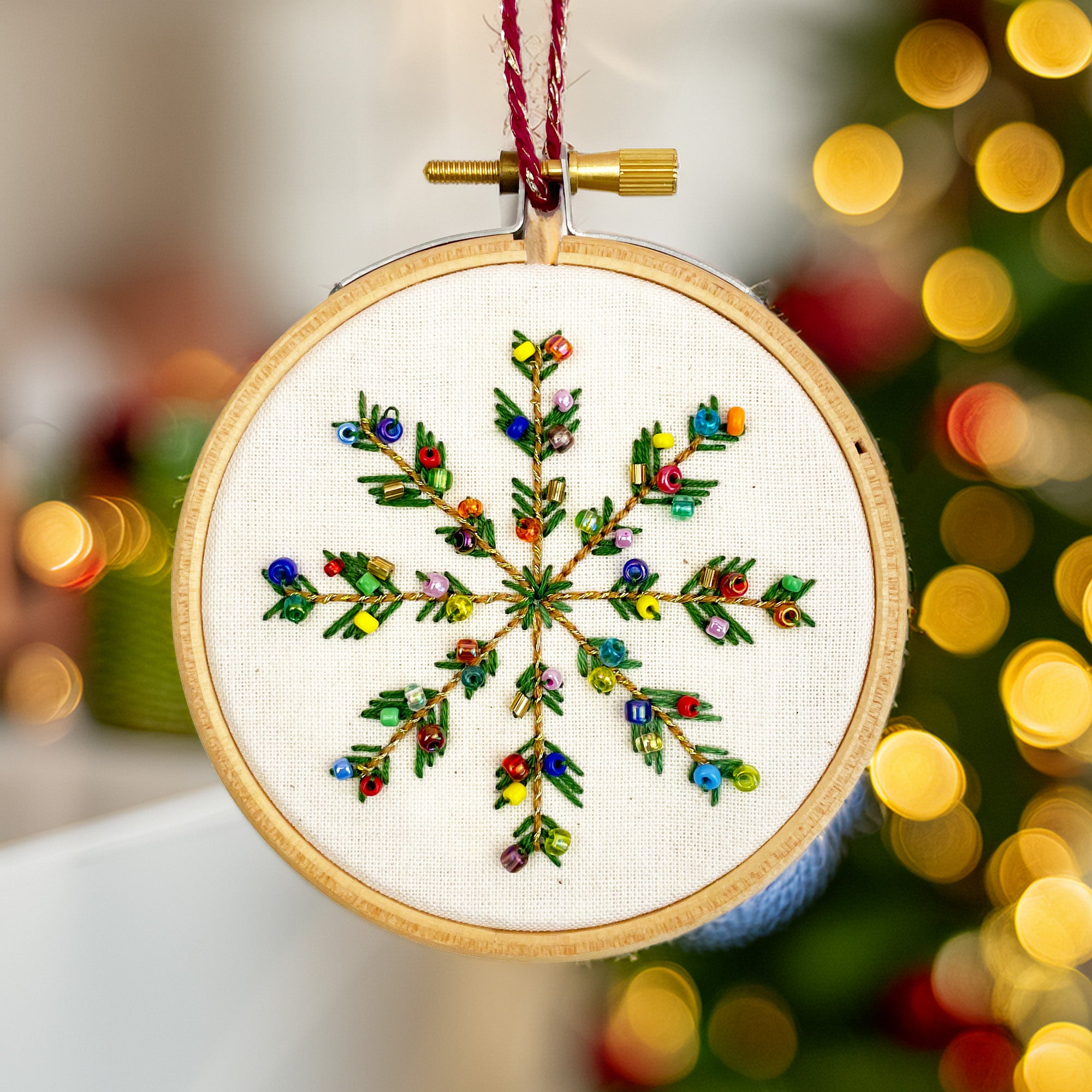
How to do laced back stitch
Laced back stitch is a decorative embroidery stitch made by weaving a second thread through a row of back stitch. It is a simple way to add extra colour, texture and detail without making the stitching much more difficult.
If you can already do back stitch, this is a lovely stitch to try next. The base line is stitched first, then the lacing thread is passed through the stitches on top, rather than stitched through the fabric each time.

How to do laced back stitch step-by-step
- Start by stitching a neat row of back stitch along your drawn line. This will be the foundation for the lacing.
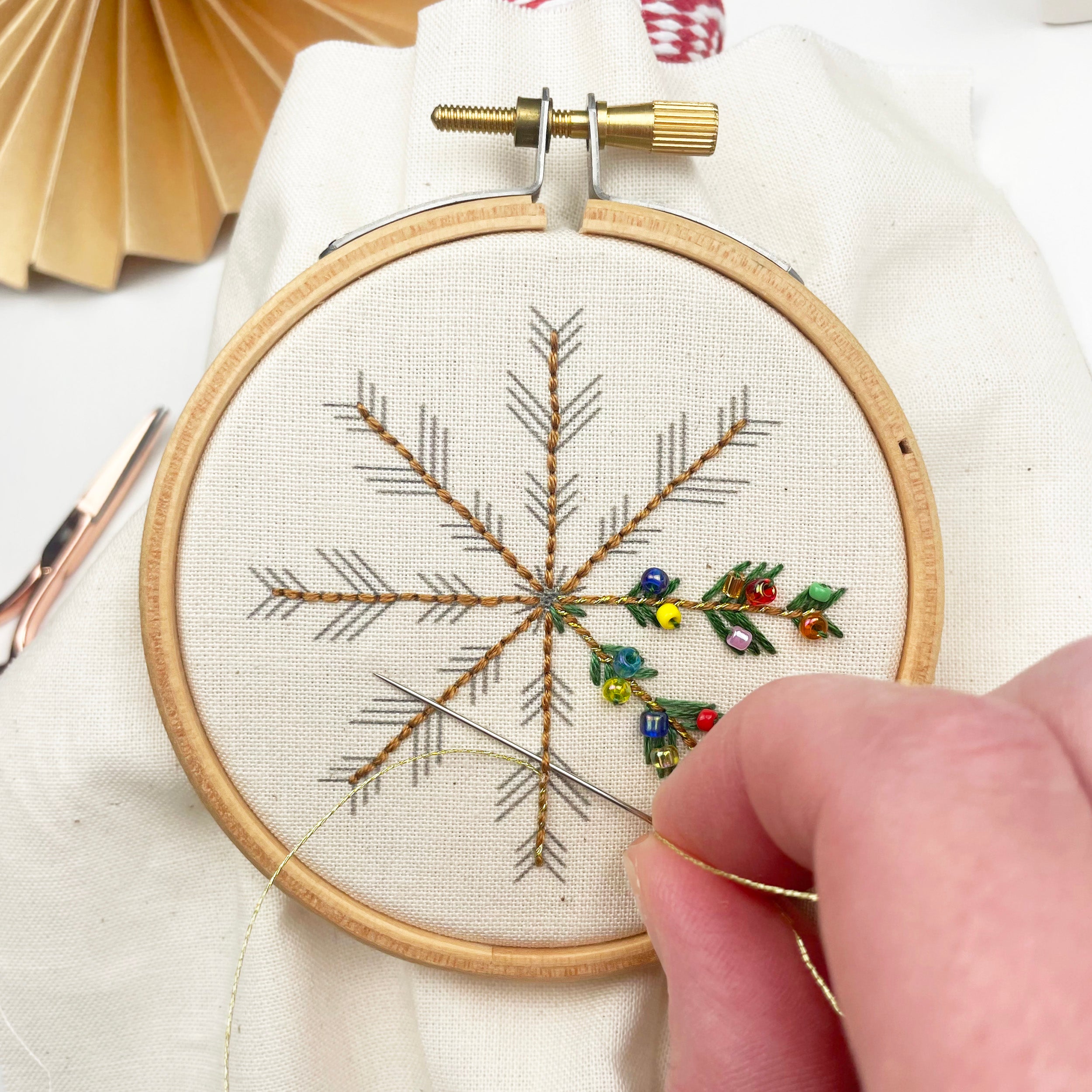
- Thread your needle with your second colour. Bring the needle up at the start of the stitched line, close to the first back stitch.
- Slide the needle under the first back stitch without piercing the fabric.
- Continue weaving the second thread under each back stitch along the line, keeping the lacing thread sitting on the surface of the fabric.
- Try not to pull the lacing thread too tightly. It should sit neatly around the back stitches without bunching the fabric.
- When you reach the end of the line, take the thread to the back of the fabric, secure it neatly and trim the ends.
I find it easiest to use the blunt end of the needle, or a tapestry needle if you have one, for the lacing part. That way you are less likely to split the stitches or catch the fabric by accident.
What is laced back stitch used for?
Laced back stitch is useful anywhere you want a simple line to feel a bit more decorative. It works well for borders, stems, outlines, lettering, frames and little details that need a touch of extra colour.
Because the second thread is woven on top, it is a good stitch for playing with colour combinations. You can use a close matching shade for a subtle textured line, or choose a contrasting colour if you want the lacing to stand out.
Tips for laced back stitch
- Use a neat row of back stitch as your base so the lacing has an even foundation.
- Use a blunt needle for the lacing thread if you have one, especially on finer fabric.
- Do not pull the lacing thread too tightly or it can distort the back stitches underneath.
- Try two thread colours to make the laced effect easier to see.
- Keep the lacing thread on the surface of the fabric, sliding under the stitches rather than stitching through the fabric each time.
- For curves, use shorter back stitches so the finished line follows the shape more smoothly.