How to Use Iron-On Embroidery Transfers
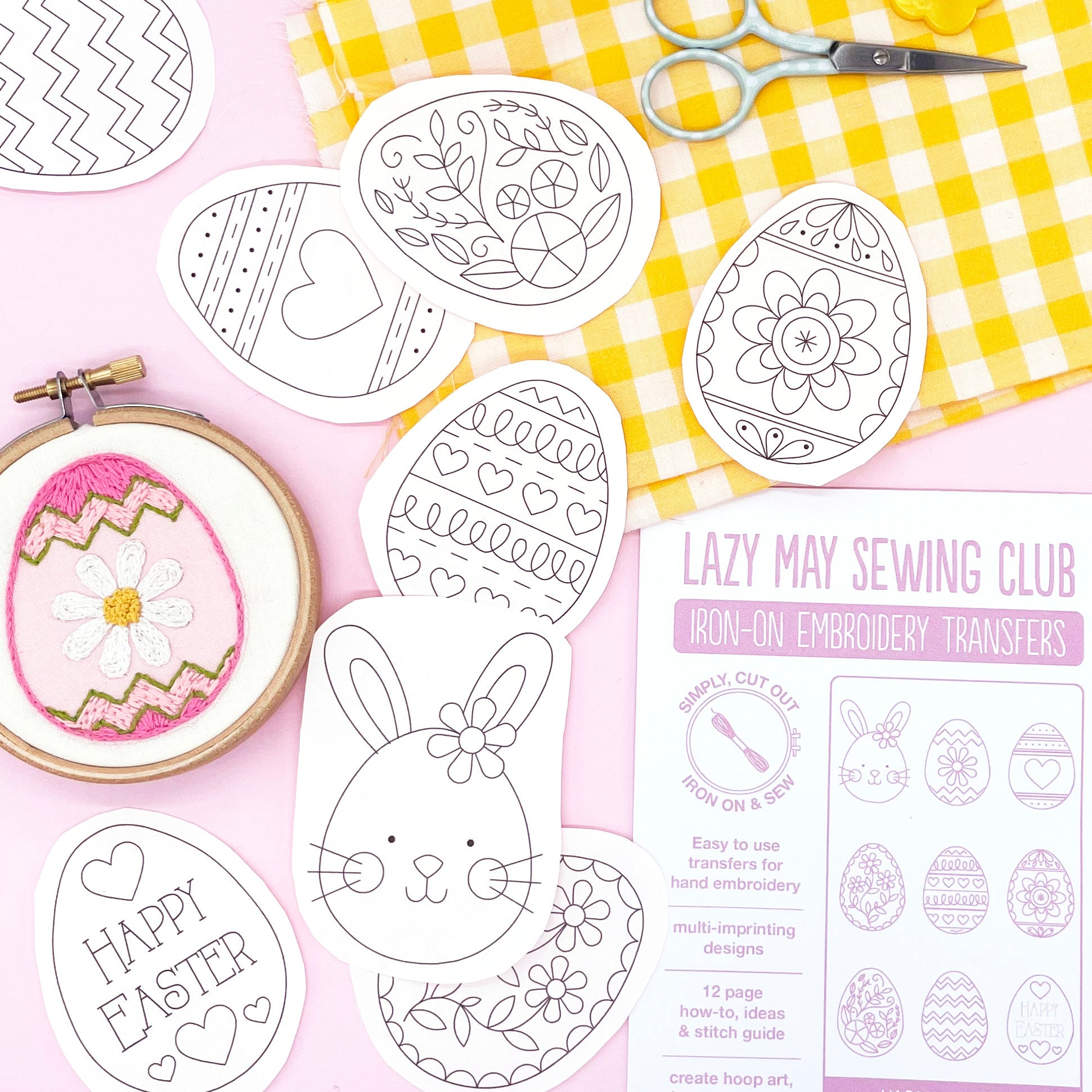
Iron-on embroidery transfers are one of the easiest ways to add an embroidery design to fabric. You simply cut out the design, press it onto light-coloured fabric and stitch over the lines, so there is no tracing or drawing needed.
Below you’ll find a quick video, step-by-step photos and simple tips to help you get clear transfer lines and start stitching with confidence.
Want to skip the drawing part? Browse my iron-on embroidery patterns and choose a ready-to-transfer design.
Watch: how to use iron-on embroidery transfers
Prefer to watch first? This short video gives you a quick look at how easy the transfers are to use. If you’d rather follow photos, scroll down for the full step-by-step guide.
How to use iron-on embroidery transfers step by step
Step 1: Cut out your design
Choose your design and cut neatly around it, leaving a small border around the edges. This makes the transfer easier to handle and position.

Step 2: Position the transfer
Pre-heat your fabric with a hot iron. Place the transfer ink-side down onto your fabric where you’d like the design to appear.

Step 3: Iron the transfer
Set your iron to the hottest setting suitable for your fabric, with no steam. Press firmly for 3 to 10 seconds. Lift one corner to check the lines have transferred before removing the paper fully.

Step 4: Peel away the paper
Carefully peel away the paper backing to reveal the printed design on the fabric.

Step 5: Place in a hoop and start stitching
Pop your fabric into an embroidery hoop and stitch directly over the printed lines. If you need a refresher, here’s my guide to setting up an embroidery hoop.

Ready to try iron-on embroidery transfers? These beginner-friendly designs press straight onto light fabric, so you can get to the stitching without tracing or drawing out your pattern first.


Best fabric for iron-on embroidery transfers
Iron-on embroidery transfers work best on smooth, light-coloured fabrics where the lines will show up clearly. Cotton and linen are usually the easiest choices, especially for beginners.
Very dark fabrics, very textured fabrics or loosely woven materials can make the design harder to transfer or harder to see. If you’d like to stitch on darker fabrics or clothes, my stick and stitch embroidery patterns are often a better option.
Tips for getting clear iron-on embroidery transfer lines
If your transfer hasn’t come out clearly, one of these is usually the reason:
- The iron isn’t hot enough – use a hot, dry iron on the highest setting your fabric allows.
- Steam is turned on – iron-on transfers work best with no steam.
- The fabric is too dark or textured – smooth, light fabrics usually give the clearest result.
- You need a little more pressure – press firmly and check one corner before removing the paper fully.
Iron-on embroidery transfer FAQs
Can I use iron-on embroidery transfers on dark fabric?
Iron-on embroidery transfers work best on light-coloured fabric because the transferred lines need to be visible while you stitch. For dark fabric, denim or clothing, stick and stitch embroidery patterns are usually a better option.
Do iron-on embroidery transfer lines wash out?
Iron-on embroidery transfer lines are usually permanent, so the design should be covered with stitches. They may fade slightly over time and with washing, but they are not designed to rinse away completely.
Can iron-on embroidery transfers be reused?
Yes, many iron-on embroidery transfers can be used more than once, depending on the fabric, heat and pressure. The first transfer is usually the clearest, so it’s always worth doing a small test first.
Ready to give it a try?
Browse my iron-on embroidery patterns, beginner kits and free sampler if you’d like a simple next step.