What do you actually need to start embroidery?
If you’ve been thinking about trying embroidery but feel a bit unsure where to begin, you’re in the right place.
You don’t need a craft room full of tools, a huge basket of supplies, or years of sewing experience. To try your first few stitches, you just need a needle, some thread and something to stitch on.
This guide keeps things really simple, so you can have a go without feeling like you need to buy everything first.

The absolute minimum you need
Let’s keep this really simple. If you want to try embroidery before buying lots of supplies, these are the only things you need to begin.
Your basic embroidery supplies
For your very first try, you can keep things wonderfully simple. You probably already have most of this at home.
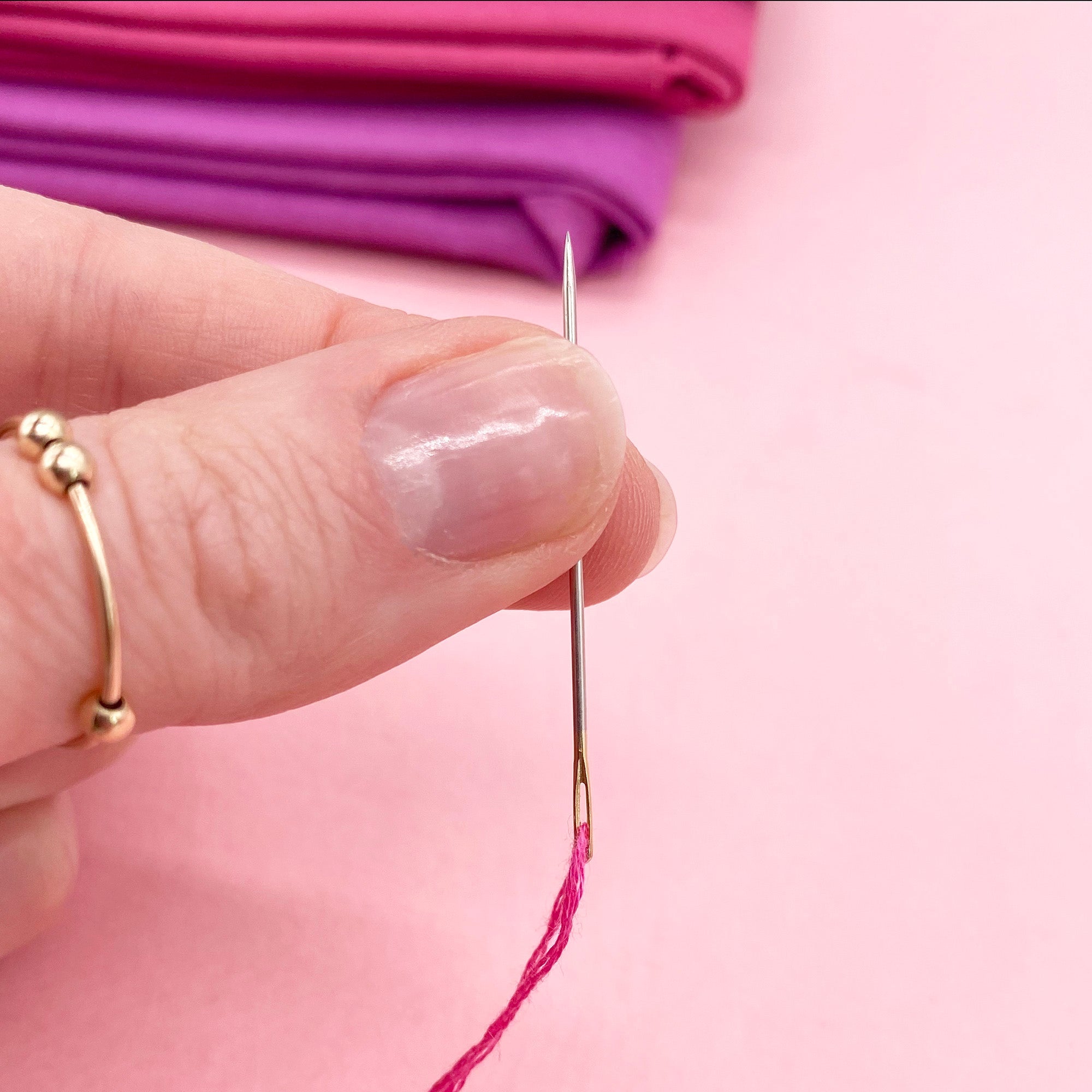
A needle
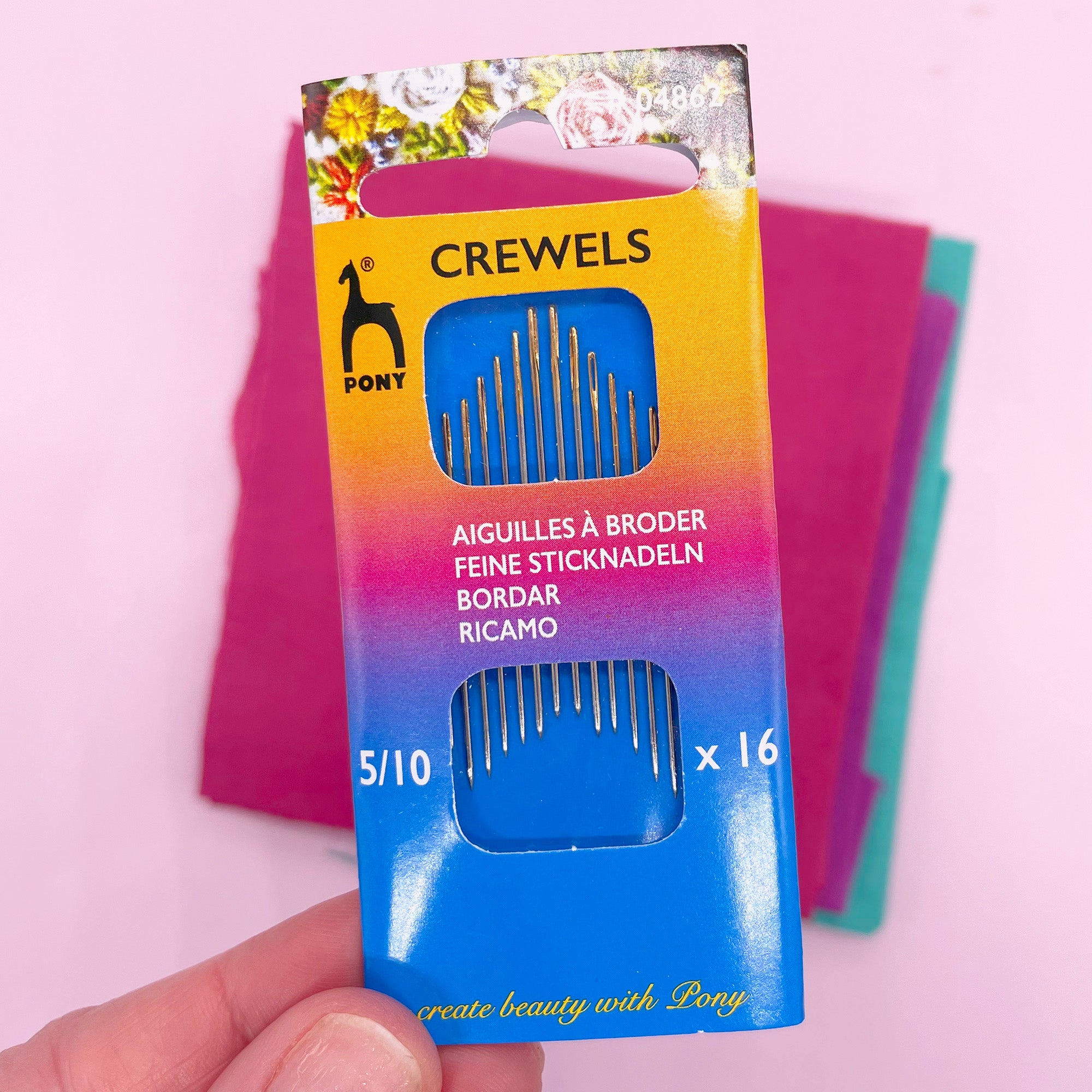
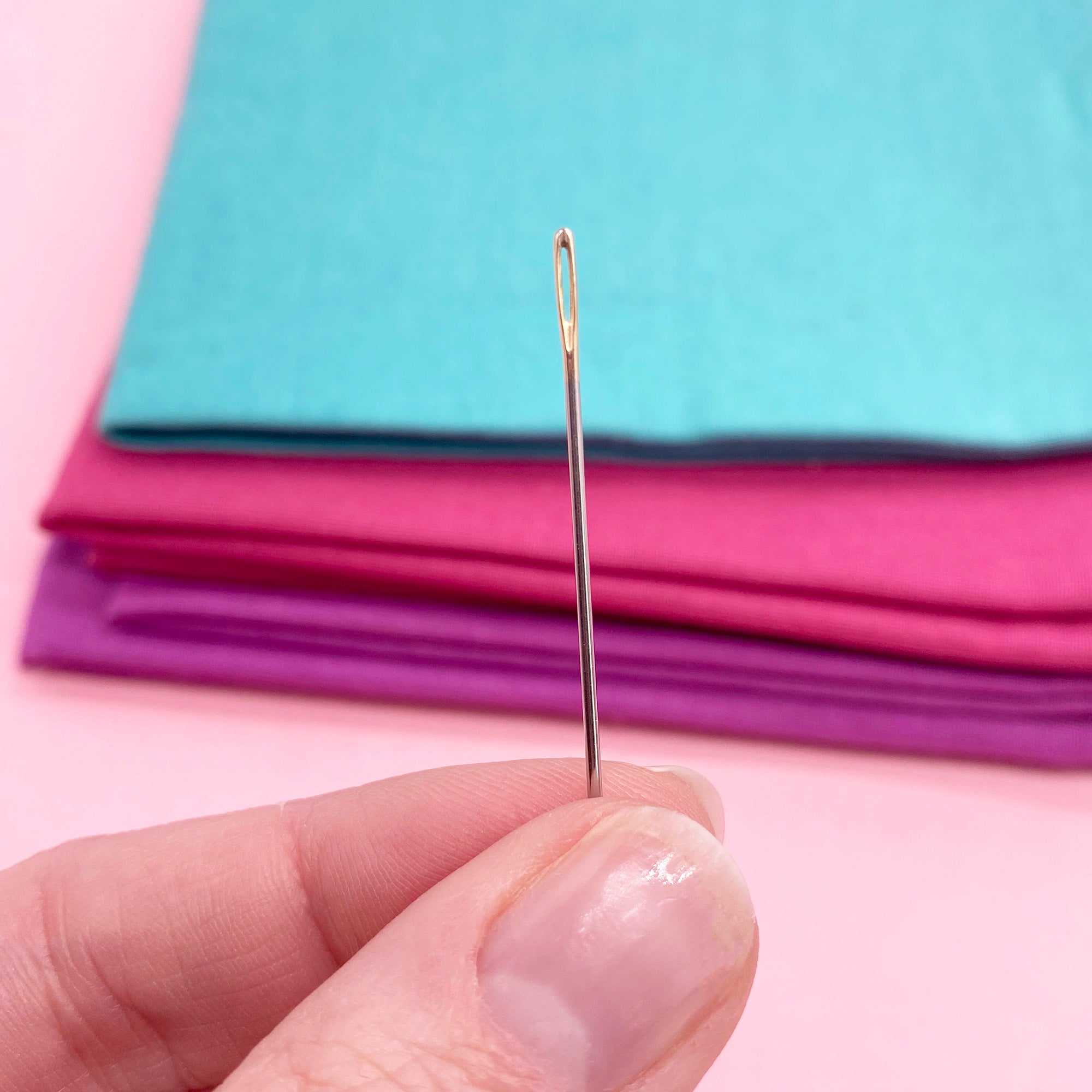
A basic sewing needle will work for your first stitches. Embroidery needles are a little easier because the eye is larger, but they are not essential to begin.
Needle size guideThread
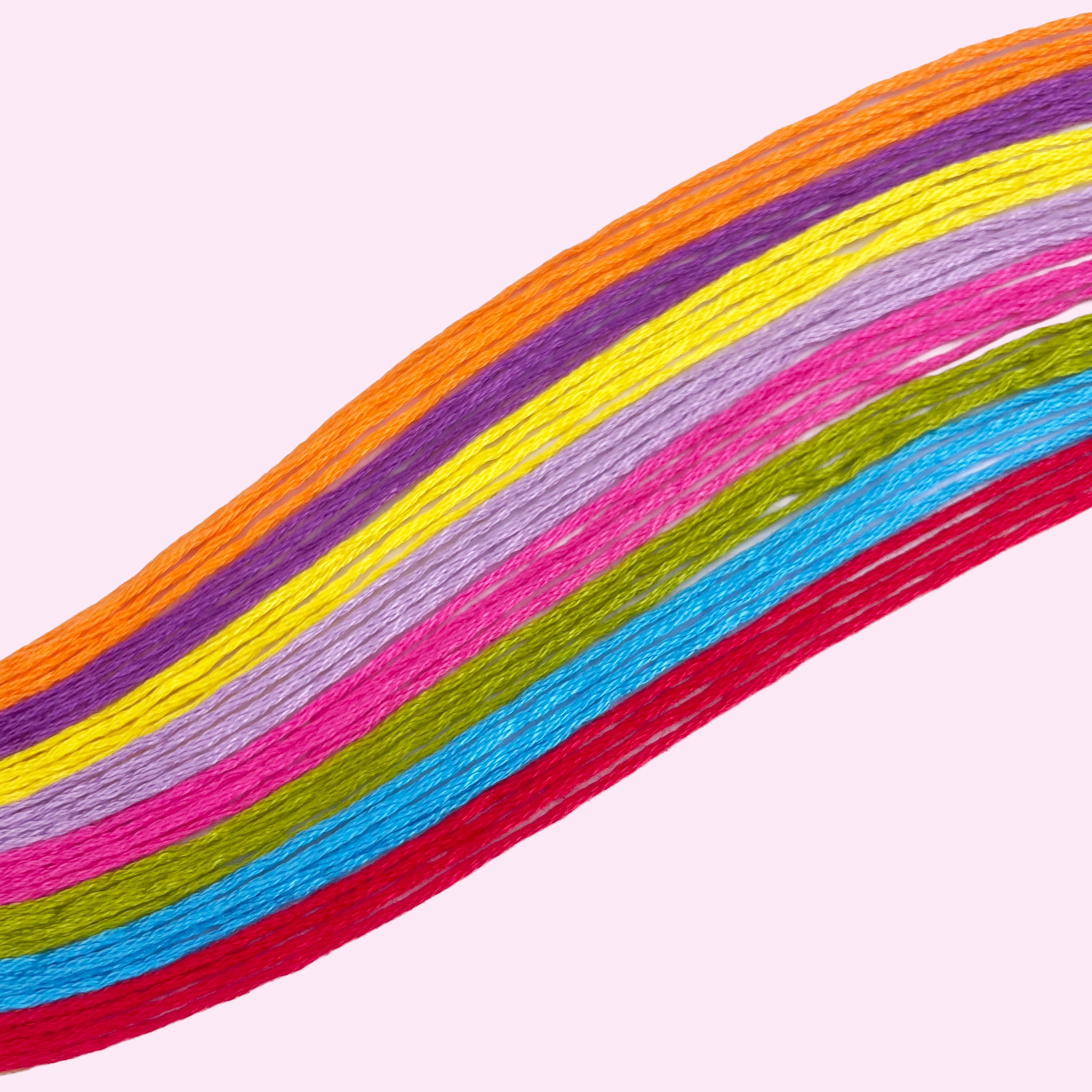
Embroidery thread is lovely to stitch with and easy to separate into strands, but ordinary sewing thread is fine while you are just having a first go.
Fabric
An old shirt, pillowcase, tea towel or scrap of cotton fabric is perfect. Light-coloured fabric is easiest because you can see your stitches clearly.
Scissors
Small sharp scissors are useful, but any scissors will do for trimming your thread when you are starting out.
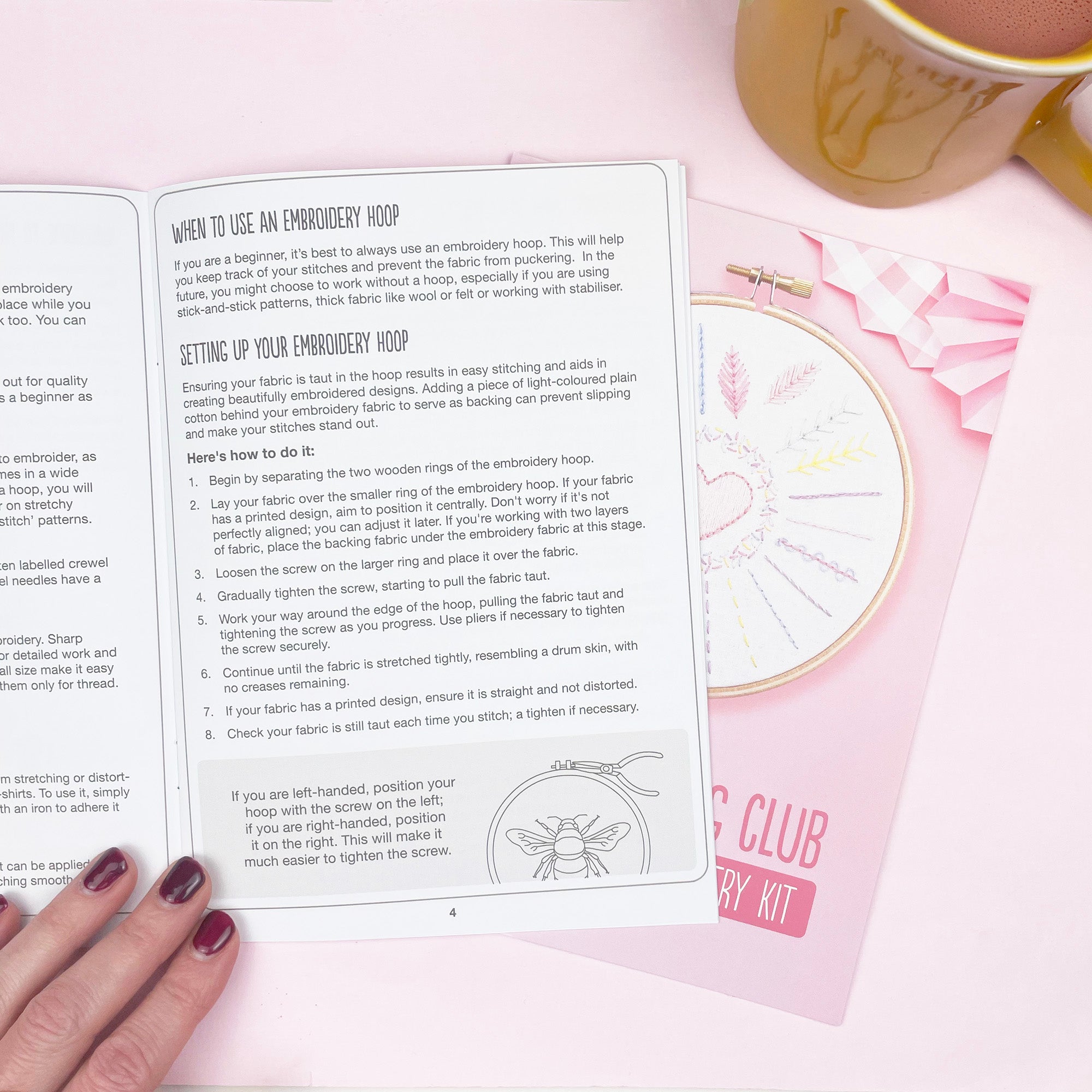
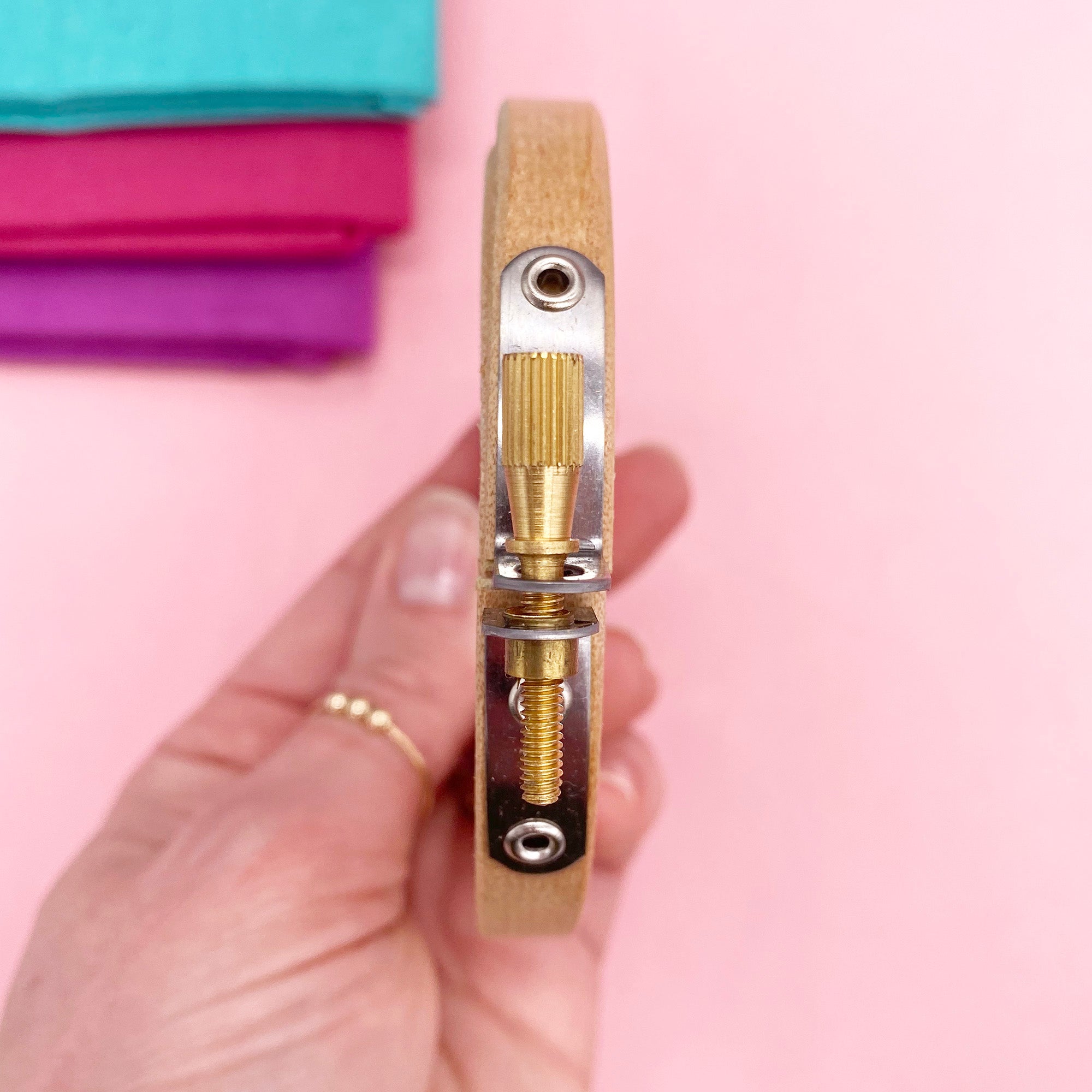
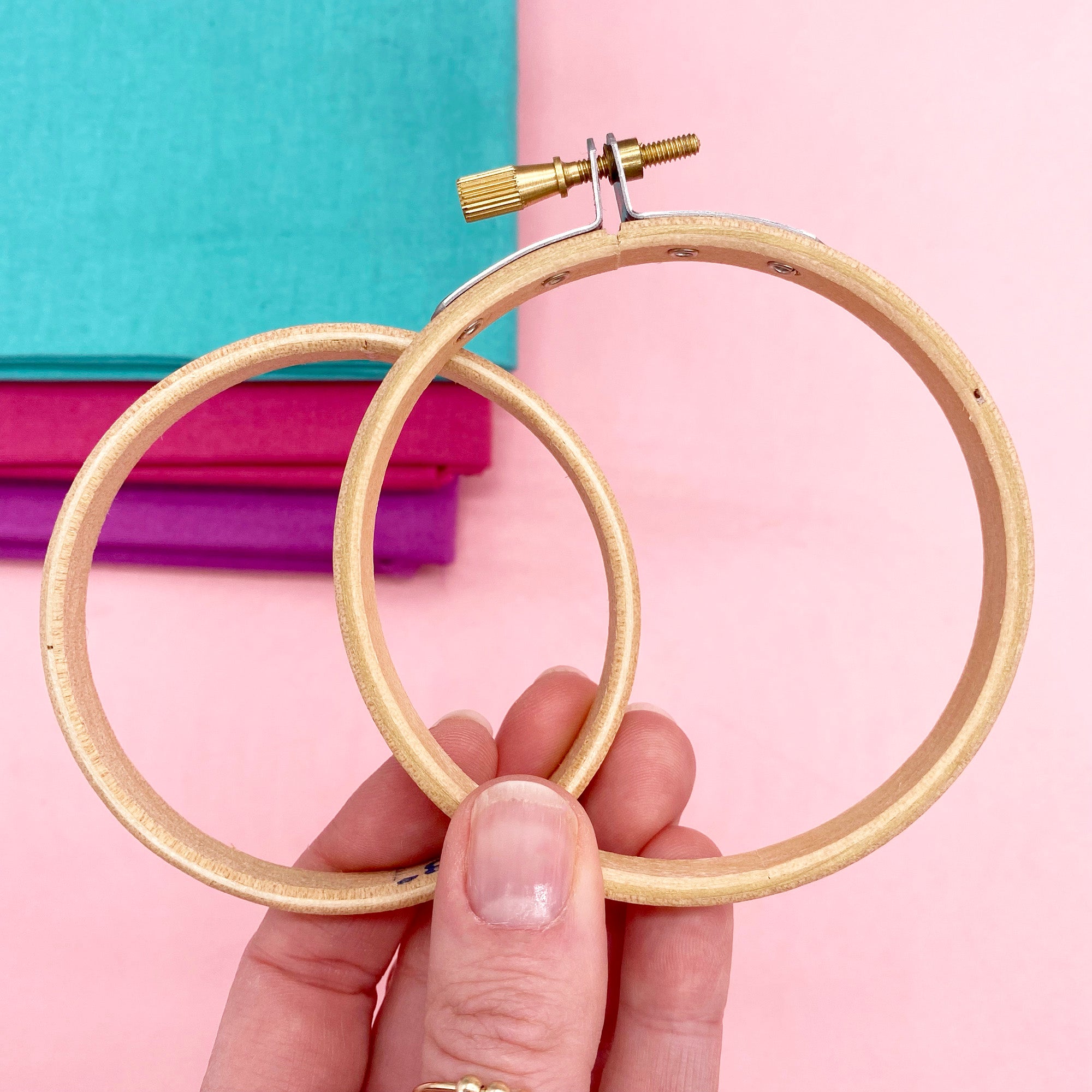
Do you need an embroidery hoop? Not for your very first stitches. A hoop can make stitching neater and easier, but you can still try a tiny design without one. If you do have a hoop, this guide will help: how to set up your embroidery hoop.
Draw a tiny design to stitch
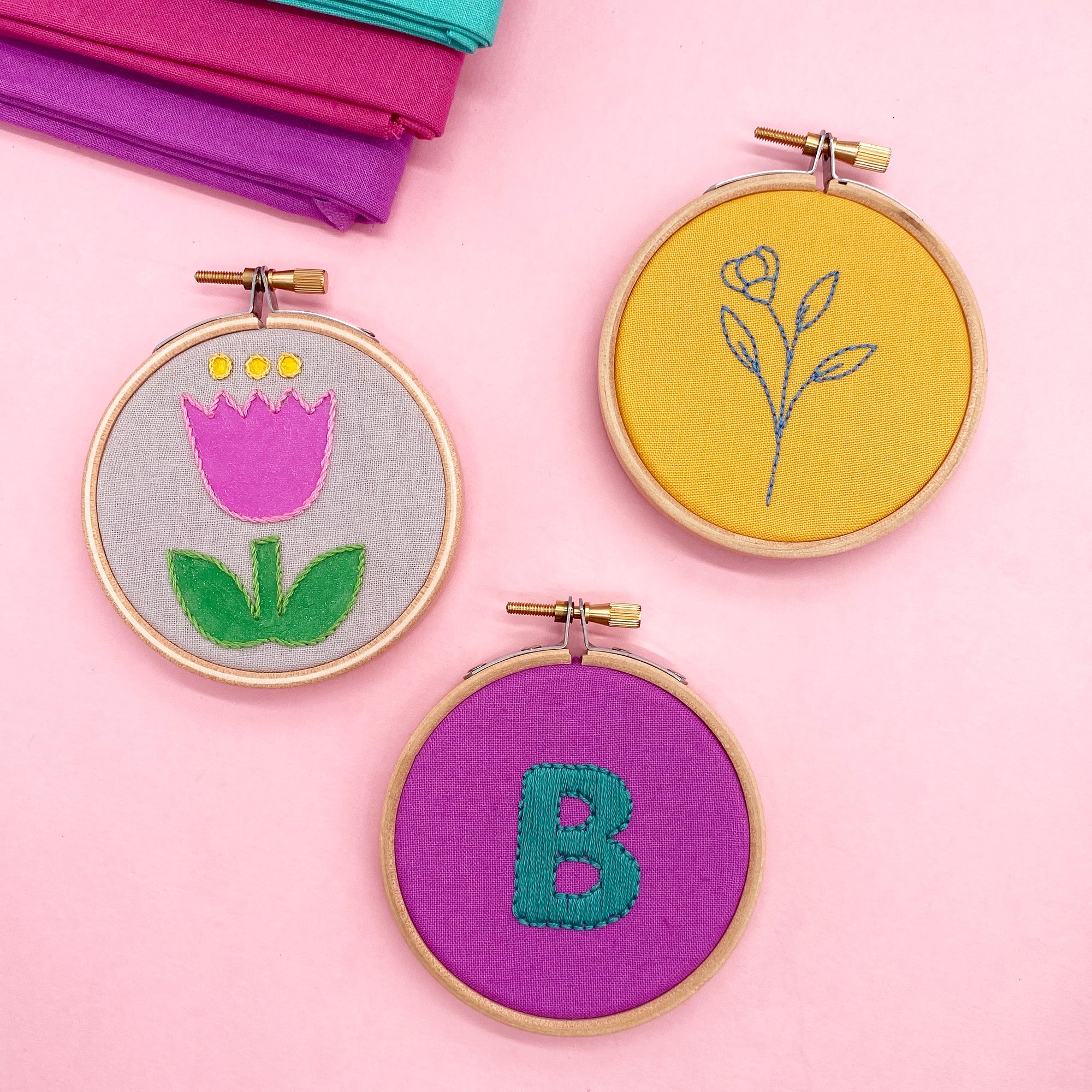
Start small. Draw a simple shape directly onto your fabric using a pencil or washable pen. A heart, a leaf, a flower outline or your initial is plenty for a first project.
This is not about perfection. It is just about getting comfortable holding the needle, pulling the thread through the fabric and watching a line of stitches appear.
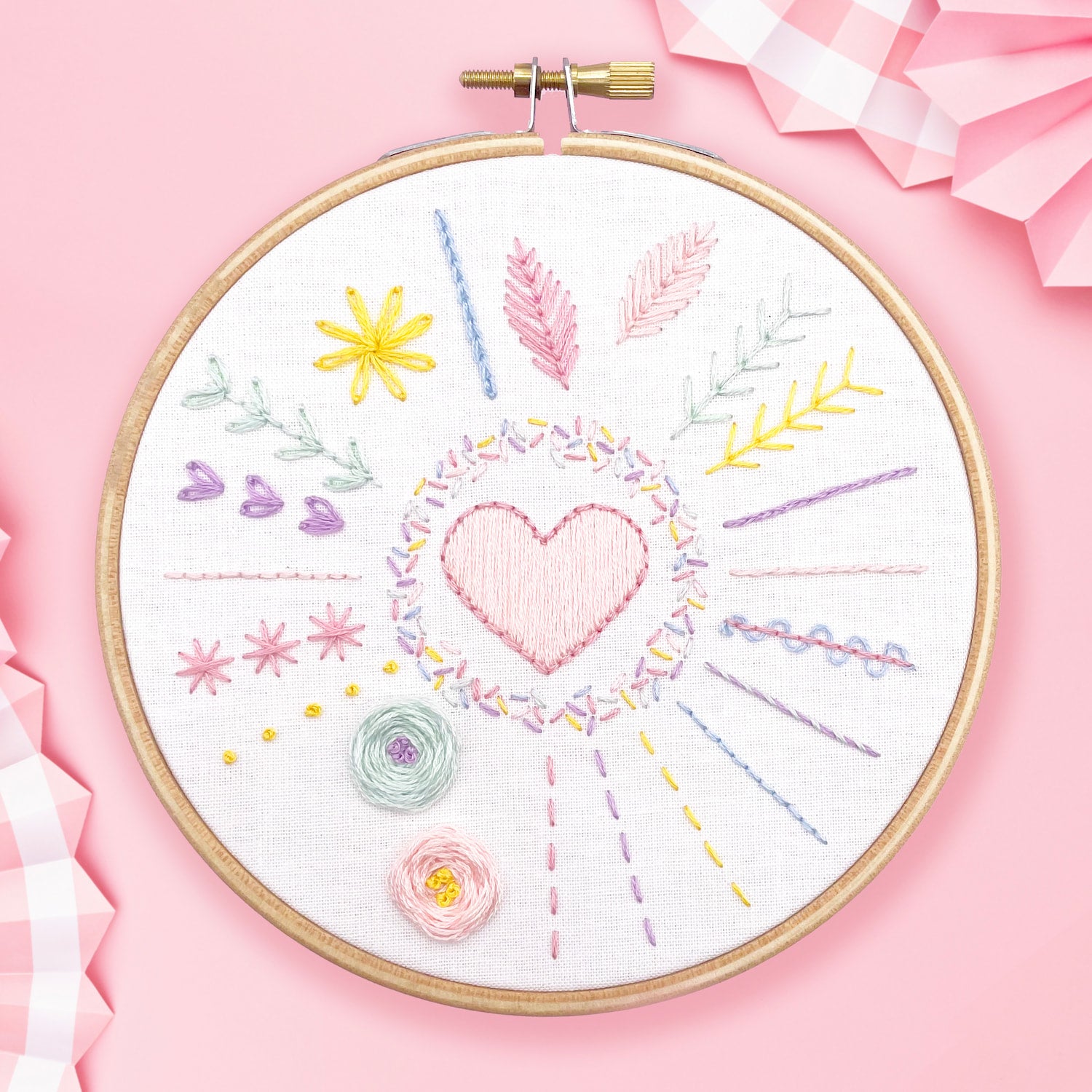
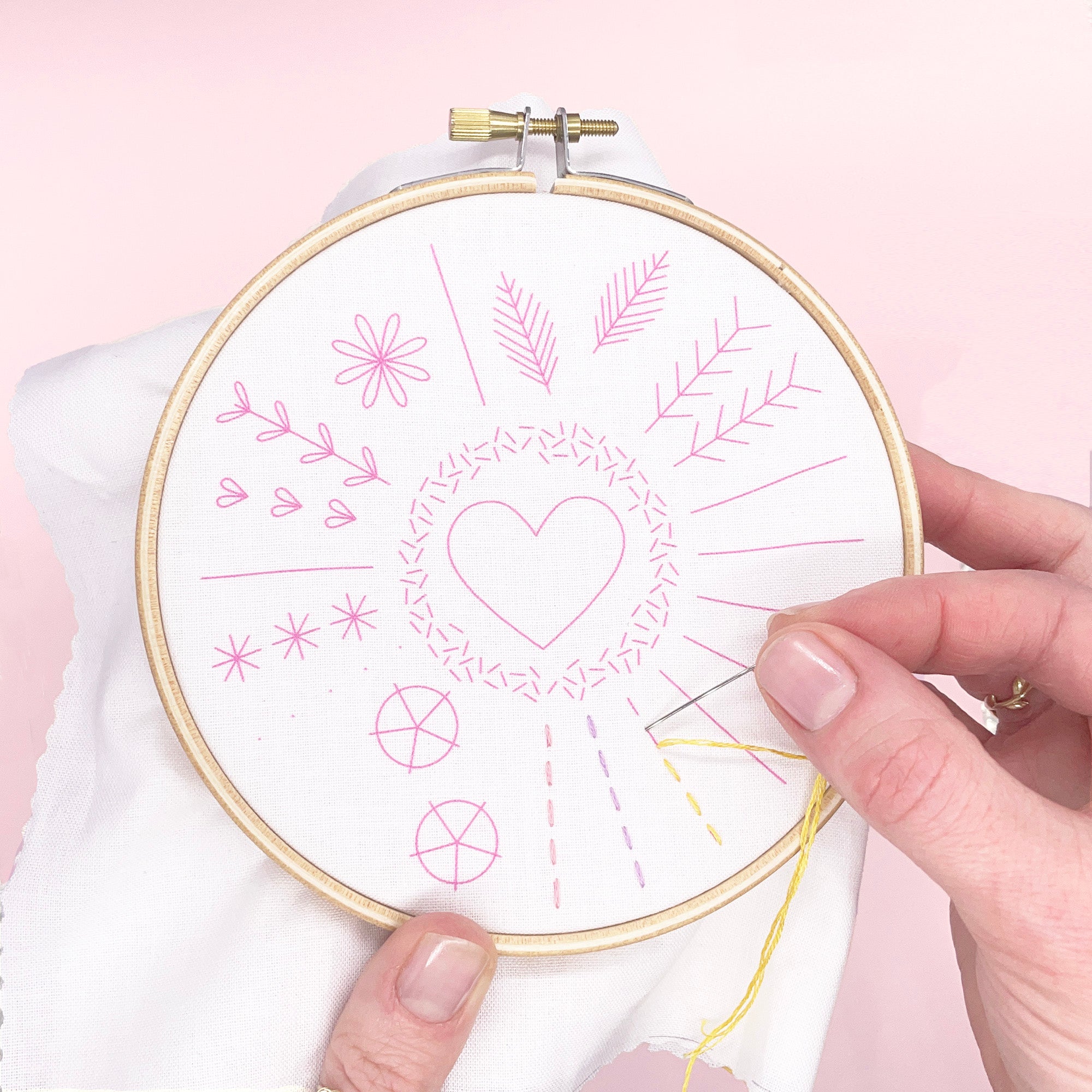
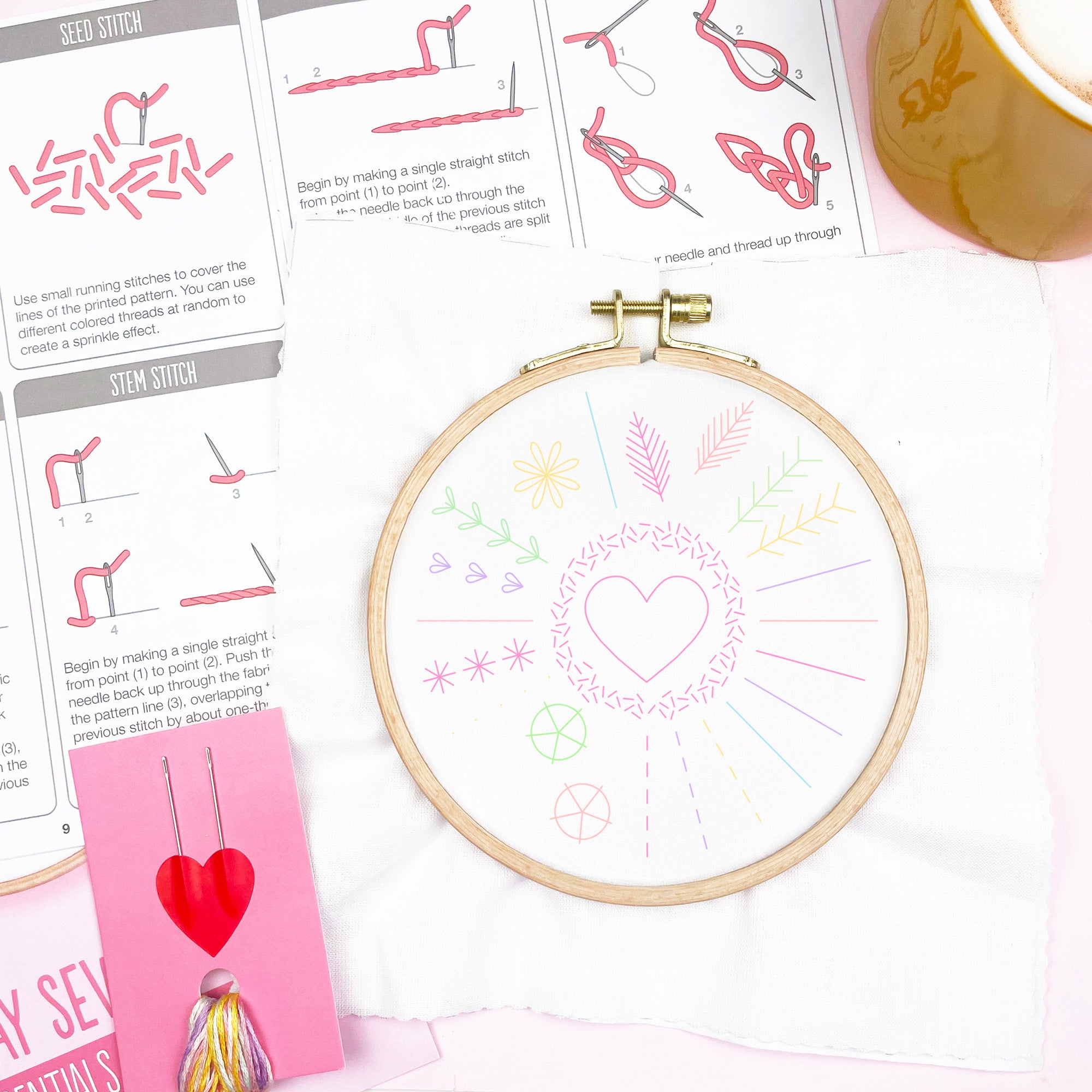
If drawing your own design feels like a bit too much, an iron-on embroidery pattern is a simple next step. You transfer the design onto light fabric with an iron, then stitch over the lines.

Your first stitch: back stitch
If you only learn one embroidery stitch to begin with, make it back stitch. It is simple, useful and brilliant for outlining shapes.

- Bring your needle up through the fabric a stitch length ahead of where you want your line to start.
- Take the needle down at the start of the pattern line to make your first stitch.
- Bring the needle back up a stitch length ahead along the line.
- Push the needle back down into the end of the previous stitch, using the same hole where your first stitch finished. This creates a continuous line.
Take small stitches to begin with. They are easier to control and give a smoother outline.

Keep it relaxed and avoid tangles
Cut a manageable length of thread, around 40cm, roughly from your fingertips to your elbow. Shorter thread tangles less and makes stitching feel much calmer.
If your stitches are not perfectly even, that is completely fine. Embroidery is forgiving. The more you stitch, the more natural it feels.
This is meant to be relaxing, not a test.
Threading tips and tangle fixes for beginners
Want the useful supplies in one place?
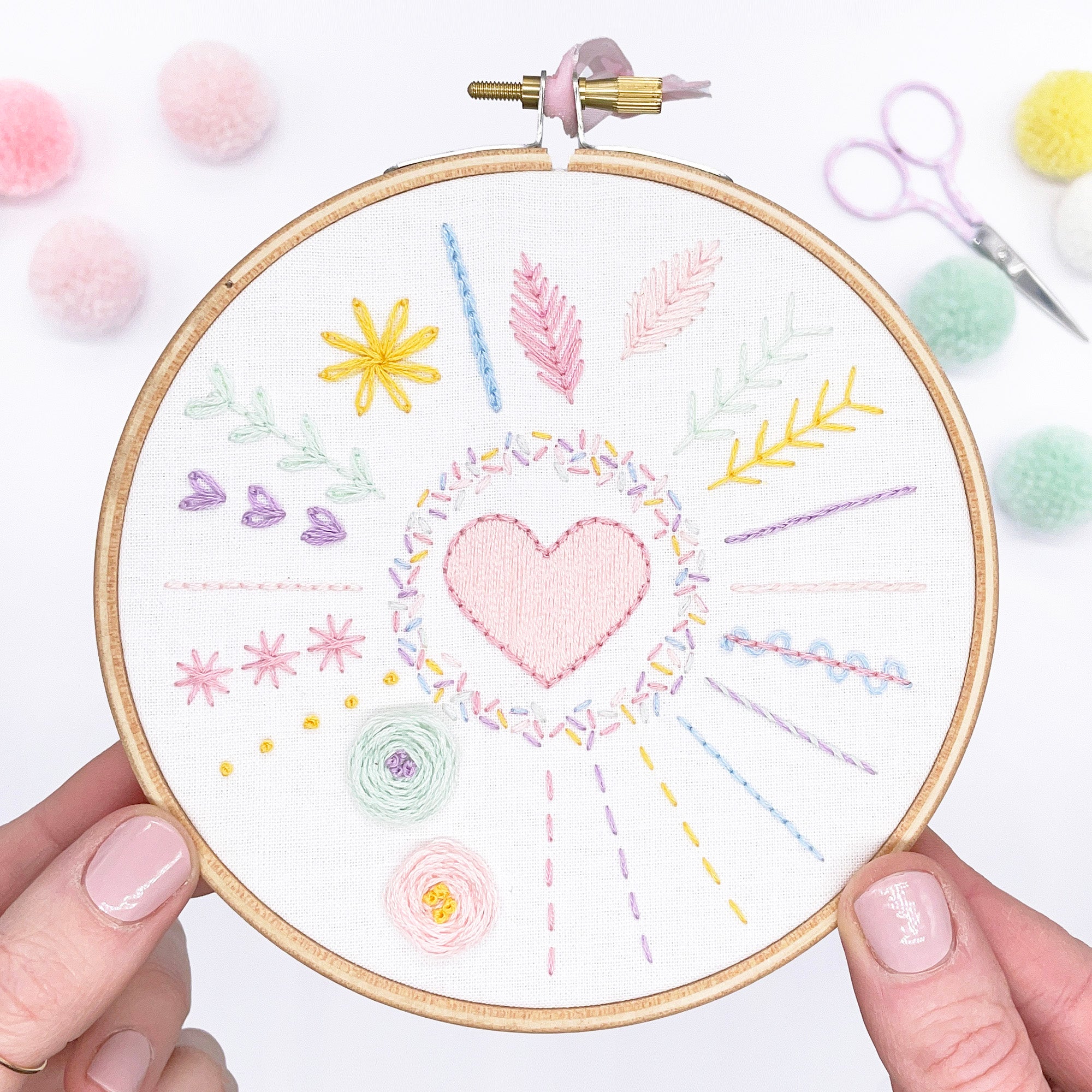
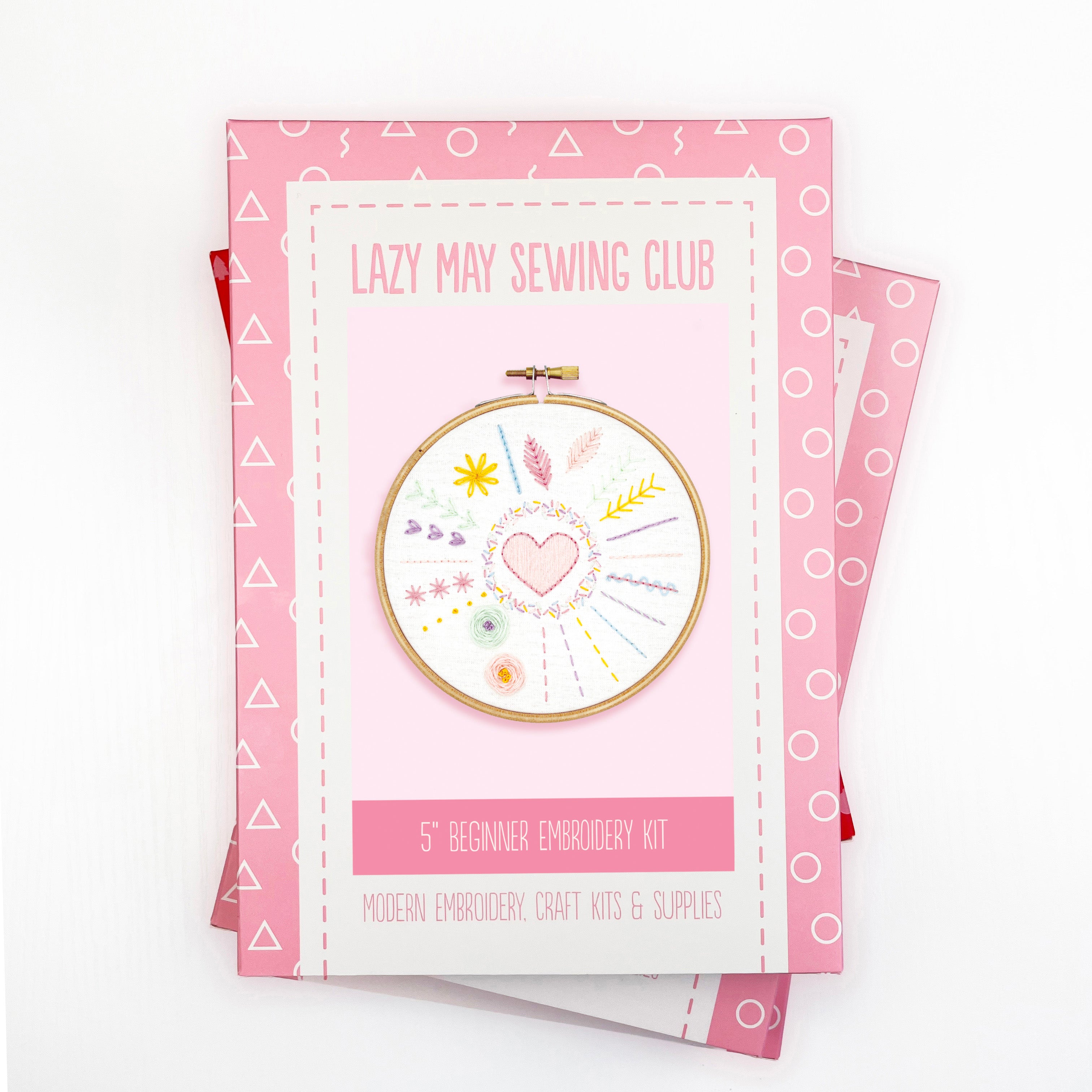
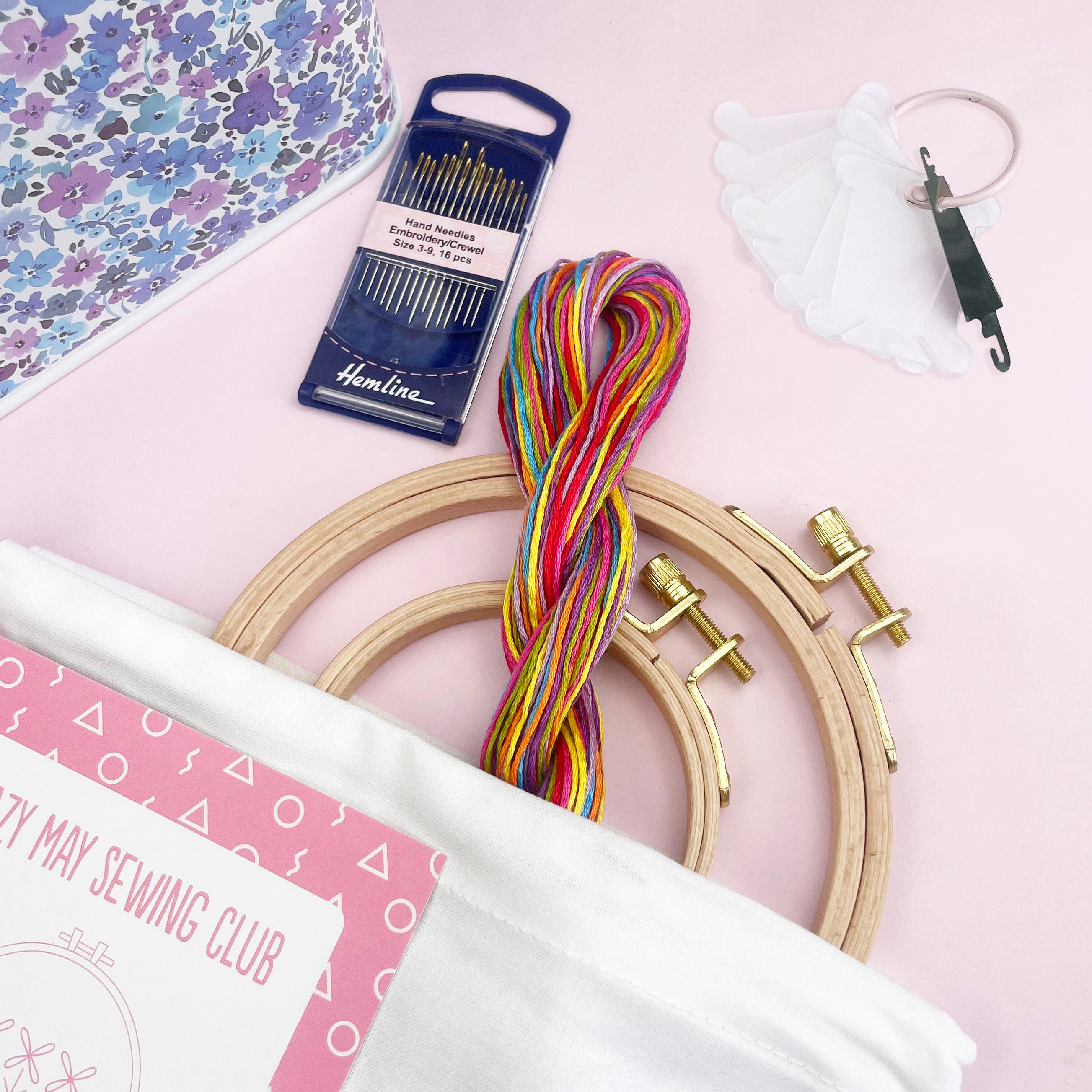
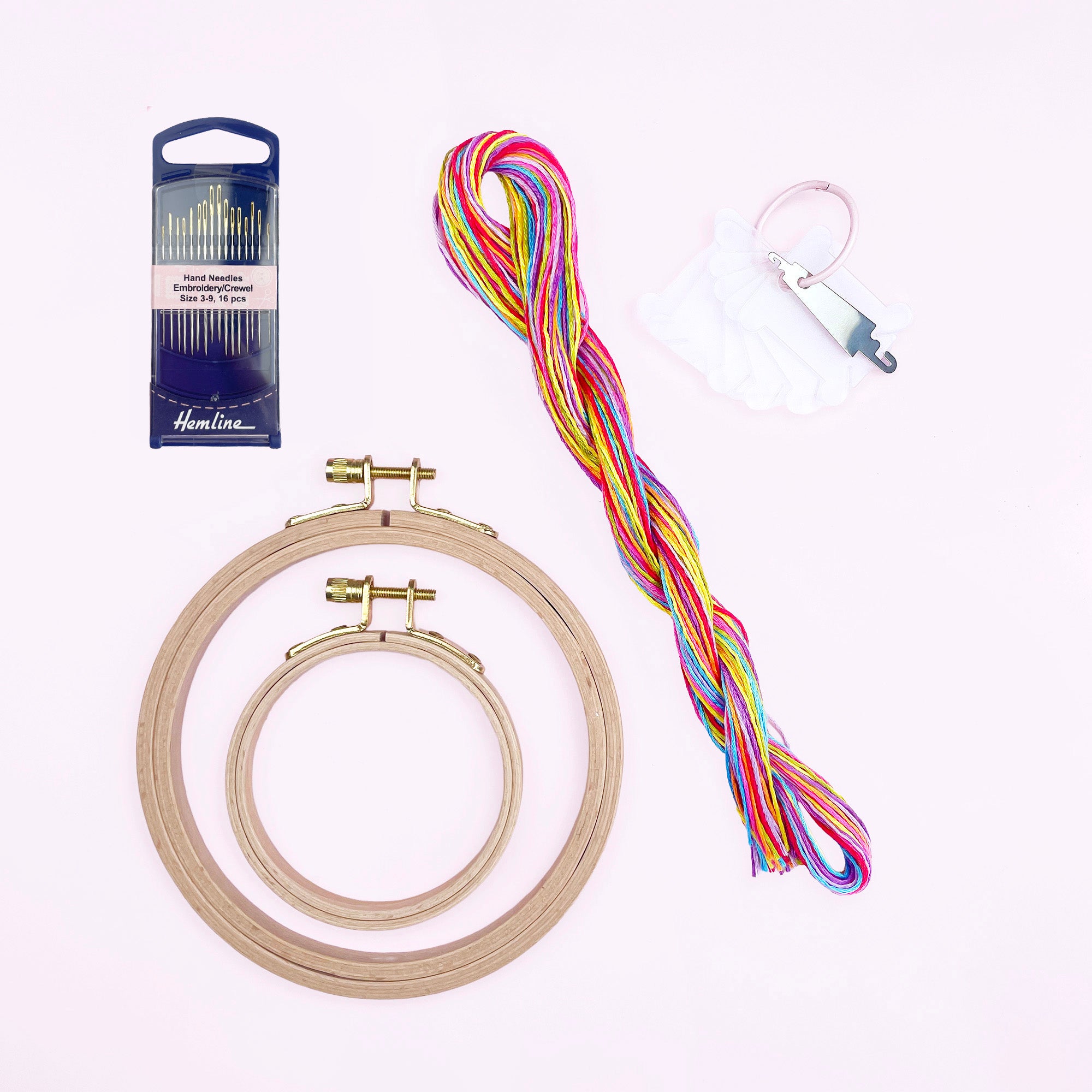
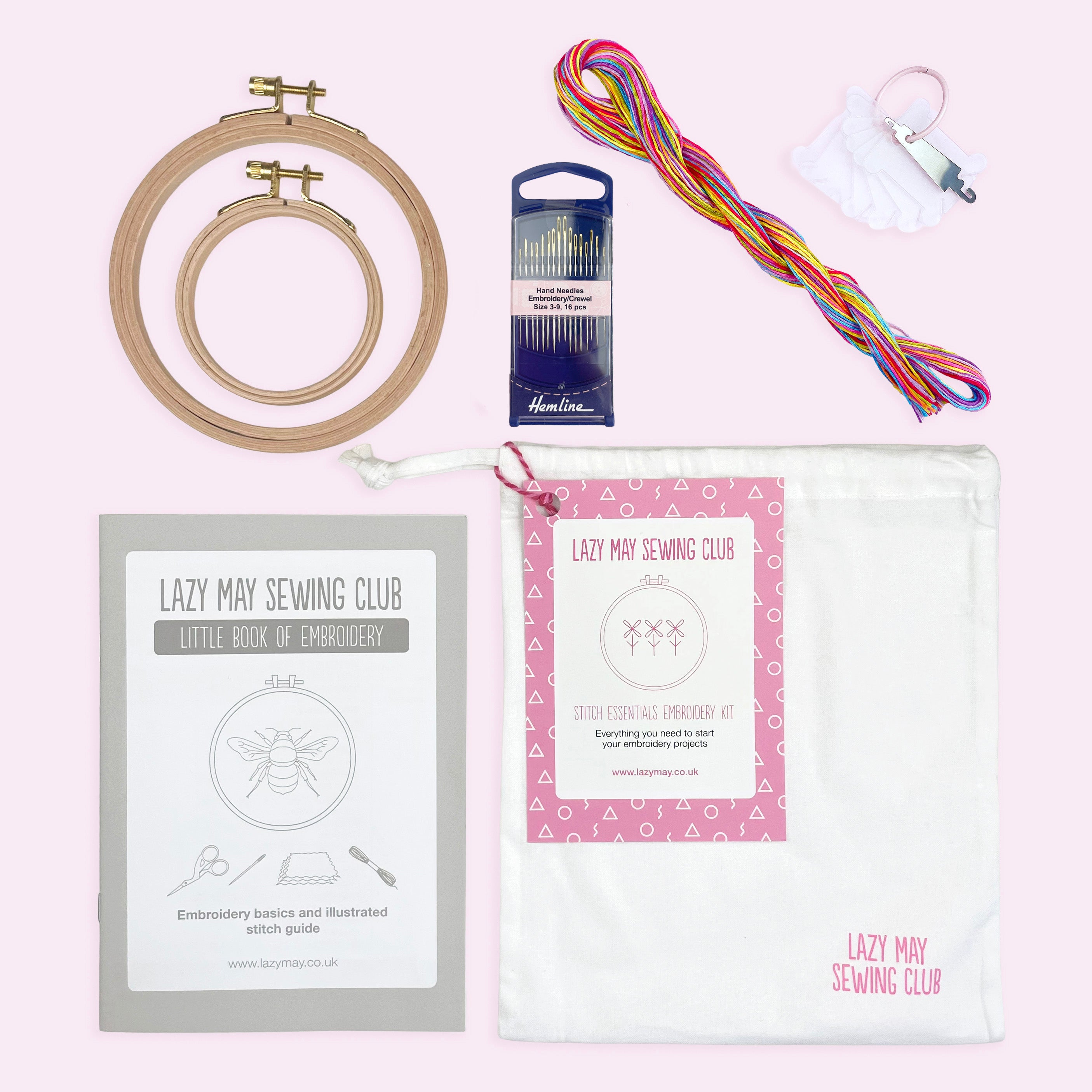
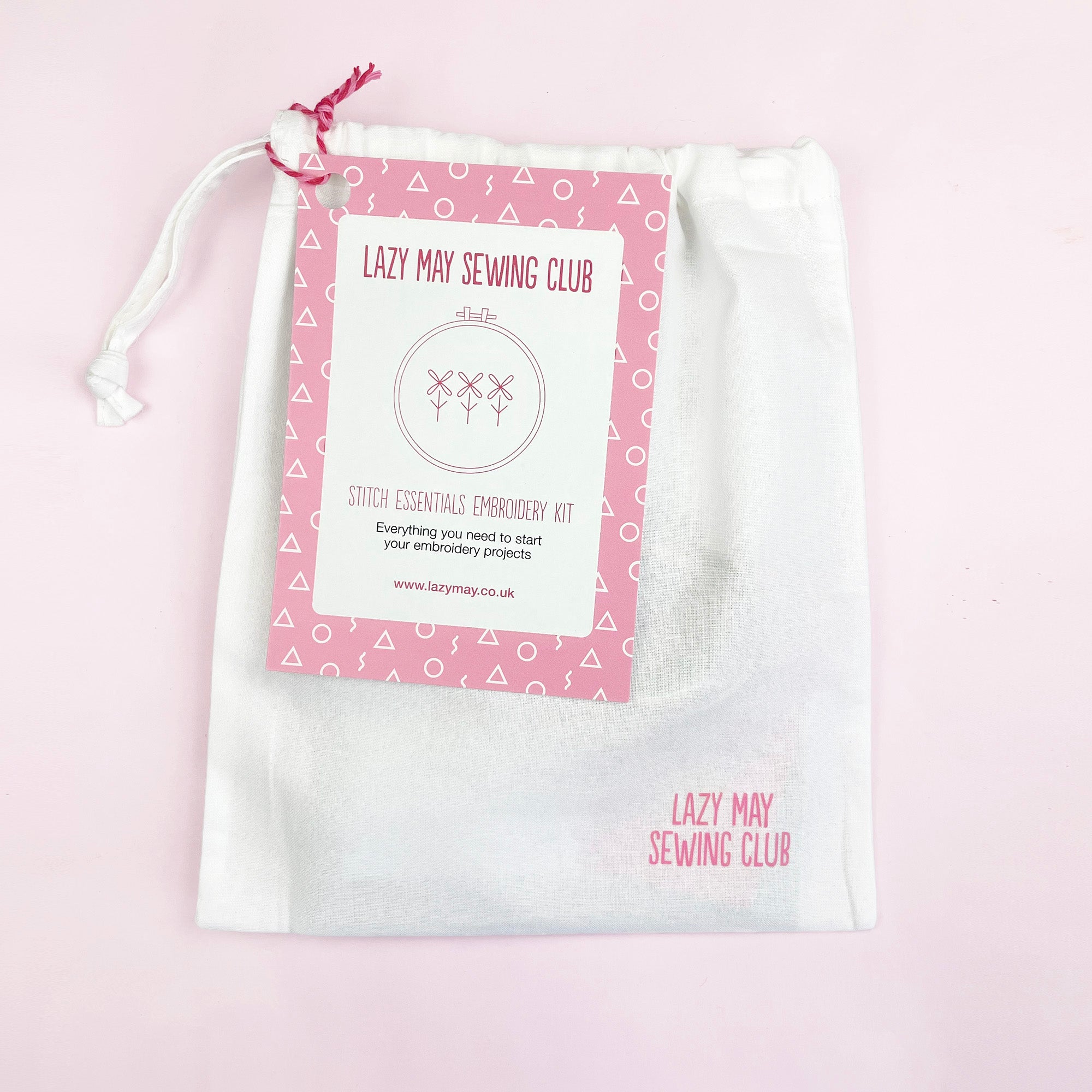
If you would rather not hunt around for needles, hoops, thread and fabric, an embroidery starter set is a helpful next step. It gives you the basic supplies for starting a project, without needing to buy everything separately.
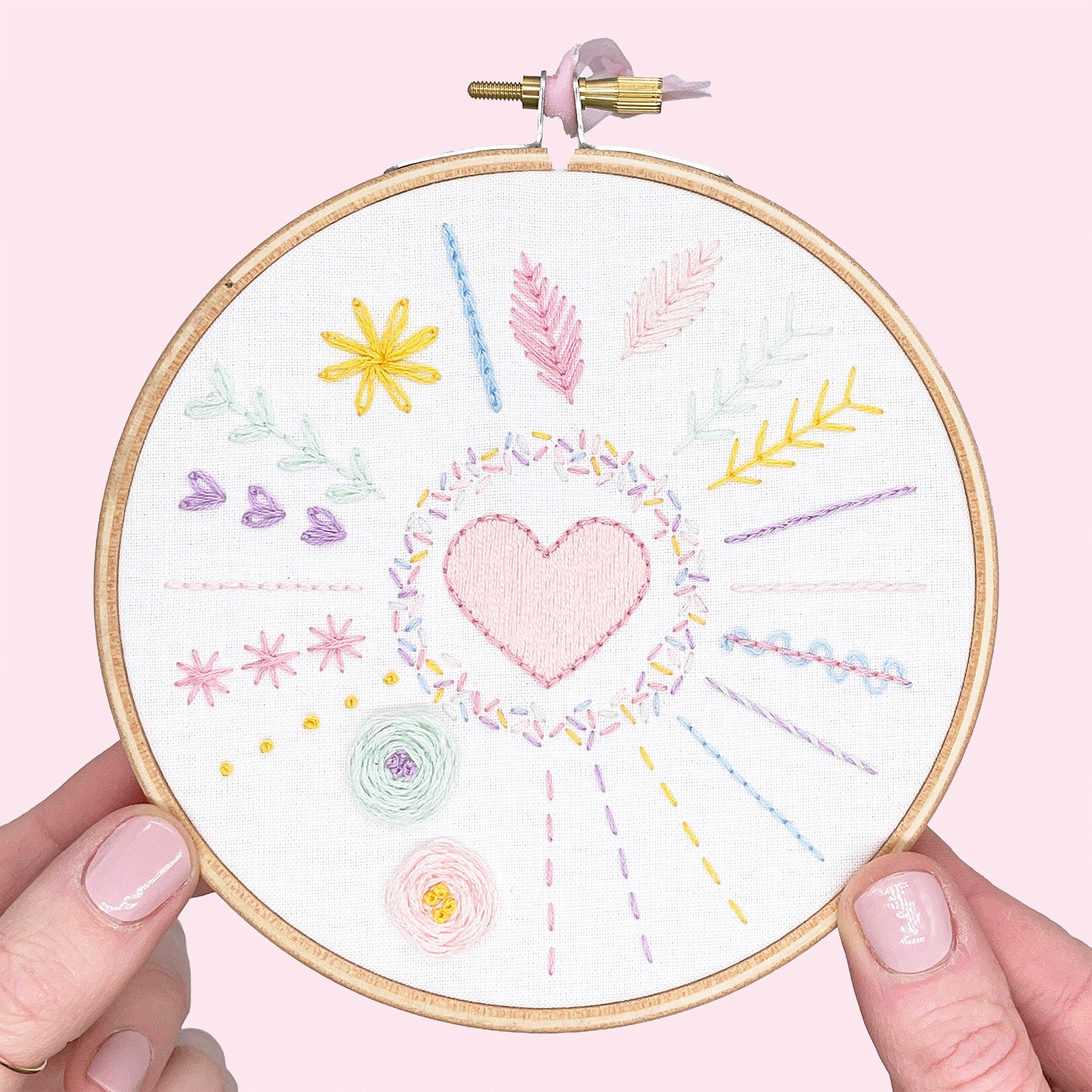
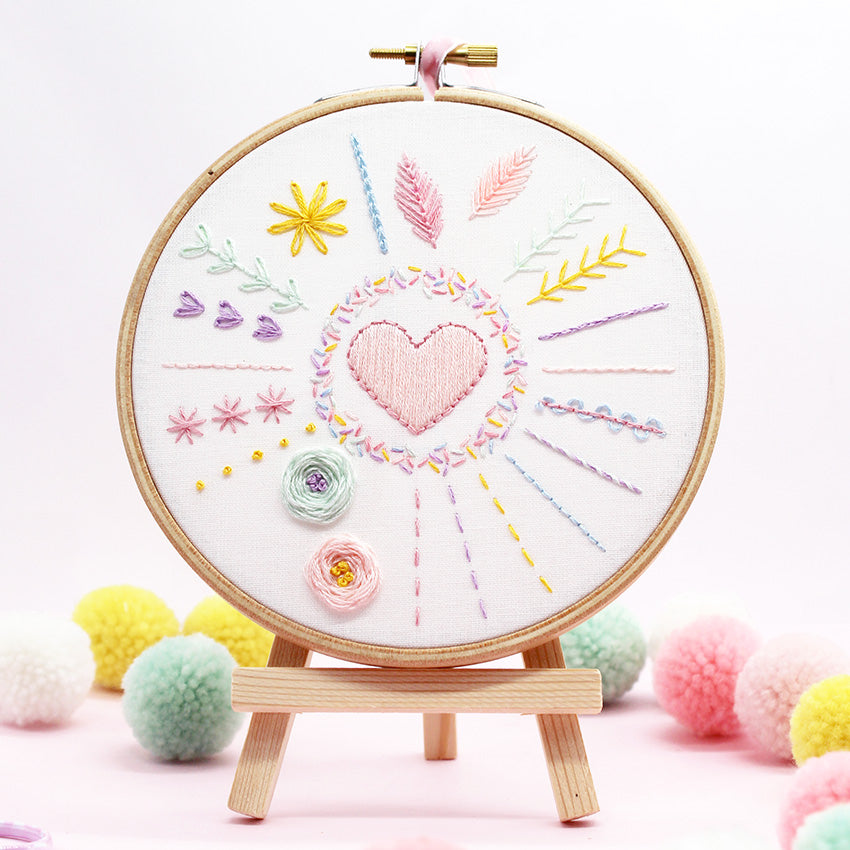
You can use a starter set with your own fabric and doodled design, or pair it with one of my iron-on embroidery patterns if you’d like a ready-made design to follow.
- embroidery hoops
- embroidery thread and needles
- needle threader and bobbins
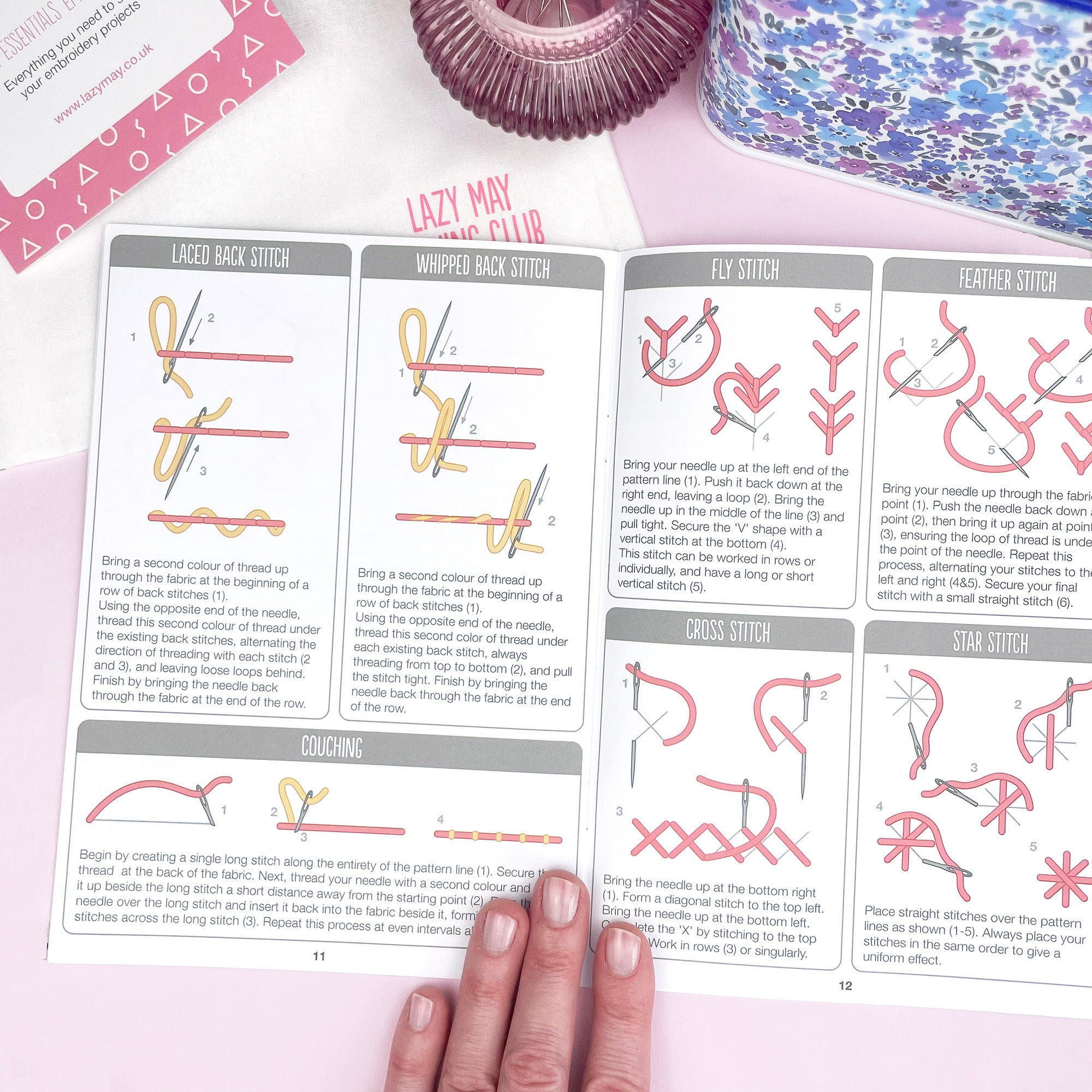
- beginner embroidery guide
- project bag to keep everything together

Start small, keep going
The hardest part is starting. You don’t need to learn every stitch or buy lots of supplies. You just need one needle, one piece of thread and one simple line of stitching.
Start with back stitch. Outline a tiny shape. Finish something small. Once you see those first stitches forming, you’ll understand why so many people find embroidery calming, satisfying and slightly addictive.